
I Crashed Cannondale’s New SuperSix Evo on Ride One. It’s Still Among 2026’s Best Road Bikes.
Only 23 kilometres into the first ride, a patch of gravel sent me sliding across the tar. After climbs, corners, and rough roads, the Gen-5 Evo still felt fast and confidence-inspiring.
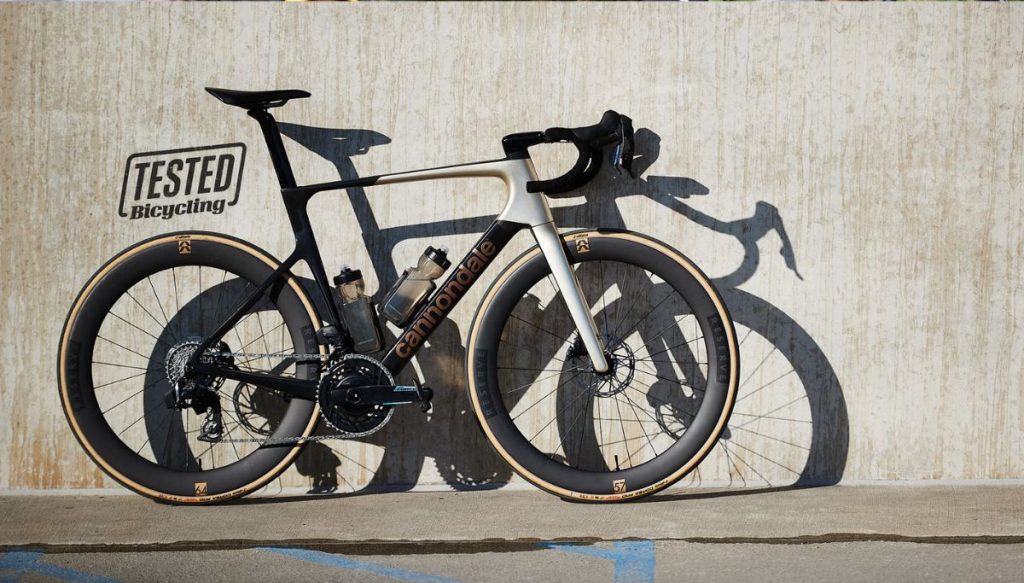
Most people don’t crash a new bike on the first ride. You probably ride it a bit gingerly the first couple of times to get accustomed to the geometry and components. Maybe you spend the initial ride getting your bike fit sorted.
However, only 23km into my first ride on Cannondale’s latest SuperSix Evo, I leaned the bike over in a turn and hit the deck. And about two hours later, I ended the ride thinking the new Evo might be one of the best all-around road race bikes you can buy.
It’s a bicycle light enough for climbing, yet sufficiently aero for speed, and with a degree of comfort and smoothness for everyday rides and training.
Designed to win races at the highest levels, race bikes aren’t for everyone. These machines generally have an aggressive fit (low and long) and loads of stiffness. They aren’t super practical for anything other than going fast.
At the same time, it’s just a pleasure to ride a bike like this as an amateur – it’ so light, so nimble, so engaging…
The Evo’s Backstory
Cannondale launched its first full-carbon SuperSix road bike in 2007. Four years later, the Connecticut-based brand followed it up with the SuperSix Evo — an “evolved” SuperSix.
In the nearly two decades since, the Evo platform has seen several iterations and refreshes. Launched in 2023, the fourth-generation SuperSix Evo claimed Olympic and World Championship gold medals, spring classic victories, and Grand Tour stage wins.
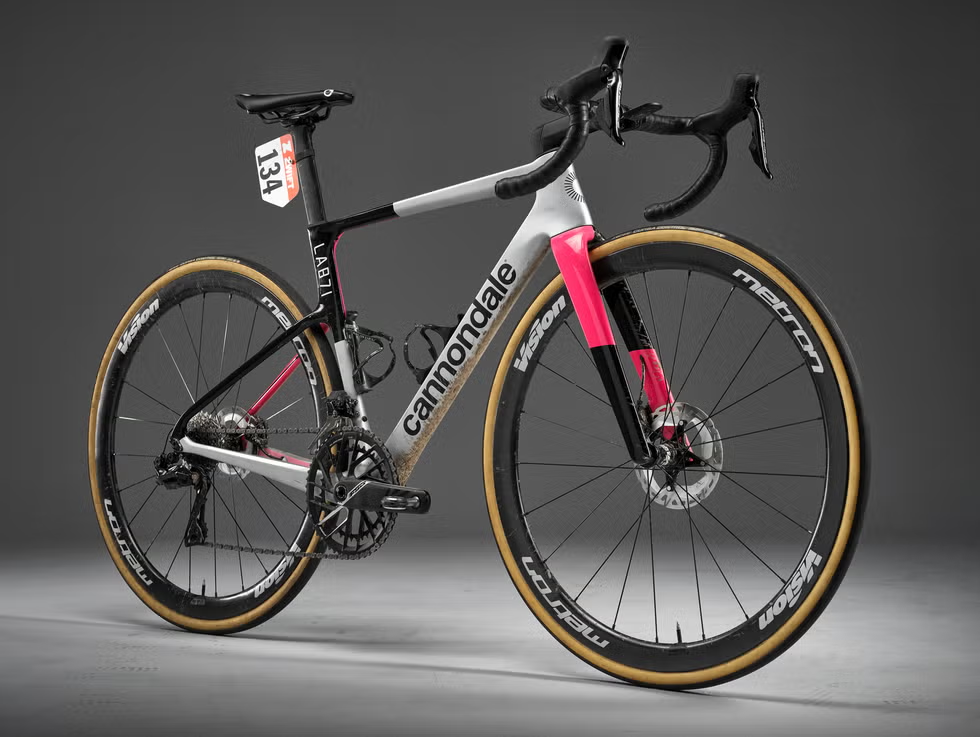
While the Evo’s palmares speak for themselves, the Gen 4 proved to be simply a great bike for riders who like fast, lightweight, and efficient road bikes. It’s a race-bred all-arounder: Light enough for big climbs and sufficiently aerodynamic for fast rides on rolling terrain. The SuperSix Evo also has plenty of stiffness for sprints and hard efforts, and its handling is poised and predictable.
The fourth-generation SuperSix Evo is also a Bicycling staff favourite; it’s so trusted and well-liked that four of us have one as a personal bike. We collectively have ridden over 16,000 kilometres on the platform. I used an Evo Lab71 model for a lot of component testing over the last two years — SRAM Red AXS, flared bars, short crank arms, and wide road tyres.
It Feels Right
Whether you recently started riding or you’re a top-ranked professional, you want a bike that instills confidence. It allows you to ride faster and perform at a higher level. For pros, it can be the difference between a podium placing and finishing off the back. For the rest of us, it can make or break a ride.
However, pinning down what makes a confident bike is often difficult. And it’s often the intangible quality of “feeling right”. Having worked closely with pro racers to develop World Championship-winning bicycles (albeit in a different riding discipline) earlier in my career, I know that confidence is key to the success of an elite-level race bike. To ride fast and perform at their peak ability, athletes need equipment that lets them focus on everything but the bike. They want it to feel right.
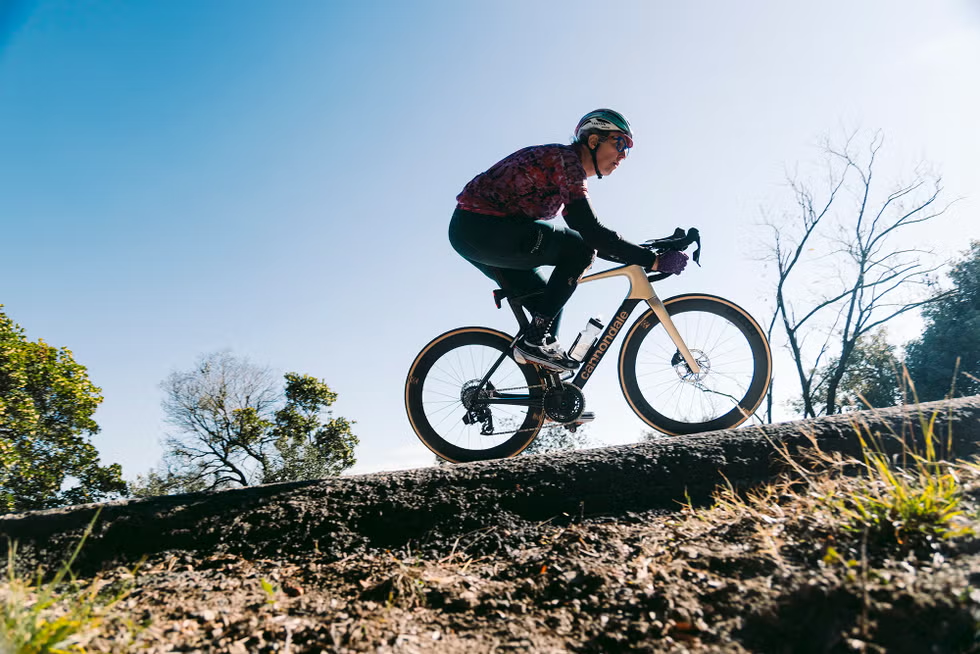
No blame can be placed on any component or aspect of the SuperSix Evo’s geometry for my get-off in Girona. While I was on my initial ride on the fifth-generation bike, the crash was entirely on me: I hit some gravel in a turn, the front tyre lost traction, and I slid across the road.
However, my confidence in the Evo is likely what put me in that situation in the first place. Was I riding a little fast for the road conditions, or did I misjudge the apex of the turn? Maybe both, but it wasn’t the bike’s fault. Yet despite crashing the bike on its maiden ride, my faith in the Evo remains as strong today as in the moments before I picked up some road rash on my hip, shoulder, knee, and elbow.
My trust in the new SuperSix Evo is largely due to the bike simply “feeling right”. And I experienced that from my first pedal strokes down the street outside my hotel. I only needed to set my saddle position and adjust the brake hood height, and it was ready to ride. That’s a rare characteristic for any bicycle. Usually, I expect to take at least a few rides to get a bike dialled and feel confident on it at speed, in corners, or in other situations where my safety is on the line.
All-Arounders in the Age of Aero
Aesthetics often play a big role in making a bike feel right. And in this sense, the fifth-gen Evo will be downright familiar to anyone who has seen the bike’s previous iteration — or many other top-shelf contemporary road race bikes. The SuperSix Evo, Specialized’s Tarmac SL8, the Canyon Aeroad, and others share a similar silhouette. The profile is ubiquitous in the pro peloton for a reason: It works.
Road race bikes are a balance of weight and aerodynamics. Ultralight bikes are on one end of the continuum. They prioritise low weight over most other characteristics, usually resulting in bikes with minimalist proportions. Brands can now make these bikes — like Specialized’s Aethos 2 and the Cervélo R5 — so light that they easily break the UCI’s 6.8-kilogram minimum weight rule.
Weight isn’t everything, though. In modern road racing, aerodynamics play a more significant role than bike mass in increasing riders’ speeds. Some brands manufacture aerobikes — often with radical design features — that are faster for pros than superlight designs even though they are heavier. The Factor One, Cervélo S5, and Colnago Y1Rs are examples of this approach.
All-arounders like the SuperSix Evo mashup aerodynamics and low weight. The bike is aerodynamically slippery enough that the EF-Education team riders use it to take long-range solo fliers or sit in the breakaway for dozens of kms. And the Evo is light enough that a team mechanic told me they sometimes need to add weight to ensure the racers’ bikes conform to UCI regulations.
And this challenge of making a bike as aerodynamic as possible (while meeting the UCI’s aero-profile rules) and getting it to the minimum allowed weight is why many all-arounders share a common look. There are only so many elements that designers and engineers can manipulate to make a winning bike that fits into the allowed parameters. Thus, dropped seatstays, an aero-shaped front triangle, deep wheels, and a fully-integrated one-piece cockpit are standard fare across many models in the category.
Elite road racers aren’t the only ones who benefit from this balancing act of weight and aerodynamics. These traits also make all-arounders an ideal choice for many cyclists who seek lightweight bikes with spirited handling for their group rides with friends, training, or collecting PRs on Strava segments. Plus, most all-arounders look refreshingly normal — neither alien technology like an aerobike nor scant and delicate like a lightweight bike.
Evo Frame Updates
Perhaps the reason the fifth-generation SuperSix Evo feels right to me is that it closely mirrors its fourth iteration — a bike I rode about 24,000 km last year. And while distinct, if you layer images of the two bikes, the new Evo’s form and dimensions bear such a striking resemblance to that bike that even some Cannondale fans might mistake it for a refreshed colour scheme rather than a new frame variant.
The similarities run deeper than the SuperSix Evo’s looks. Aside from a shorter headtube on the new version, the geometry is effectively the same on most frame sizes. On the 58cm Evo I tested, the wheelbase, chainstay length, head angle, trail, and bottom bracket drop measurements all match those of the gen-four model. No wonder I feel so comfortable on the bike.
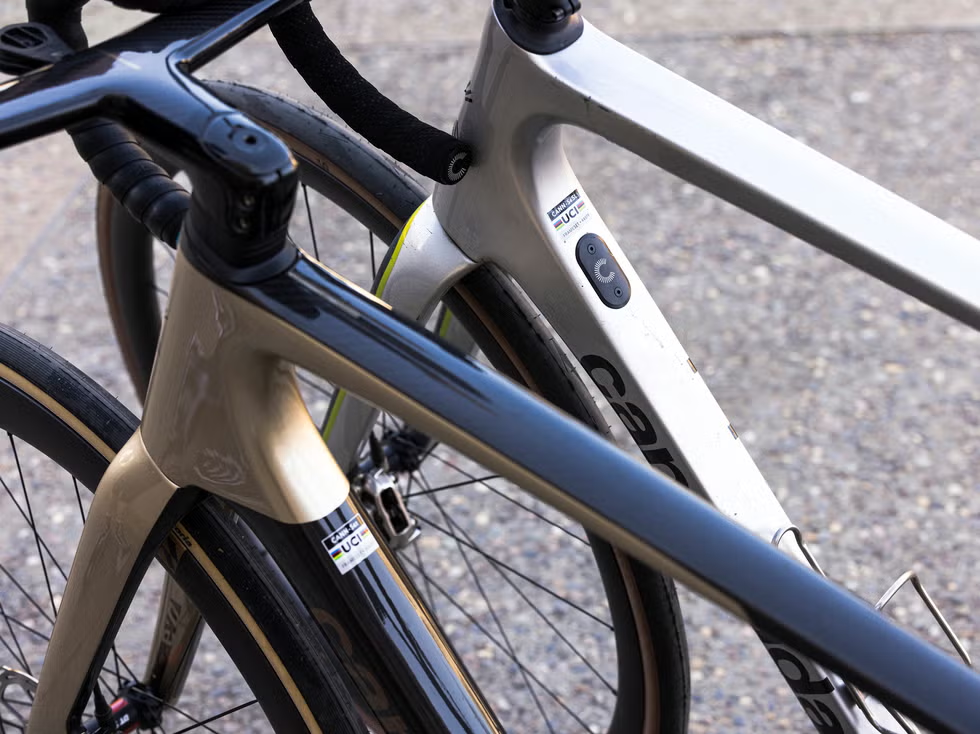
Toptube: Gen 4 (top) vs. Gen 5 (bottom). Photo by Albert Gallego Rabert |
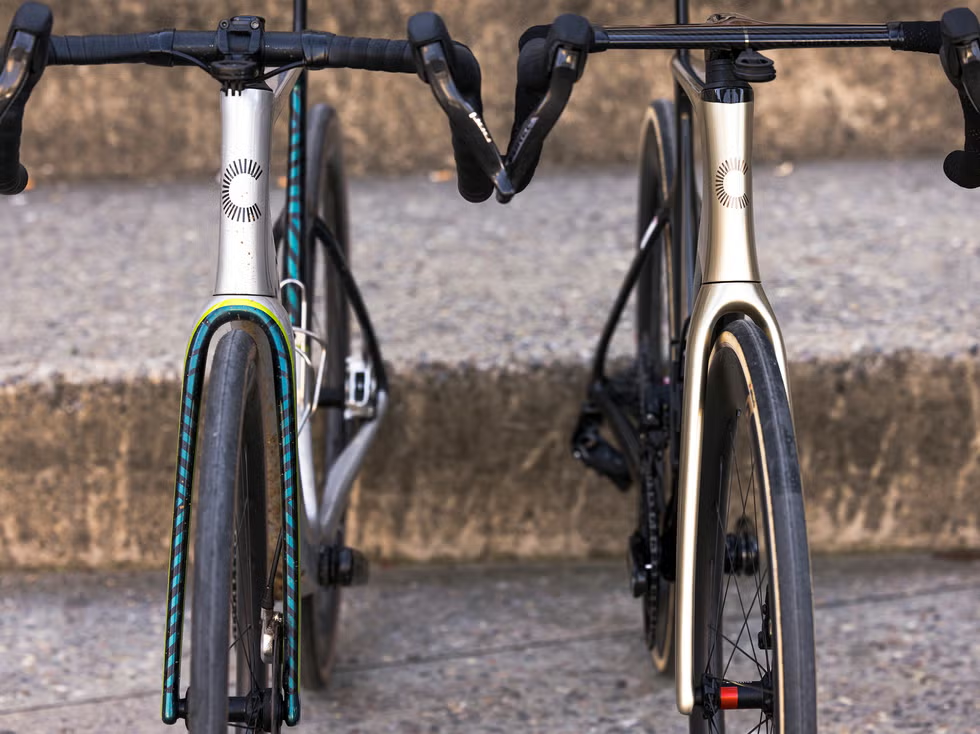
Front profile: Gen 4 (left) vs Gen 5 (right). Photo by Albert Gallego Rabert |
However, similar doesn’t mean the two Evos are identical. And the changes and updates Cannondale made for the new bike only improve upon an already solid road platform.
The most easily identifiable addition to the gen-five SuperSix Evo is its use on a UDH-compatible rear dropout. UDH has quickly become the standard for road, gravel, and mountain bikes. Not only does it make finding a replacement hanger simple (most bike shops will have them), but it also means the bike is compatible with SRAM AXS XPLR 1x drivetrains. It helps future-proof the frame for any new derailleur mounting standards.
As is now standard for most bikes in the road race category, the new SuperSix Evo frame is compatible only with fully internal routing and electronic drivetrains. While perhaps sad news for some riders holding on to old mechanical drivetrains, it fits the current road market: Shimano, SRAM, and Campagnolo’s racing and high-performance groupsets are all electronic shifting.
Cannondale also offers a SuperSix Evo 6 model equipped with Shimano’s 12-speed 105 mechanical group assembled on the previous-generation frame.
Other changes, while nominal, help tidy up the SuperSix. An example of this is a minor thing that always peeved me about my Gen-4 Evo: The thru axles on the new Evo finally match. Other refinements include a new dust cover for the seatpost binder, cleaner Di2 battery access, and a sleeker seatpost. Cannondale also softened some radii on frame tubes, eliminated the shelf where the seatstays meet, and cleaned up the look of the fork.
These details may not dramatically affect the Evo’s ride characteristics. Yet these nuances make the new Evo feel like a higher-quality product.
Geometry-wise, little differs (for most people) between the previous generation and the new Evo. But Cannondale made two key changes that benefit some specific riders. The shorter headtube (10mm less stack on most sizes) allows riders to achieve a lower bar height. This was an issue I experienced on the Gen-4 bike.
Component Details and Models
Before riding the new SuperSix Evo on the blacktop outside Girona, I spent three days getting acquainted with the terrain. I did not want to step off a trans-Atlantic flight and get thrown directly into two days of riding a brand-new bike on unfamiliar roads.
For comparison on some of the same roads we’d be riding on the new bike, I brought my fourth-generation SuperSix Evo Lab71 with Red AXS along for the trip. Cannondale did not provide me with details of the new bike in advance (other than identifying the platform I’d be riding), but I wanted a similarly close feel.
So, I assembled my bike with components I expected the brand’s product managers would use on the latest Evo. I selected a 48/35-tooth compact double crank, 10-36T cassette, and 38mm-wide flared bar for my trip. I also brought along Reserve 34|37 TA wheels shod with 30mm Schwalbe tyres. And my choices turned out rather close to how Cannondale equips some of its new bikes.
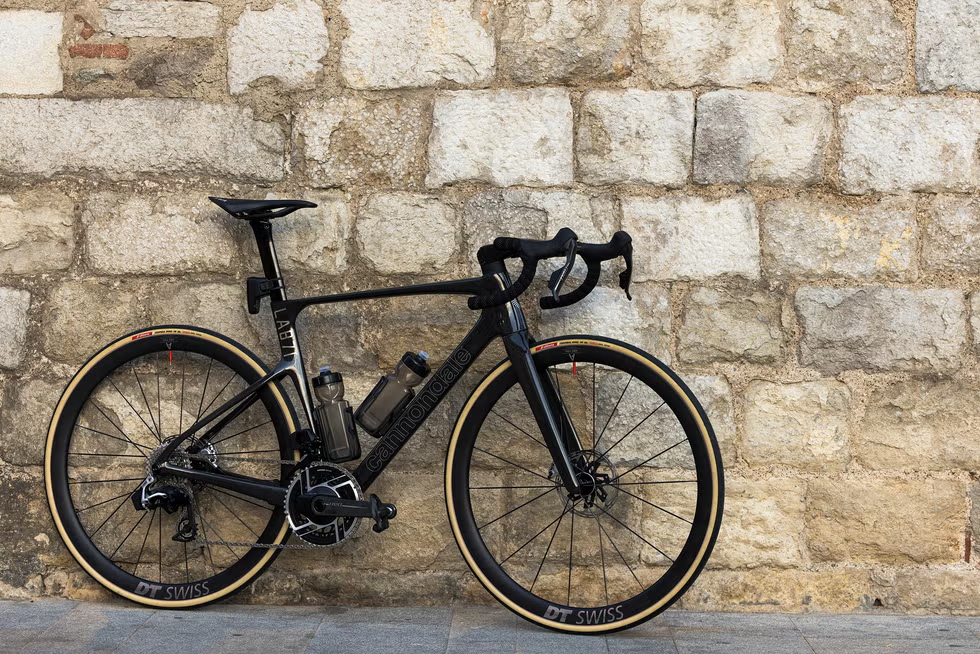
Cannondale offers a deep assortment of fifth-gen SuperSix Evo models. Prices start at R99,995 for the Evo 5 with 105 Di2; they top out at R249,995 for the Lab71 bikes with Dura-Ace and Red AXS. Evo variants with SRAM Force and Rival AXS groups, as well as Shimano Ultegra, are also available.
Lab71 complete bikes employ the 1,138-gram (claimed) Series 0 frameset, and Evo 1 models use the 75-gram heavier Hi-Mod variant. Evo 2, 3, 4, and 5 models come with a standard carbon frame and fork weighing 1,355 grams. These are also offered as framesets if you wish to build up your own bicycle or swap parts from an existing bike.
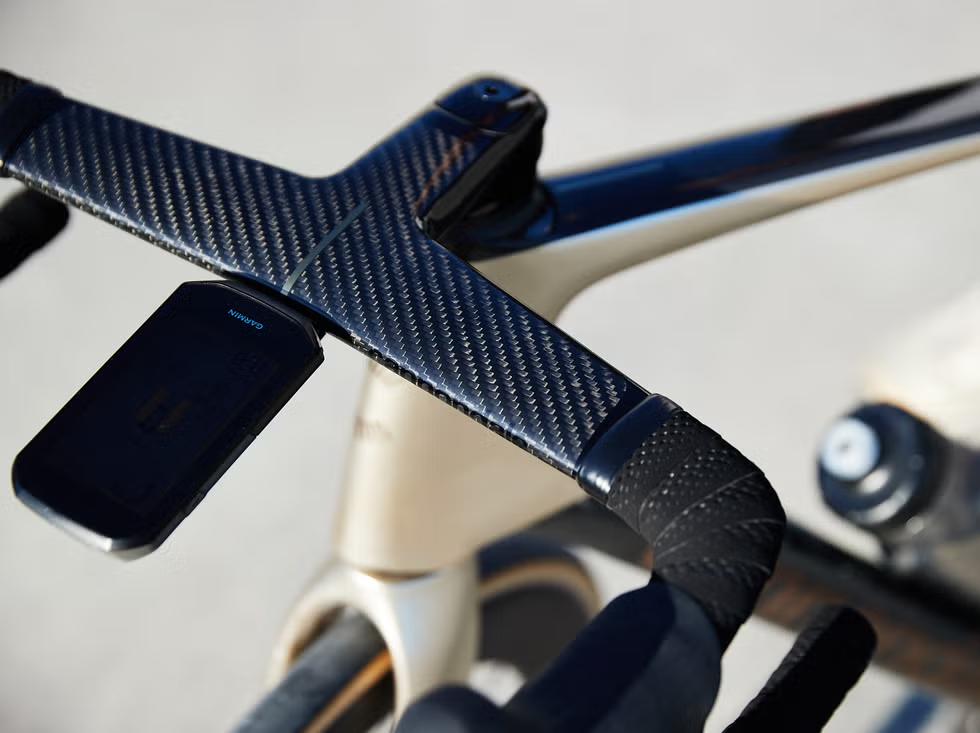
New for the Gen-5 Evo are superlight versions of the Lab71 and Evo 1 tiers. Dubbed Lab71 SL and Evo 1 SL, these models have lighterweight wheelsets and the new SystemBar SL cockpit (Lab71 and Evo 1 are assembled with deep-profile wheels and the standard SystemBar). The Lab71 SL’s 6.3kg claimed weight puts it in the ballpark of featherweight bikes like the Specialized Aethos 2 and Cervélo R5, but with a more aerodynamic frame.
Both new cockpits are one-piece bar/stem combos with 40mm bar flare. The 265-gram SystemBar SL (38cm and 40cm widths) has a traditional round profile; the SystemBar (34cm to 38cm widths) is a flat-top aerobar that weighs an extra 110 grams. The other Gen-5 Evos are equipped with a Vision carbon aerobar and a Cannondale stem.
Gen-5 On the Road
The specific model I tested was the SuperSix Evo 1 (which is not available in SA). It felt fast, smooth, and predictable on Catalonia’s well-kept blacktop. Climbing was comfortable, and it remained poised when descending.
Back home, the Evo was equally calm and quick. While not possessing the terminal-velocity effect of fully aerobikes I’ve ridden — like the Scott Foil RC Ultimate or Cervélo S5 — the SuperSix Evo 1 still feels quite rapid and carries its speed well.
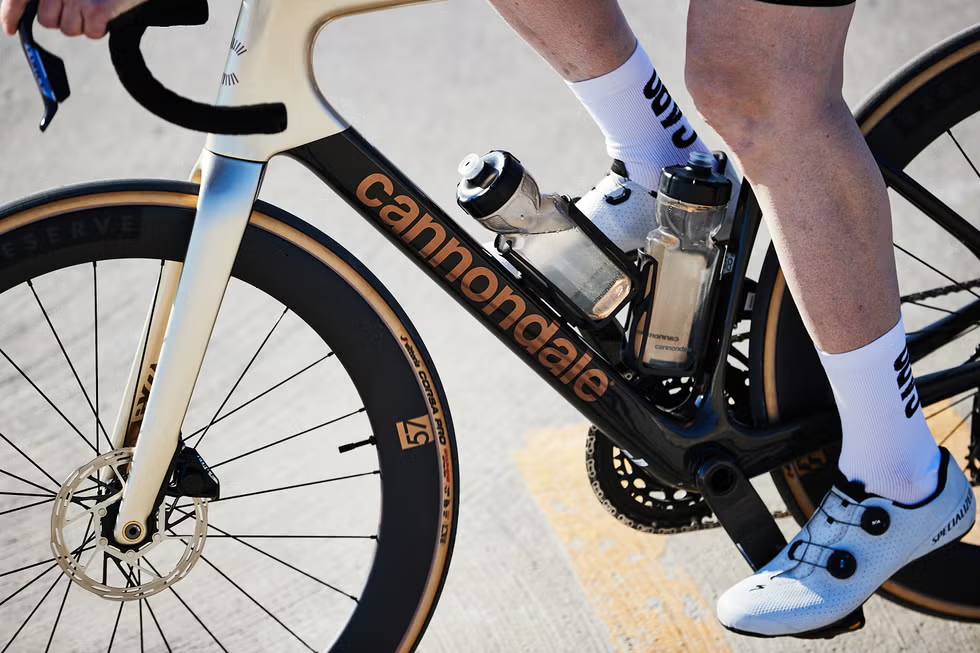
The Evo 1’s speed is especially noticeable on rolling roads and through corners. Thinking this was largely attributable to the deep 57|64 Reserve wheels with Vittoria Corsa Pro tyres, I swapped them for a Zipp 303SW wheelset with Goodyear rubber, and then for low-profile Reserve wheels with Schwalbes. While somewhat slower with these shallower wheels, the Evo 1 still feels downright fast.
No bike is absolutely perfect for every rider, even the really good ones. However, the faults I found in the Evo 1 are personal preference, not functional issues. The bike’s 48/35T chainrings paired with the 10-33T cassette isn’t my favourite combo — I’ll take the slight weight penalty for the extra range of the 10-36T. Similarly, I prefer SRAM’s 50/37T chainring combo for all but the biggest climbing days.
Along these lines, the 29mm tyres on the Evo 1 felt somewhat skinny for my usual riding. The Evo can easily accommodate 32mm tyres, and the added comfort and grip of wider tyres is worth the extra grams. Luckily, cassettes and tyres are wear items and easily swapped if needed.
Worth the Price?
The Cannondale SuperSix Evo should be on the shortlist for anyone purchasing a new race bike. If you already own a Gen-4 Evo, the latest Evo might not rock your world. As implied in its name, this bike is an evolution, not a groundbreaking redesign. But that’s a big part of what makes the bike feel so confident and familiar.
Cannondale does not stray from its proven formula on the new Evo. It took an already solid bike and softened some rough edges, tidied up details, and fixed a couple of shortcomings in sizing and fit. And the brand built a better, faster race bike that feels right.
Of the eight Gen-5 SuperSix Evo models, five are available in South Africa.
Local Pricing
| Description | Availability | Colour | RRSP |
| LAB71 S6 EVO A/M Frame Set | Now | Raw & Black w/ WOW | R89 995,00 |
| LAB71S6 EVO SL | Now | Raw | R249 995,00 |
| LAB71 EVO | Now | Cashmere | R249 995,00 |
| S6 EVO 4 | Now | Cactus Green | R104 995,00 |
| S6 EVO 2 | End of March | Tungsten Bue & Raw | R129 995,00 |
| S6 EVO 5 | End of March | Cashmere | R99 995,00 |
| LAB71 SuperSlice A/M Frame Set | TBA | Raw | R99 995,00 |
Learn more at cannondale.com or visit your nearest Cannondale dealer.
READ MORE ON: bike review Bike Test Cannondale SuperSix Evo