
7 Surprising Times You Might Need a Bike Fit
Hint: It’s not just when you’re uncomfortable.
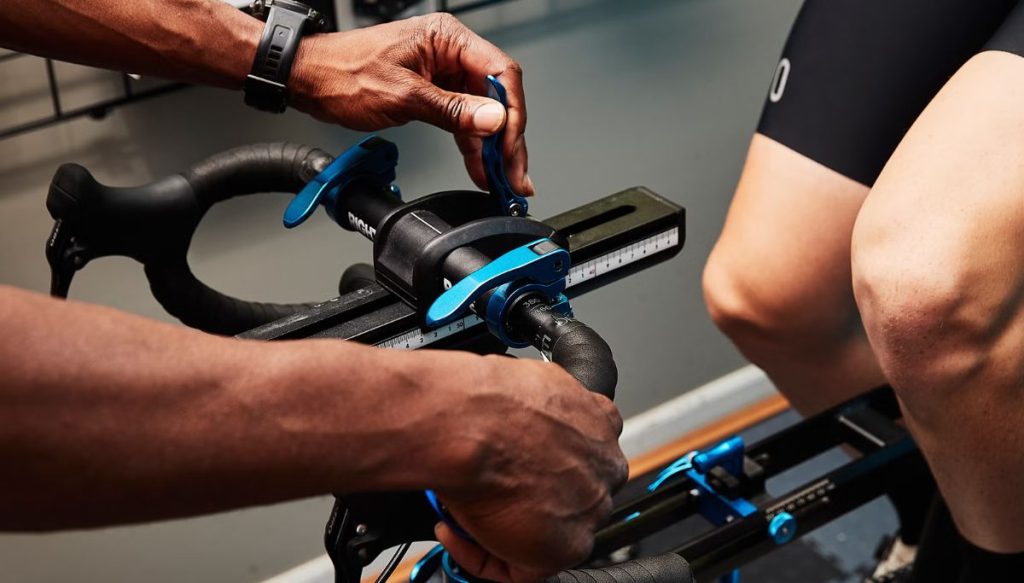
Most people assume they only need a bike fit when things have become excruciatingly uncomfortable. But adjusting your position on the bike can help you pedal more efficiently, support your body if you’ve gained or lost fitness, and allow it to heal better from a nagging injury. Here are seven common reasons to consider making tweaks:
You Bought a New Type of Bike
Your measurements on one type of bike won’t translate perfectly to a new bike. “Especially when going between different cycling disciplines, the optimal angles will change,” says Willie Swift, a bike fitter at Human Powered Health. He adds that the maximum extension is going to be slightly larger with a time trial bike, for example, than with a road or gravel bike, because you don’t typically need the ability to be super-nimble in your handling. “And some mountain-bike bars will mean a very different way of holding your upper body, compared to the drop bars on a road bike.”
Your Strength Or Mobility Has Changed
Any change in strength, mobility or flexibility – whether from a new gym routine, yoga practice or an injury – can be a reason for a bike-fit adjustment. Swift points out that if you’ve improved your mobility, you may be able to get more aggressive in your position, folding a bit lower over the handlebar to improve aerodynamics. Similarly, if you’ve improved your core strength, you may also find it easier to stay in a low, more aero position for longer.
If you’re injured and lose mobility, that can change your fit needs as well. “Imagine trying to touch your toes with tight hamstrings,” says Alyssa Hillaby, a registered physiotherapist and bike fitter. “Every time you reach the bottom of your pedal stroke, as you’re bending your trunk to the handlebar, you’re essentially doing that same forward fold motion.”
And although your legs are doing the pedalling, think about your body as a whole, Hillaby explains – meaning a lack of mobility in one area can affect the entire in-ride feeling. “A common one we see is a herniated disc or other back injury that’s making sitting on the saddle intolerable. Back injuries can even physically change your torso length, which can require a new fit. Usually, we say that a bike fit lasts for around two years. If you think of yourself two years ago, your mobility and strength are different to what they are now.”
Dealing With An Injury
You may be able to ride through minor injuries or even after some surgeries, assuming you’re cleared by a doctor or physiotherapist. But you may need a new fit to get comfortable.
Once you’re back to your old self again, the fit that was more comfort-focused and allowed you to keep riding may no longer be optimal. “Your bike and your bike position should reflect you now, in this current moment in time,” says Swift. “Recovering from the injury is just as impactful as the injury itself – sometimes, we’ve made adjustments to the bike fit that were good during the recovery process, but may be holding you back once you’re recovered.”
This is particularly important for injuries that have necessitated adjustments to one side of the bike and body. “You might have made a positional change to let an injury heal, or to address an asymmetry,” Swift says. “Over time, with that new position, you might be able to heal that asymmetry; and then, all of a sudden, you’re not riding the same as you were when you made that correction.”
In cases like this, where you expect to improve, it’s good to have a fit check-up every six months to a year.
Major Change In Weight
Your weight – and where you carry it – can dictate the angles you’re able to hold on the bike. If your midsection gets bigger, you may need to ride in a more upright position for extra belly room. If it gets smaller, you may be able to bend over the handlebar a bit lower and move into a more aggressive, aerodynamic position.
Don’t be surprised if things that seemingly shouldn’t change with weight loss (or gain) suddenly feel different. Hillaby notes that with significant weight changes, you may need to swap out your current saddle. You may have felt fine on a cutout saddle, for example, but if you lose significant weight, it may start to cause chafing.
Riding Postpartum
The alignment of your pelvis and your comfort while sitting on the bike may change a bit after giving birth, which means the saddle that felt great before may now feel a little ‘off’. You may also have lost some core strength, which can cause you to put more weight on the handlebar.
“Because cycling tends to be something that women can get back to relatively quickly postpartum, it’s even more important to make those fit adjustments,” Hillaby says.
Feeling ‘Stuck’
If you feel like you’ve plateaued in terms of the watts you’re able to hold, or you’re not able to pedal as hard as you’d like to, a bike fit may help improve your efficiency. “We never claim that a bike fit is going to increase your power, but you might have an easier time maintaining that power,” says Hillaby. “A cyclist came in once, and we moved his seat up six centimetres! While his power didn’t change, he was able to hold his previous 20-minute power for a full 40 minutes.”
“Your on-bike position does have a pretty big impact on the amount of power you can produce.”
Swift agrees – though he notes that a bad bike fit can certainly sap you of your ability to use the power you do have, so a proper fit may actually increase your watts in some cases. “Your on-bike position does have a pretty big impact on the amount of power you can produce, how long you can maintain it, and which muscles you’re using the most,” he says.
You Just Don’t Want To Ride
Cycling culture tends to reward toughness – you push through the pain; you tell your legs to shut up. But Swift says these small issues causing pain and discomfort aren’t always meant to be ‘pushed through’. Often, they can be addressed, so you can improve your fitness and actually enjoy the ride.
“It’s important to listen to our bodies, and furthermore, listen to our emotions,” Swift says. “A good indicator that it might be worth checking your position on a bike is when you start having a sense of dread or disinterest in riding. Sometimes there’s a small tweak to your fit that completely changes how the ride feels.”
READ MORE ON: BIKE FIT