30 Years in Cycling Tech – This is the Gear Worth Buying
I've been a gear editor for 30 years. Here's what is – and isn't – worth your money.
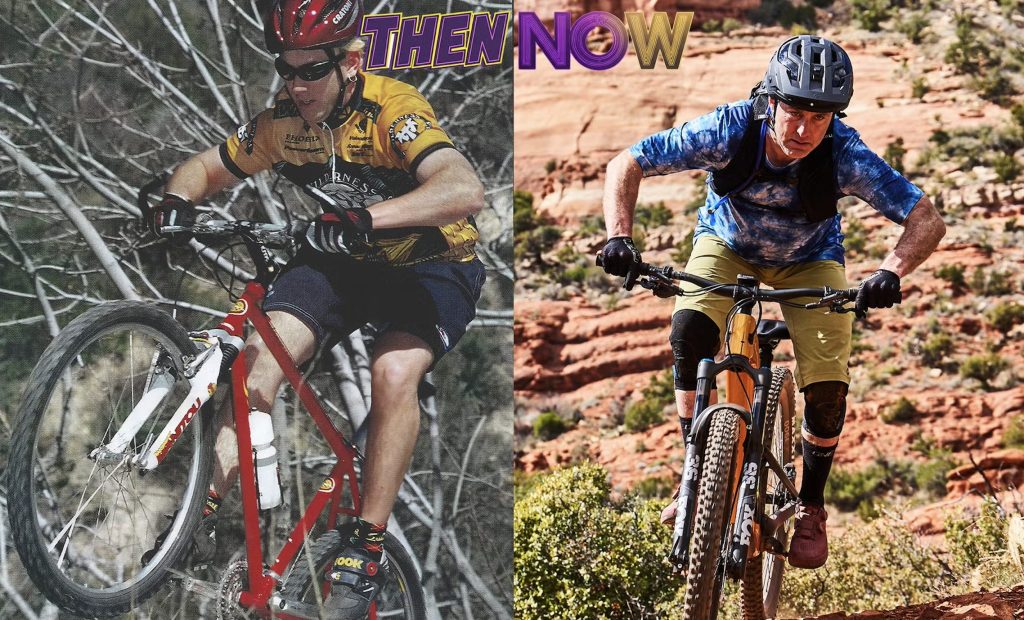
In my time, I’ve ridden thousands of bikes and used countless other cycling gear items. Everything from mainstream stuff to the fruits of one person with a big idea and bigger dreams; weird stuff that didn’t work, and some that did; cheap gear and some that was unfathomably expensive.
All that time and experience has taught me many things about cycling gear and myself, what works, and what matters. And I’m going to share some of those lessons with you now. Here are the pieces of cycling equipment I’ve learned are worth splurging on, as well as the stuff that is not.
The Stuff I Splurge On
BIKE FIT
I spend hours and hours on a bike, and I want every minute to be as comfortable and fun as possible. For a long time, I used the fit I developed by listening to my body, and that worked okay, but it always seemed like there was more potential than I could find on my own.
A professional bike fit unlocked that potential. The fitter made a series of adjustments that led to noticeably better performance and comfort. My new, better fit was especially noticeable on long rides and after unbroken blocks of riding.
But bike fits aren’t one-and-done. Ten years after getting my last fit, I went through a new fit consultation, which, like last time, resulted in a handful of tweaks that have already paid dividends.
MAINTENANCE TIME AND TOOLS
I pay attention to my bikes as I ride, listening for new or strange noises and noticing if the bike starts to feel or handle differently – indications that something needs attention.
By splurging on maintenance time, I usually find and address issues before they become a problem on a ride, so my bikes are always running fast, smooth and quiet; they last a long time, and I don’t encounter nagging issues.
I recommend investing in good tools, especially a torque wrench. High-quality instruments last longer and are less likely to damage delicate parts.
TYRES
High-performance tyres are magical. At the right pressure, they make your bike faster and smoother, and they grip better, so you can ride more comfortably and confidently.
Considering they’re one of the cheapest pieces of cycling hardware, good tyres have the greatest ratio of performance gained per rand spent. So, yeah, I’ll happily spend nearly a thousand bucks per tyre for the Pirelli P Zero Race TLR RS, or the Vittoria Mazza Enduro.
GOOD BEARINGS
The thing about bearings is that they get worked hard every ride, which is why they’re the bike’s most maintenance-intensive parts – after chains, cogs and rings. And they’re buried where it takes work to reach them for service.
That’s why I’ll pay more for good bottom brackets, headsets and hub bearings (and pivot bearings on a mountain bike). And I’ll make sure the frame surfaces where the bearings reside are properly prepared.
Good doesn’t mean spending crazy money for ceramic bearings that advertise ‘forever’ spins. But it might mean investing in Chris King stuff, Enduro MaxHit products, or CeramicSpeed SLT bearings – the money and effort spent on installing good bearings will pay off in the future.
WHEELS
Forget the latest drivetrains and ‘upgrades’ like oversize pulley wheel systems: if you want a bike to feel and perform better, invest in a great wheelset (wrapped with great tyres, of course).
I’ve found that putting a light and stiff wheelset on a lower-tier frame results in a better overall package than the reverse. And you don’t need to spend R100k-plus on something ridiculous like a set of Lightweight Obermayer Evos; there are plenty of sub-R20k wheelsets that kick ass – including Lyne, Hunt, Bontrager and others.
For my mountain bikes – except maybe an XC race bike, where weight is a top concern – I prefer the feel of a good aluminium wheelset like the RaceFace Turbine or the DT Swiss XM 1700 to that of a more expensive carbon wheel.
BIB SHORTS
I don’t shop for cycling shorts by price; I focus on fit and comfort. My favourites are often a brand’s mid- and lower-tier models, like CIOVITA’s Corsa 2.0, Enjoy’s ProXision and RH77’s RACE 7.7. Admittedly, some of these are still expensive (look out for sales), but one pair of great bibs is worth more than a hundred pairs of ill-fitting and poorly designed shorts you bought just because they were cheap.
COLD- AND WET-WEATHER GEAR
When it comes to gear for inclement weather, investing in high-quality products makes a huge difference – potentially, between a great ride and a dangerous ride.
In this space, name-brand technologies like Polartec, Gore-Tex, Gore Windstopper and eVent are usually worth paying for. For insulation, I seek out products that use Polartec Alpha and PrimaLoft.
HELMETS
Try on as many different options as possible, and pay for the one that feels best. You’re not going to regret paying an extra R2 000 for a lighter, better-ventilated and better-fitting helmet. And as with bib shorts, it’s often the mid-priced stuff that impresses me the most.
So, while a R4 900 Specialized S-Works Prevail is a superb helmet, so is the brand’s R2 900 Search. But if I tried on both and the Prevail felt better, I wouldn’t hesitate to buy it. Put your comfort and safety first, not your wallet.
The Stuff I Save On
DRIVETRAINS
Unless all you care about is weight or flexing, there’s no reason to buy a top-of-the-line drivetrain. The key technologies that influence performance are usually the same in a third-tier group as they are in a top-tier group. Skip the Shimano Dura-Ace Di2 or SRAM Red AXS and get the Shimano 105 Di2 or Ultegra Di2, or SRAM’s Rival AXS or Force AXS. (Or – heaven forbid! – a mechanical set-up.)
While it’s true that drivetrain brands introduce their newest features and designs in their top-of-the-line groups – hood shape, brake revisions and a micro-adjusting front derailleur in SRAM’s new Red AXS, for example – these things trickle down to the lower-priced groups eventually.
HIGH-END CARBON ROAD FRAMES
While I’ll always encourage people to spend as much money as they want on a custom frame from a small builder they love – like David Mercer – I don’t feel the same about mass-produced carbon frames from mainstream brands.
I have two main reasons for this. For one, carbon frames, especially race-oriented ones, tend to evolve so quickly that the latest/lightest/fastest/coolest frame can only claim to be so for a few months before it’s supplanted. Second, when a company offers multiple tiers of carbon frame, the top-of-the-line is usually a lot more expensive but only fractionally lighter.
“The extra money brands charge for their premium frames is in no way justified by the extra performance they offer.”
As I see it, the extra money brands charge for their premium frames is in no way justified by the extra performance they offer. And this is clearer than ever as brands like Elves and Winspace start to gain traction with frames that boast impressive performance but are half (or even less) the price of a top-end Trek Madone, Specialized Tarmac or Cannondale SuperSix Evo.
PEDALS
There’s no real reason to buy the top-of-the-line pedal in a brand’s range. You’ll get the same performance – because they use the same cleat – from a cheaper pedal from Shimano, Look, Time, Crank Brothers or Speedplay.
Plus, many brands use a titanium axle on their top-of-the-line pedal, which is less stiff than a steel axle and often has a lower rider weight limit.
CYCLING COMPUTER
Cycling computers have been good for a long time, and their main features haven’t changed in years. Still, to convince you to buy something new and expensive, brands add fancy-sounding features that often turn out to be not as useful as promised, helpful only to small numbers of people, or needed only in uncommon circumstances.
For daily use, I need a computer that connects to GPS and a few sensors, displays the few metrics I want to see while I ride – time, elevation and power-related stuff – and records my ride data so I can view it later. I never use a computer’s workout tools (I find workouts more practical to do indoors on Zwift, for example). And I hardly use the navigation tools; when I do, the most I usually need is ‘turn left’ or ‘turn right’.
I don’t need seven thousand ride or bike profiles; I don’t need my computer to respond to a text for me; I don’t need it to tell me I’m riding into a headwind; and so on. The only newer feature I might want is compatibility with a radar for increased safety, which is just a sensor profile and a data field anyway.
Most of what the R10k to R15k computers offer is simply not useful or needed. The GPS cycling computers with all the tools I need (and way more) for my everyday rides include the Garmin Edge 130 Plus (about R4 500) and Wahoo ELEMNT Bolt (about R4 600).
Senior Test Editor Matt Phillips has ridden thousands of bikes and used countless pieces of equipment during his career – everything from mainstream gear to weird stuff that didn’t actually work. No matter how cheap or unfathomably expensive, all of it has taught him lessons about what matters.
READ MORE ON: Cycling Gear gear