
2025 CT Cycle Tour Winner, Tyler Lange is Making His Own History
An interview with Tyler Lange (21), winner of the 2025 Cape Town Cycle Tour
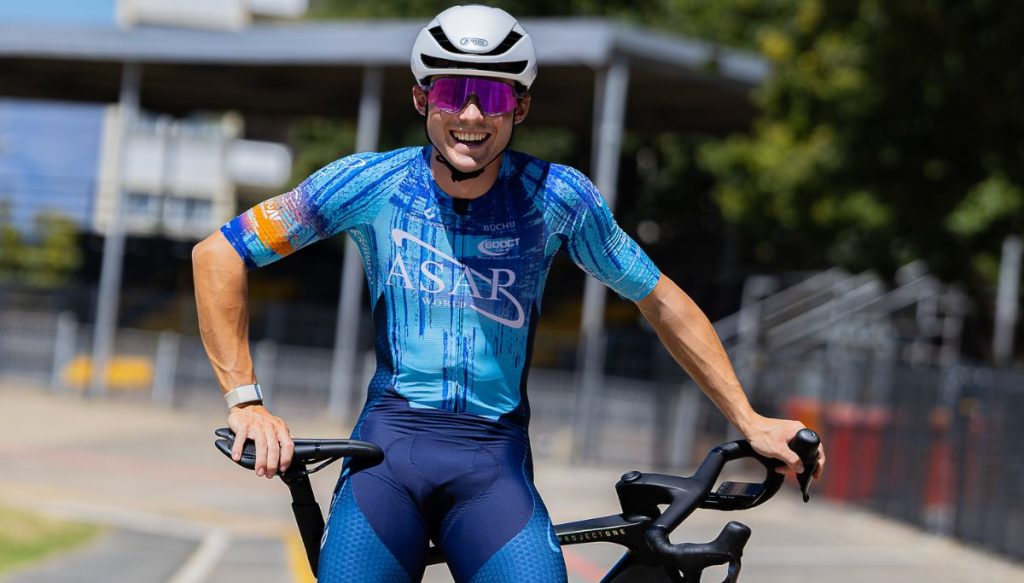
Tyler Lange doesn’t struggle with the weight of expectation.
As the son of Malcolm Lange, Tyler would be excused for choosing another path in life rather than that of a professional cyclist. Malcolm, now 52, has won everything there was to win in South African cycling: 403 victories, three national titles, three Cape Town Cycle Tours, etc. He rode in the Barcelona Olympics in 1992, and was regarded as the premier sprinter in South Africa for more than a decade.
So, when 21-year-old Tyler pulled off a remarkable come-from-behind sprint to win the 2025 Cape Town Cycle Tour in 2:25.48 – and break Robbie Hunter’s 17-year-old course record in the process – every headline announcing the win drew comparisons between Tyler and his legendary dad.
We caught up with the Langes at the DSV Shift Academy in Paarl, which Malcolm runs to develop young talent in the Boland area.
What was it like growing up with a father who was probably the most successful rider of his generation?
TYLER: Most kids grow up with a dad who goes to work nine to five, and to them, that’s normal. For me, it was normal for my dad to be out at 5am and then pick me up from school when he came back from training. So I really understood the training side from an early age
How have you managed to handle the pressure of living up to the Lange name?
T: I never thought of it as pressure. For me, I just did my own thing. But of course, there’s always the questions: ‘Are you gonna beat your dad’s records? Are you gonna win as much?’ We’re two completely different people. But obviously… in South Africa, Lange’s a big name in cycling. So, there’s the good and the bad that comes from it.
Your dad has told us that he and your mom tried to discourage you from cycling seriously because of all that expectation, but it seems that you loved cycling from an early age?
T: Yeah, I’ve always loved riding bikes. Every holiday, I had to have a bike; and even if we went to watch my dad, I would come back and want to ride. It didn’t matter what kind of bike it was, just as long as it was a bike.
MALCOLM: I remember where it all started. We lived in a small complex in Joburg when he was young, and we had a short driveway. He must have done thousands of kays just in that driveway, emulating finishes.
But it’s fair to say that you probably learnt a lot about cycling just by virtue of being around your dad?
T: I think people always say, ‘Oh yeah, you can win a Cycle Tour because your dad knows how to do it.’ But it’s one thing listening to how to do it, and another actually doing it.
When did you realise you may have inherited some cycling talent?
T: It was always a dream to be good; and even when I was racing track as a 12-year-old, I pretty much won everything. But at that point you run purely on talent. It’s when you get older that you start to understand the tactics of road races, and because I’d spent so much time in team cars when I was young, I guess I understood racing quite well. Eventually, you get to a point when you start to get beaten, and you think, ‘Okay, now I need to try this training thing a bit more.’
You’ve worked with legendary South African coach Barry Austin for six years now. What’s that been like?
T: I’ve only really started getting big power in the last two years. Literally every week I’ve been getting better numbers, and working with Barry is amazing. Barry worked with my dad’s team, but we didn’t go the same coaching route until I was in Grade 9. My dad didn’t want me to have a coach too early, because guys get bombarded with numbers they don’t understand. And when you’re young, you want to enjoy the sport for what it is.
Obviously my dad always gives me pointers and advice and things like that, but it’s tricky. At the end of the day, a coach is there to push you hard, and a dad is there to be a dad. It’s not the same.
Both my parents – and Barry – also encouraged me to get my matric done before I started thinking seriously about cycling. He’d tell me that you can’t focus 50-50, so it’s better to get your schooling done properly before you focus on riding. My Dad knows how hard the sport can be, and that it can end at any point with a crash. You need to have your future in mind beyond cycling.
Yeah, your dad knows all about those long, lonely hours when you’re training!
T: It’s a hard sport. Training-wise, it’s crazy. You have to train through the December holidays, which is not fun when everyone else is relaxing. There are way more bad days than good. I mean, winning the Cycle Tour was good; but I probably had a hundred bad days before that.
Before your win at the Cycle Tour, you had some great results at the Tour du Cap, where you won two stages, won the Sprint Classification, the King of the Mountains jersey…
T: My main goal was the Cycle Tour on the Sunday, so I didn’t aim for the overall GC because I wanted to have easier days. But winning the stages and grabbing the jerseys was a real confidence booster, and I felt that I had good legs at the Cycle Tour.
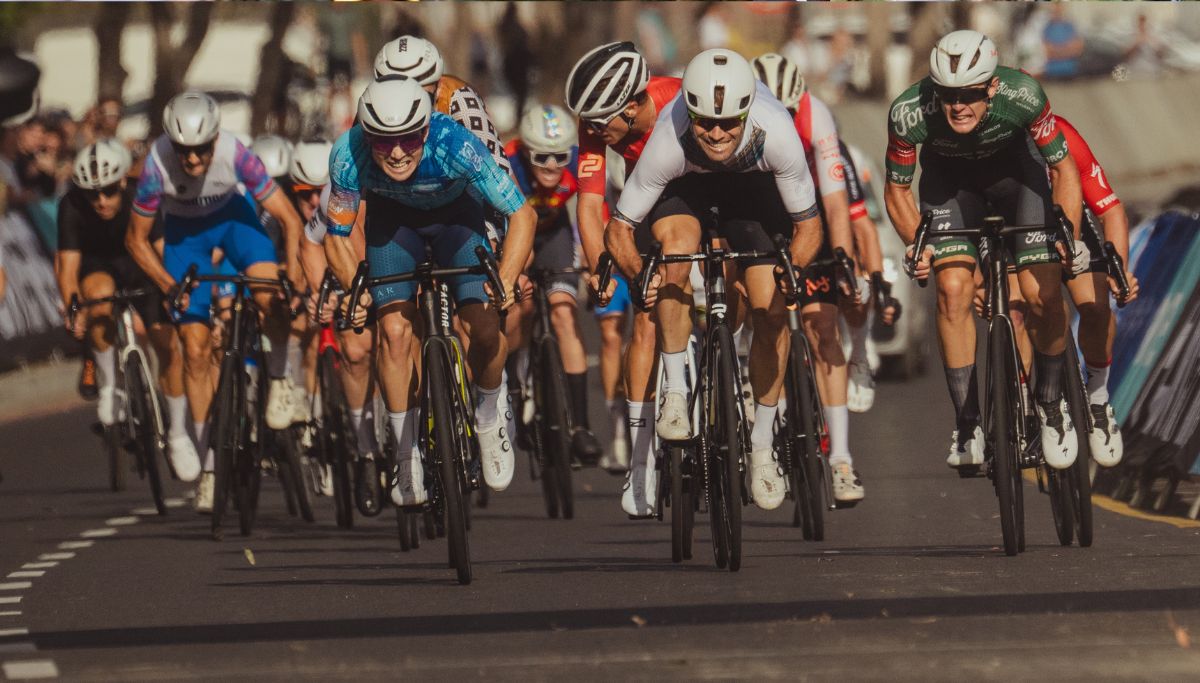
That final sprint to win was crazy, with the lead car getting in the way and you guys only catching the breakaway 300m from the line.
T: Yeah, it was crazy fast. The last 4km, we averaged just shy of 60km/h. It was nuts. I kind of just gambled because I did think it would come back, although I didn’t think it would be so late in the race. The car stalled us a bit and we had to go around it. We didn’t know if it was going to go left or right.
Reinardt [Janse van Rensburg] attacked from a long way out, which he often does, and that caught me off guard for a bit. It felt like it took ages for me to get on his wheel, and I eventually managed to get around him at the line.
Malcolm, when did you first hear that Tyler had won?
M: I was out on the course, and one of the spectators shouted, “Your boy won!” But then I thought, “I’ve got two Academy kids in the race too, so maybe it’s one of them?” I stopped and asked him, and he confirmed it was Tyler. The tears just welled up. It was the weirdest feeling, because you know how much he’s been through to get there. And I know you need a bit of luck to fall your way, too!
T: After the race, you know what it’s like with the media – it’s crazy, and then you have to go to doping control. I came back from that and was doing interview after interview; and midway through one of them, my dad walked in after he’d finished an interview of his own. It was a very special moment – I think there’s a video of it somewhere.
M: I just wanted to give him a fat hug, because I knew what he was feeling.
Malcolm, you grew up in an era of cycling rife with drugs. It’s always going to be an issue in the sport – how do you handle the thought that some riders may still be cheating, and affecting Tyler’s future prospects?
M: It was tough back then, which is why I turned my back on Europe. Guys are always going to try something, especially with the amount of money in the sport.
I still believe club level is actually the worst, because there’s less doping control and testing. In places like Belgium, you ride some of the crits there and they’re crazy fast; then you go to a Continental race, which is supposed to be two levels higher, and it’s half the speed. But I do think it’s better at the top level now than it was back then.
What’s the long-term dream for Tyler?
T: I want to win stages in big races in Europe. I’m not an overall, GC kind of rider – that’s not my forte. I prefer to target certain days. Making it to the World Tour would be the dream, but the first goal would be to make it back into a Continental team again.
M: I think Tyler’s a late bloomer. He rode for EF Education’s Continental team in 2023-24. He’s good, but he’s going to have to work for it.
READ MORE ON: Cape Town Cycle Tour interview