
The Local Coder Changing The Training Game
Meet the Capetonian behind Intervals.icu - the pros' new favourite training tool.
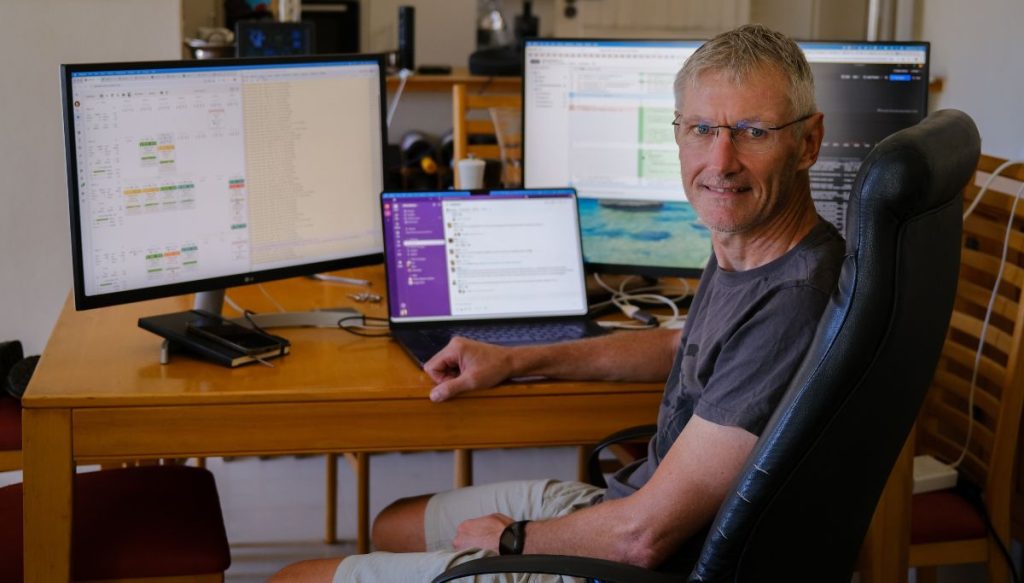
When software developer David Tinker couldn’t find a training app for cyclists that met his specific needs, he did what any good, tech-savvy cyclist would: he built his own. Now, Intervals.icu is a global South African success story, adored by pros and keen amateurs around the world.
Intervals.icu is a global South African success story, adored by pros and keen amateurs around the world.
David Tinker’s cycling origin story is not unique: “I was overweight; and I couldn’t run, thanks to dodgy knees,” he says. “So I took up cycling.”
Tinker quickly realised that he enjoyed the sport of cerebral men and women worldwide, specifically the early gains of the beginner cyclist. “What I loved about cycling from scratch, and what I think is great about the sport, is that when you start from nothing, your immediate gains are quite profound. You get better and better with every ride.”
A few years into his cycling progression, when gains started to become marginal, Tinker wasn’t getting what he wanted from the common training platforms. So he developed and built Intervals.icu, a platform now used by professional cycling teams and a growing fanbase around the world.
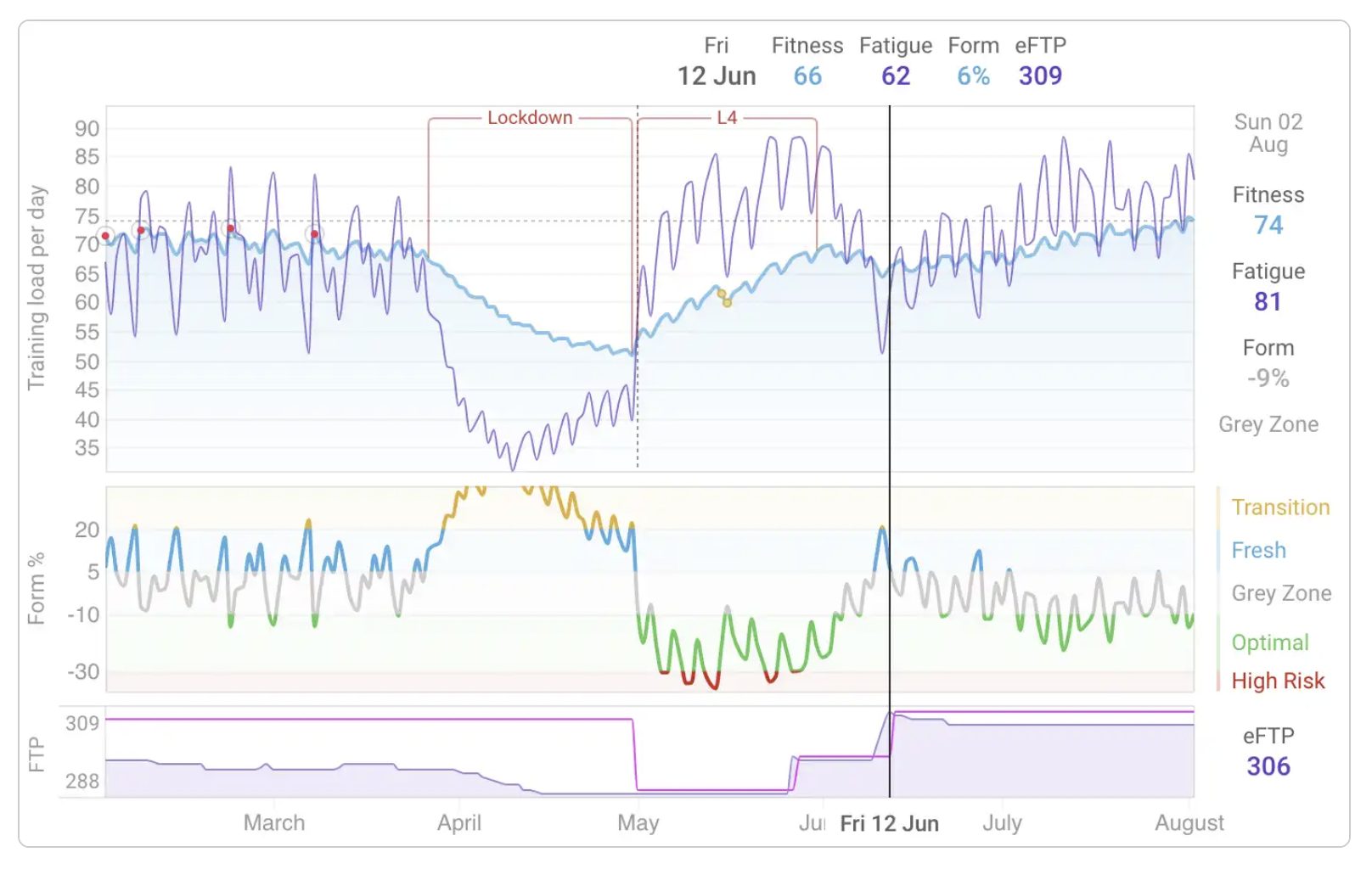
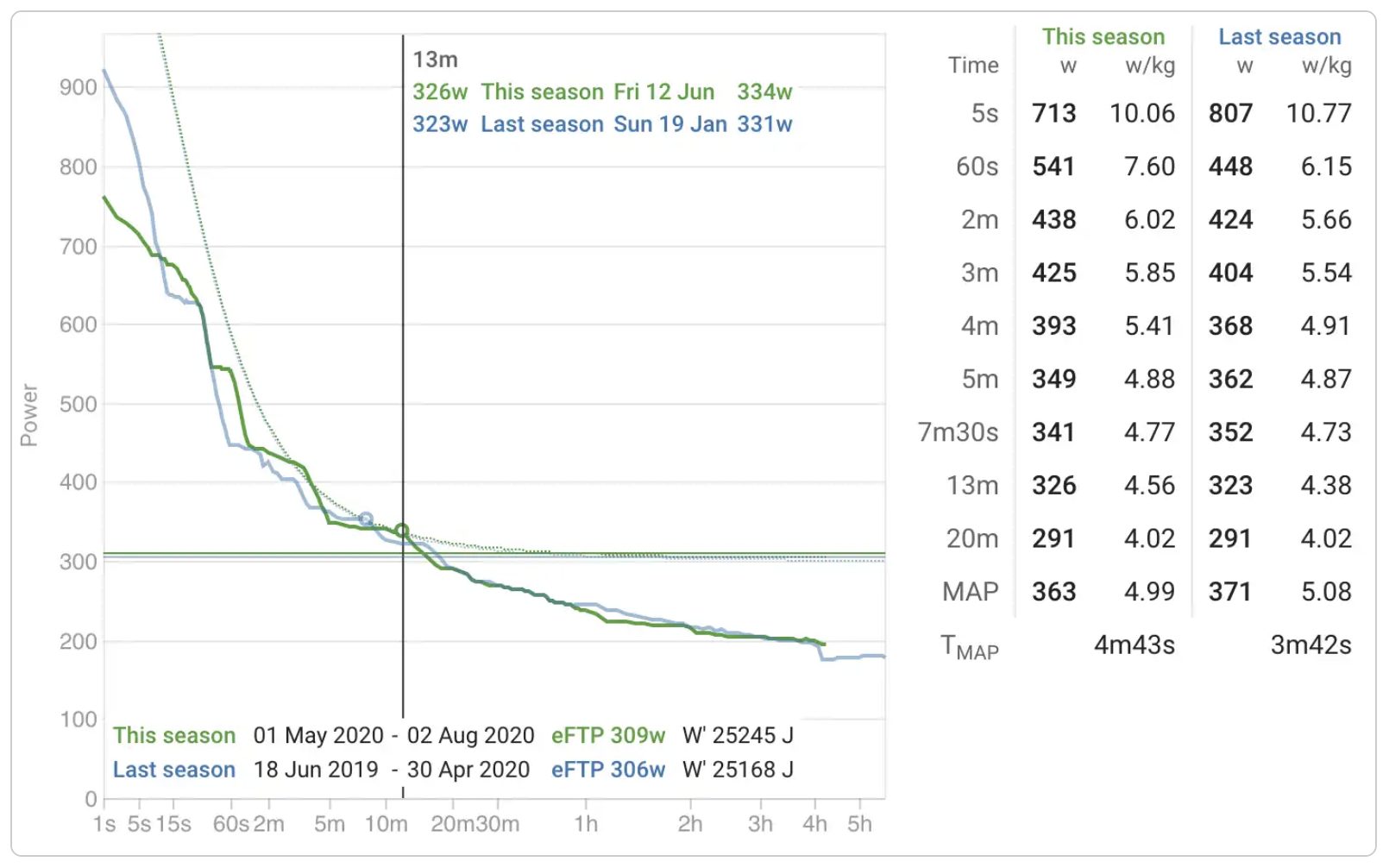
Unlike Strava, which tends to be more social in nature, Intervals provides deep performance analysis, training load modelling (fitness, fatigue, form) and advanced metrics (detailed power curves, interval detection, training load and zone data) that many other mainstream platforms don’t offer natively.
We sat down with Tinker at his home in Vredehoek, Cape Town, to find out what Intervals is all about.
What type of athlete is Intervals.icu for? It’s an online platform for endurance efforts. You can use it for any sport, but it’s best for cyclists and runners. It has a lot of analytics and planning features, which really dig into the data, and hopefully make you better at cycling or running.
Where did the inspiration come from? Well, I’m a software developer, and I started cycling when I was about 35 – so, 20 years ago. A few years back I needed a new project to test out some software to use at work; so I thought, ‘Let me write something that plugs into the Strava API.’ [application programming interface].
That was the start. What I really wanted, or needed, was something to analyse torque intervals. So, that’s where I ended up: writing the software and placing it into the Strava ecosystem, to see how it went.
How is Intervals different to platforms like Strava or Garmin? Compared to device-specific platforms like Garmin Connect, Intervals pulls data from everywhere, so you can get all your data in one place and have everything on the same platform. And it’s easy to use, that’s the main thing!
Intervals doesn’t rely on you pressing ‘lap’ during training. Instead, it automatically detects interval efforts after you upload your workout file, based on the data recorded (especially power data from a power meter).
When your activity is uploaded (from Garmin, Zwift, Strava, etc.), Intervals analyses power, time and other metrics to identify distinct efforts (high-intensity segments separated by recovery), and marks those as intervals for the rider. It generates stats for each interval (power, heart rate, cadence, intensity, zones etc.) and groups similar intervals together for comparison.
What was the initial reaction when you launched? I wrote about it on Bike Hub, and then some people started using it. That was a good way to start, because there was a lot of feedback. Then, a YouTube channel – Fast Fitness Tips – did a video on it a few years ago, and it picked up momentum.
I wasn’t sure who the users were back then, because I was just trying to make sure everything was working! The growth and use were quite unexpected.
Are you going global? Haha – yes! At the moment, most of the users come from the United States. Then it’s France and the UK; I think China is up to number five now. So it’s being used all over the world. Intervals is available in 23 different languages, which helps a lot!
Why do you think people are drawn to your platform? Right in the beginning, I did quite a nice interval analysis. The software automatically detected the intervals in a ride, and it would show torque. Plus, I think the platform had a nice calendar feature that worked with Strava to give you an overview of all your training – that was something Strava didn’t have at the time.
I think Strava is great if you want to see what your friends are doing, but I don’t think it’s so good for serious analytics.
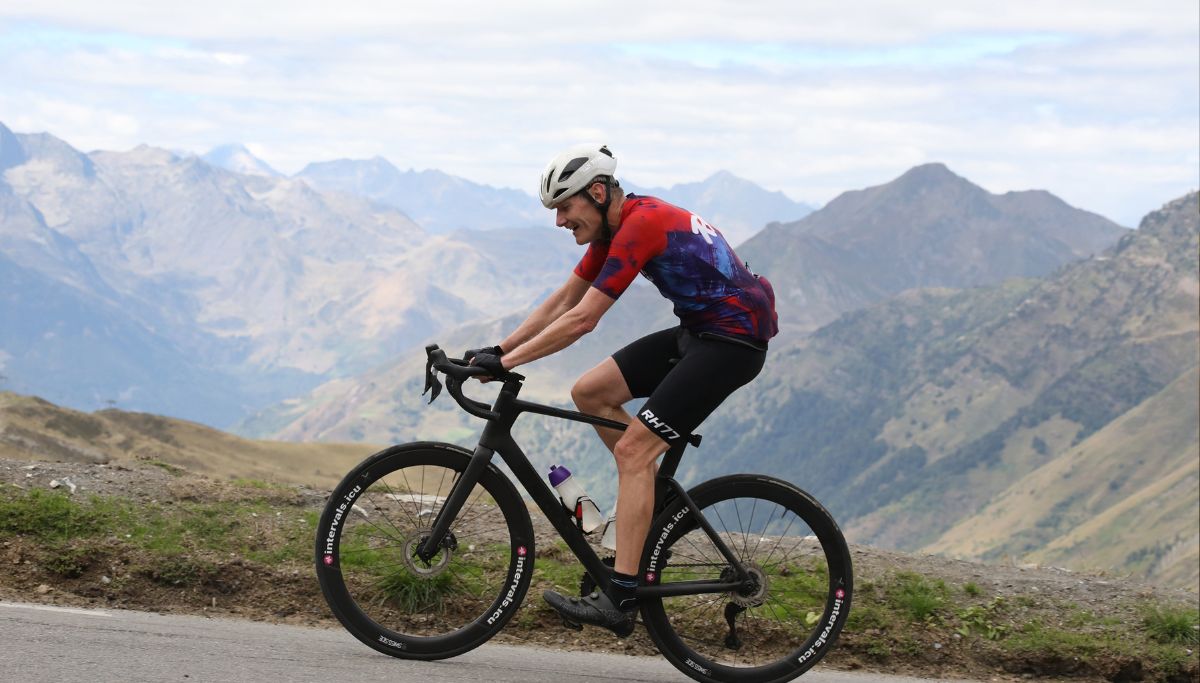
Do you use your own platform? Of course! I’ve had a coach in the past, which was very helpful; but that also comes with a lot of stress, and I need cycling to be my de-stress time.
I don’t have a coach at the moment, and I don’t follow a structured programme – I ride mostly on feel. But I look quite closely at the data on Intervals, and I use that to guide me.
What data are you looking at specifically? For me, for every ride, I look at heart rate response to power, to get an idea of whether I’m fatigued, getting sick, or if I need a break. But mostly it comes down to what my legs feel like… if I decide on an interval session but my legs aren’t feeling it, then I’ll do something else.
But Intervals has a lot of charts built in. You can look at your power-to-heart rate relationship over time, and you can put that on a curve. If the curve is shifting to the right, it means you’re getting more watts at the same heart rate, which means you’re getting fitter. It’s quite a business to clean up the data and make it easy to understand like that – that’s what Intervals does best.
Do you think cyclists are being overwhelmed with too much training data? I don’t think so. You have to find what works for you.
What about people just starting with cycling? How can Intervals help them without drowning them in data? If you’re just starting, you can see your power numbers going up, and you’ll see new power records on climbs. That’s great feedback for people right at the beginning of their cycling journey. Then, from there, you can start using other metrics.
What’s the most important data variable for you? I like to look at the power curve over different durations – a three-minute climb, for example, or a five-minute climb. What you can do for three minutes is quite important if you want to improve. That kind of data really helps if you’re training for the climbs on the Cycle Tour, for example.
Where is data going – can it keep getting more useful, or do we plateau at some stage? People are coming up with more data all the time. One of the new things now is tracking your breathing – basically a heart-rate sensor that also measures how much your chest is expanding. You can see how much you breathe, and in theory, that’s a better measure than heart rate for your zones, because it doesn’t drift as much as heart rate does. There are lots of things like that coming up.
Pro teams like Uno-X Mobility are using Intervals… That’s pretty cool. Definitely – I get nice exposure from some of the elite riders, because they sometimes post a screenshot of a training session from Intervals. Teams like Uno-X Mobility ask for features that are generally not for mere mortals. I build it for them, though, and they use it. Working with them also helps me because I get a lot of good feedback.
A recent request was something quite interesting: based on their feedback, I added completely custom zones as a feature – very, very precisely targeted training zones. So, you don’t get something generic, like ‘Zone 2’, but rather something like ‘Vo2 Max at 420 to 440 watts’. The team will adjust these weekly. Building that type of feature is quite cool.
Why do you think Intervals appeals to these elite teams? Intervals has an open API, which they like because their data science guys can easily go down into the details and do their own secret-sauce analytics, and whatever else needs to be done.
Have you been surprised by how Intervals has been embraced? Yes – well, I was initially; I hadn’t actually done much in the beginning. And then I put a lot of work into it over the years – every evening, every morning, every weekend, every holiday… Once people start using it, you’ve got to make sure it keeps running!
Intervals has already been through three huge changes in the back end – the way the data is stored – just to keep up with the volume. We’re now a team of three, running it as a business.
Is it something that can replace a coach? Yes. If you know what to do! You’ll do better with a coach, but that approach comes with other pressures, and more money.
It’s up to the user. But whatever you choose – coach or Intervals, or both – you still have to do the training!
Has it made you a better cyclist? Yes, I’m getting better… I’ve got less power than I had when I was younger, but I’m faster. I train better now. I know what to do.
And I have a much faster bike!
Why do you think cyclists as a demographic are so enamoured with data? Data allows you to measure performance. Since power meters became cheaper, you’ve got a mostly reliable measure of the effort you’re actually putting in. And then you combine that with your internal load, your heart rate… You learn all sorts of things.
Also, if you’re riding and it’s really windy, at least you can tell if you’re doing 200 watts. Without being able to measure that effort, you just think you suck at cycling if you have a tough day in the wind.
What’s next for Intervals? There are a few projects on the go. We’re building an app and working on an integration with a big watch manufacturer; which will be good for us, as we’ll be one of the first on their platform.
We’ll be releasing an annual training plan-builder shortly. People have been asking us for that for a long time. You’ll be able to pick a target event, as well as side events. You can say how much you want to ramp up, and the planner will give you an idea of how much load, time or distance you should be doing to hit your race target.
Any strange requests? Actually, yes – someone asked the other day for snow shovelling to be added as a sport!
Check it out and sign up
Anyone can sign up to Intervals.icu and use the vast majority of features at no cost. If you love it, you can choose to support the project by paying a monthly or annual subscription, which unlocks certain premium benefits and better integration with third-party apps like Strava. Find out more at intervals.icu
READ MORE ON: interview People tech Training App