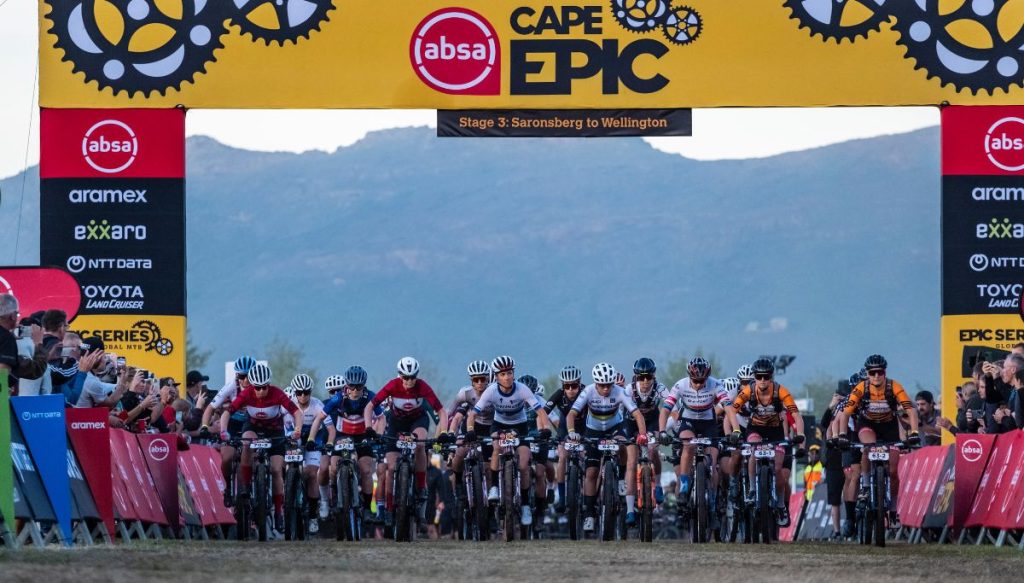
Few races carry the weight, reputation, and influence of the Absa Cape Epic. For more than two decades, it has set the benchmark for mountain bike stage racing – not only through its scale and difficulty, but through a consistent willingness to evolve. In 2026, that evolution continues with a revised format for the Elite Women’s category, one designed to shape how the racing unfolds.
“The change to parity in race time will sharpen the spectacle.”
At the centre of the change is a move toward parity in race time rather than race distance. Instead of covering the same kilometres as the Elite Men, Elite Women will race courses adjusted to align expected winning times between the two categories. The organisers’ thinking is: closer time gaps, more opportunities to attack, and more exciting racing.
Race Director Shannon Valstar describes the shift as a natural step forward. Bringing the women’s race into line with broader norms in professional cycling follows recent milestones such as UCI HC status, prize money parity, and the introduction of separate Elite Women’s starts. In her view, the revised format “will sharpen the spectacle” while better reflecting the competitive depth now present in the women’s field.
Vera Looser, the 2023 Absa Cape Epic champion, sees the change as part of the race’s long-standing identity. “This race has always been the toughest. The one that tests, defines, and inspires,” she says. “But the greatest races don’t just endure. They evolve.”
Photo: Dom Barnardt1
That sense of considered evolution is echoed by six-time champion Annika Langvad, who points to the collaborative process behind the decision. “We were brought into this process by a team who did the work – who asked the right questions, studied the data, and listened to the riders, experts, and industry opinions,” she explains. “We’ve been part of the conversations, and we stand here because we believe in what’s coming next.”
On the ground, the changes will be reflected through dedicated Elite Women’s routes. These will deviate from the general race course where needed, trimming distance to maintain time parity. Point-to-point stages will feature separate remote starts, while loop stages will include deviations to preserve competitive balance. The Prologue and Grand Finale remain unchanged, as their durations already fall within the defined parity framework.
The revised format applies only to the Elite Women’s category. The Open, NTT Masters, GIC Grand Masters, and Toyota Mixed teams will continue under their existing structures.
For Ariane Lüthi, a three-time Elite Women’s and two-time Toyota Mixed Category champion, the intent behind the changes is clear. “This isn’t about softening the race – it’s about sharpening the spectacle,” she says. “It’s about parity, fairness, and creating a competition that lets women perform at their absolute peak.”
Beyond race tactics and timing, there is a wider ambition at play. Candice Lill, a five-time Absa Cape Epic silver medallist, sees the revised format as an opportunity to broaden the field and deepen competition. “This is how we grow the field. How we invite more women from more disciplines and more countries to this start line,” she says. “This is about raising the level, deepening the rivalries, and pushing the sport forward for years to come.”
With enhanced broadcast coverage planned for the Orange CIOVITA jerseys and a format designed to keep racing tighter throughout the week, the 2026 Absa Cape Epic opens a new chapter for the Elite Women’s race – one that invites fans to watch closely as the effects of shorter stages play out on the trails.
What are your thoughts on the changes to the Elite women’s race? Join the conversation on Facebook or Instagram.