
How To Descend Safely & With Confidence
Learn the secrets to confident, thrilling descents every cyclist should know.
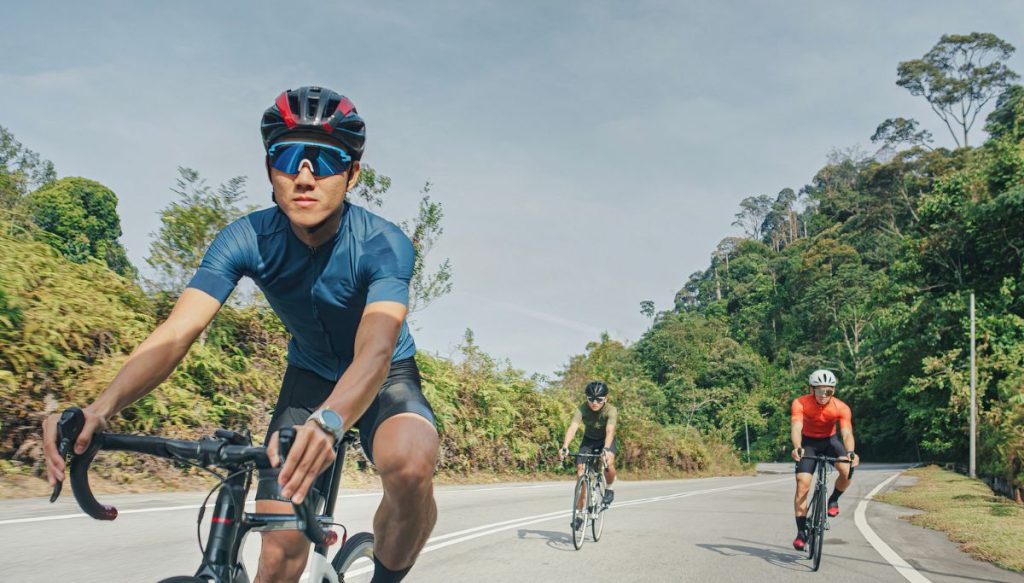
Even if you typically ride on a relatively flat route, at some point in your cycling life you’ll soar down a hill with a sense of flight and speed. And while there’s no ride like a solid climb, what goes up, must come down.
Riding downhill does require some skill, though, and learning the tips and tricks it takes will help you take on descents with confidence. So here’s everything you need to know about how to ride downhill on a bike — whether you’re riding dirt, gravel, or the road.
The Best Tips on How to Descend With Confidence
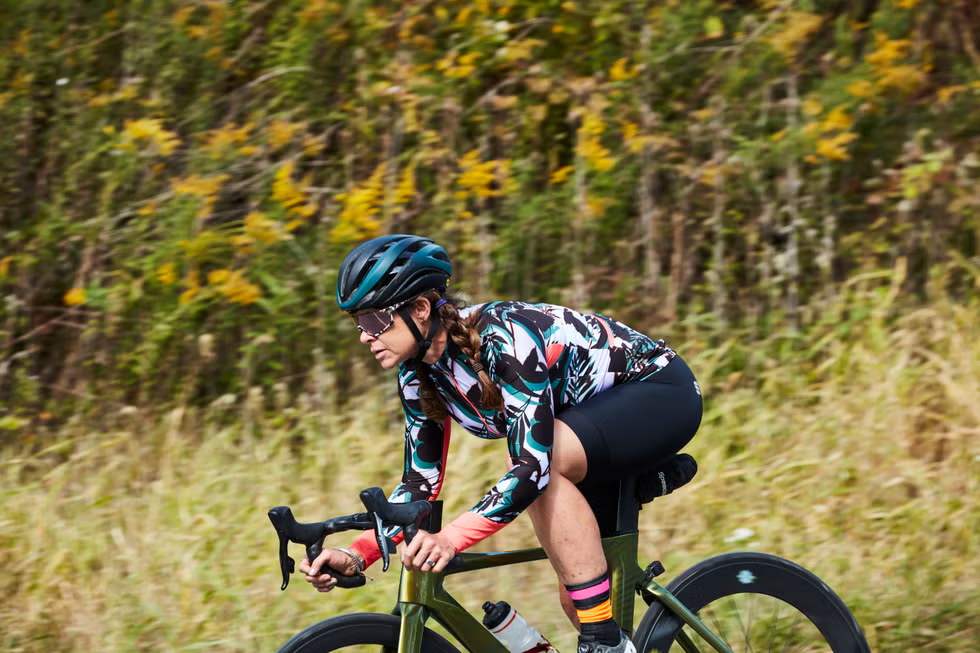
Adjust Your Position
If you’re on a road bike (or gravel bike with drop bars), place your hands in the drops. When your hands are on the lower part of the handlebars, your centre of gravity is closer to the ground. Also, your weight will be more evenly distributed between the front and rear wheels, which helps maintain traction, especially during braking and turning.
“The biggest mistake I see people making is being completely tense and rigid.”
“The biggest mistake I see people making is not being in an athletic position or being completely tense and rigid. You can’t get a bike to do cool things if you’re rigid,” says Lee McCormack, author of Mastering Mountain Bike Skills and several other books on bike handling.
For trail riding, McCormack says it’s important to get into an athletic stance versus treating your seat like a cushy recliner and cruising all the way down.
“Push your butt back and hold your torso level,” McCormack says, comparing the position to the one you make in a deadlift. Hinge at your hips and use your glutes, not your quads. “All of the weight should be in your feet and your hands should be completely weightless,” McCormack says, adding that this stance will allow your gravel or mountain bike to essentially float underneath you while you make tiny adjustments.
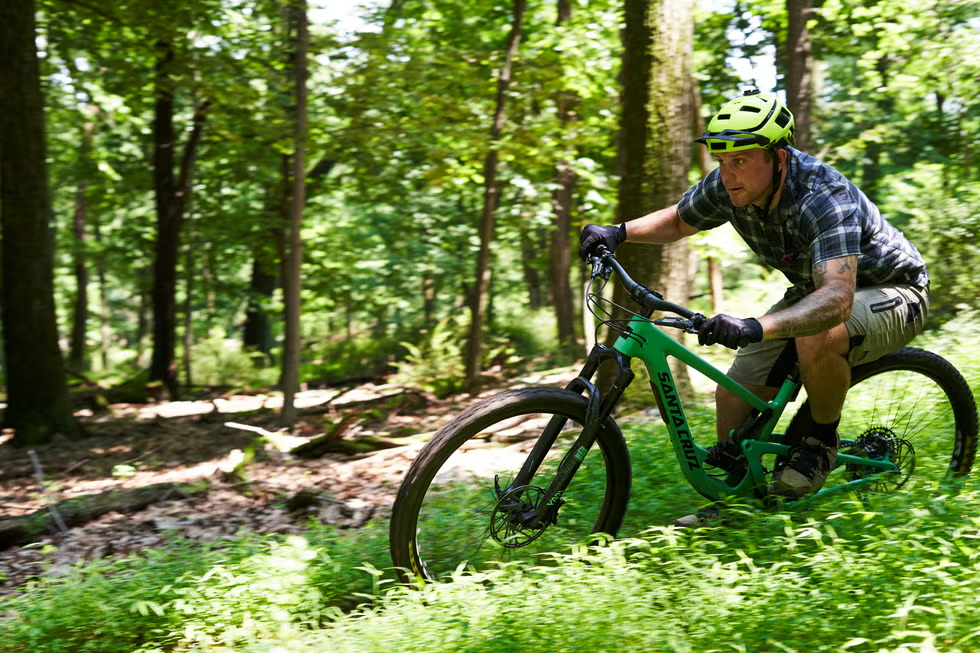
Look Where You Want to Go
Regardless of riding surface, your eyes should scan ahead and look for any possible danger signs, so you have time to react. You’re looking for problems in the road, cars, other cyclists, and pedestrians, as well as the unexpected on trails, including branches and roots.
Your goal should be to never be surprised by trail and road obstacles. “If you come up on an obstacle on the trail without realising it, that’s your mistake; that’s on you,” says McCormack, who has raced downhill and knows a thing or two about riding too quickly. “You have to ride at a speed that’s within your vision,” he says, meaning that if your brain and body can’t process what’s coming up on the trail before you’re on top of it, you need to slow your roll.
You need to keep your eyes on the exit, which will help you carve a smooth, steady line all the way through. Likewise, if you want to get faster, don’t pedal harder; instead, practice looking farther ahead. “The farther you can look out in front of you, the faster you can ride,” McCormack says.
Don’t Stress Out
It’s good to be alert and aware of the dangers of going downhill—but letting them rule your mind is a problem. “I’m not sure if ‘ironic’ is the right word, but it is exactly that tension and focusing on all the things that might go wrong that will draw a rider toward the scenarios they are afraid of,” coach and exercise physiologist Jesse Moore tells Bicycling.
Case in point: You tend to steer toward whatever you’re looking at, so if you’re fixated on that pothole, you may just end up bouncing across it.
The solution: Take a deep breath before the downhill, ride well within your comfort zone (more on this in a bit) and remember, this is supposed to be fun! “If you wanted to be stressed out, you might as well go to the office,” says McCormack.
To help stay relaxed, start at the top of your body and let go of tension. Keep breathing, open your mouth to unclench your jaw, drop your shoulders, bend your elbows, release your death grip on the bar, uncurl your toes, and let your feet lie flat on the bottoms of your shoes.
Still find yourself struggling with bike anxiety? Avoid big downhills while you practice on easy grades, or find a local bike-handling expert or coach to help you, says McCormack. If that doesn’t help, consider enlisting the expertise of a sports psychologist.
Brake Early, But Not Often
The biggest mistake people make descending: They wait until they’re in the middle of a turn to brake. Instead, scrub speed before the turn. If you have to brake in the turn, you didn’t slow enough to begin with.
“When you do brake, brake emphatically and with intention,” says McCormack. Then let go and allow your bike to travel unencumbered through the tricky spots like rock gardens or rutted sections.
READ MORE ON: descending Skills