
The Five Rules of Carbo-Loading
There are quite a few misunderstandings about carbo-loading. Here are five rules to help you fuel like a pro.
1 Do not carbo-load for the whole week
When you eat carbohydrates that you don’t use immediately, they’re stored in your muscles as glycogen. However, you can only store a limited amount of glycogen.
Research shows that it’s enough to increase your carbohydrate intake only on the day before a long ride or race.
If you eat extra carbohydrates every day starting Monday, for a race on Saturday, a large part of those sugars will be stored as fat. Before you know it, you could be standing at the start line weighing a kilo or so more.
Research shows that it’s enough to increase your carbohydrate intake only on the day before a long ride or race.
2 Don’t load up on fatty foods
During cycling, your body always burns a combination of carbohydrates and fats (and a very small amount of protein). The higher the intensity, the greater the proportion of carbohydrates used.
After about one or two hours of a hard ride, your glycogen stores will be significantly depleted. If you don’t replenish these during the ride, you’ll have to reduce your intensity considerably. Your body will increasingly rely on fat as an energy source.
However, you don’t need to load up on fat before the race. We all have enough fat stored to cycle for several days in a row. A little fat and protein in your meals the day before the race is fine, but eating something like an extra-large bag of slap chips won’t help you the next day.
3 Expect to gain a little weight
Glycogen binds to water in your body. For every gram of carbohydrate you store, you also retain about 4 grams of water. If you carbo-load effectively, you might weigh a few hundred grams more on the morning of your big event.
However, this isn’t extra body fat. During exercise, when the carbohydrates are released and burned, the extra water will actually help you.
4 Pancakes, pasta, pizza… Go for it!
To fuel optimally, research shows that the day before the ride you need 7-10g of carbohydrates per kilogram of body weight. Consuming less means you won’t fully replenish your glycogen stores; consuming more increases the risk of stomach and digestive issues.
For most people, this typically amounts to around 500-900g of carbohydrates. It’s best to spread this amount evenly throughout the day: carbohydrates at breakfast and lunch, snacks in between, and a good portion at dinner. (You can find a balanced eating plan here.)
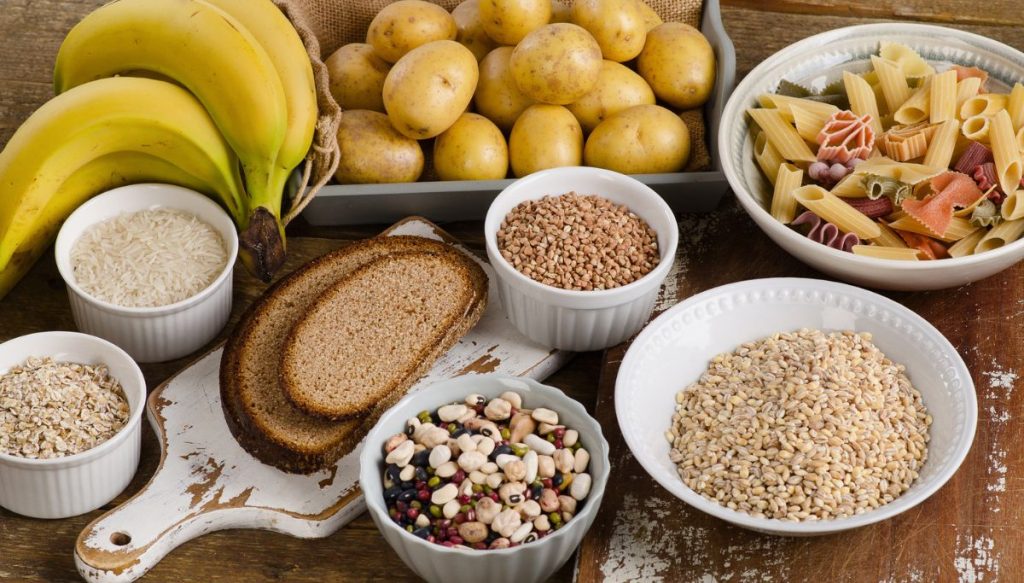
Pasta is often seen as the ultimate cyclist’s fuel, but a serving of rice or couscous contains just as many carbohydrates. Pancakes or pizza (with a thick base and low-fat toppings) also work well.
The day before your ride, avoid fibre-rich carbohydrate sources such as legumes, whole-grain bread, vegetables, fruit and wholewheat pasta. Instead, opt for white bread and white pasta. After the race, make sure to eat your fruit and vegetables again!
5 Give yourself enough time
Don’t oversleep the day of your race! Set your alarm, and make sure you have breakfast at least two hours before the start. Make sure you have time to eat calmly; chewing well helps with digestion and the absorption of energy.
Eating three plates of pasta or a huge stack of pancakes at breakfast is not a good idea; those carbohydrates won’t be stored in your muscles as glycogen before the start. Rather opt for a carb-rich breakfast (100+ grams of carbohydrates), like four slices of white bread with sweet spreads, or a bowl of yoghurt with eight tablespoons of muesli and a glass of fruit juice.
READ MORE ON: carbo-loading fuel