The Secret to Cyclist-Level Quads Is This Simple Squat Variation. Here’s How to Do It.
Let the burn begin.

Despite the enticing name, cyclists’ squats aren’t an exercise that’s just for cyclists. This particular squat variation does however, emphasise one of the four muscles that make up our quadriceps, the vastus medialis oblique (VMO for short).
A well-developed VMA is a hallmark of strong “cyclist’s quads.” A jacked VMA is even something that’s noticeable visually as a protrusion of muscle above the medial knee. If you look closely at any pro cyclist’s leg, you’ll see what I mean. Sometimes, it’s even jokingly called a second knee.
Benefits
Building stronger quads in general and targeting the VMA specifically with thoughtful strength training is a must-do for riders who want to sprint faster, climb stronger and increase overall riding power. Squats and lunges are great exercises to accomplish this and will benefit your cycling strength (and your everyday life strength, too). But the cyclist’s squat targets the vastus medialis oblique like no other squat variation does.
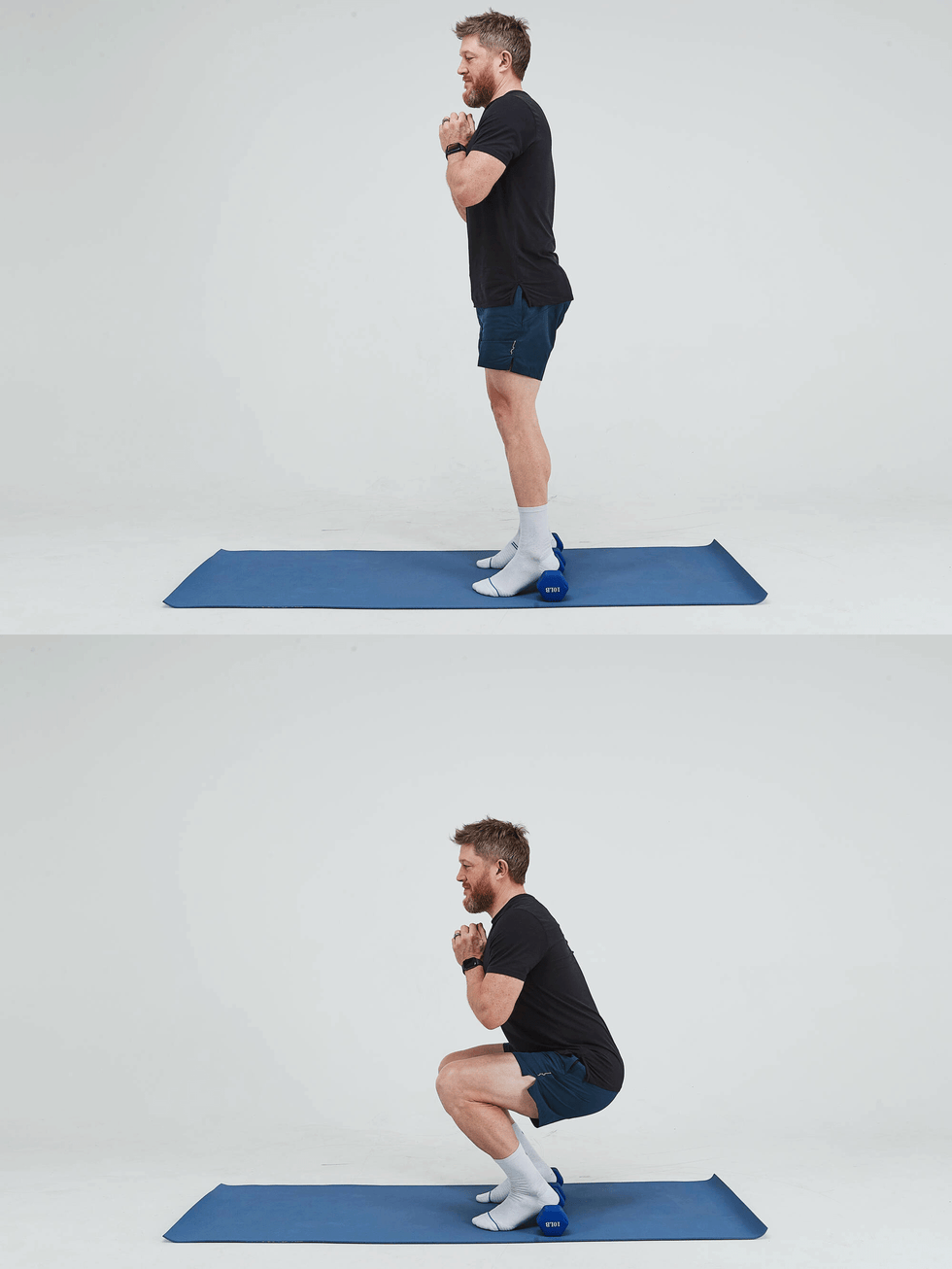
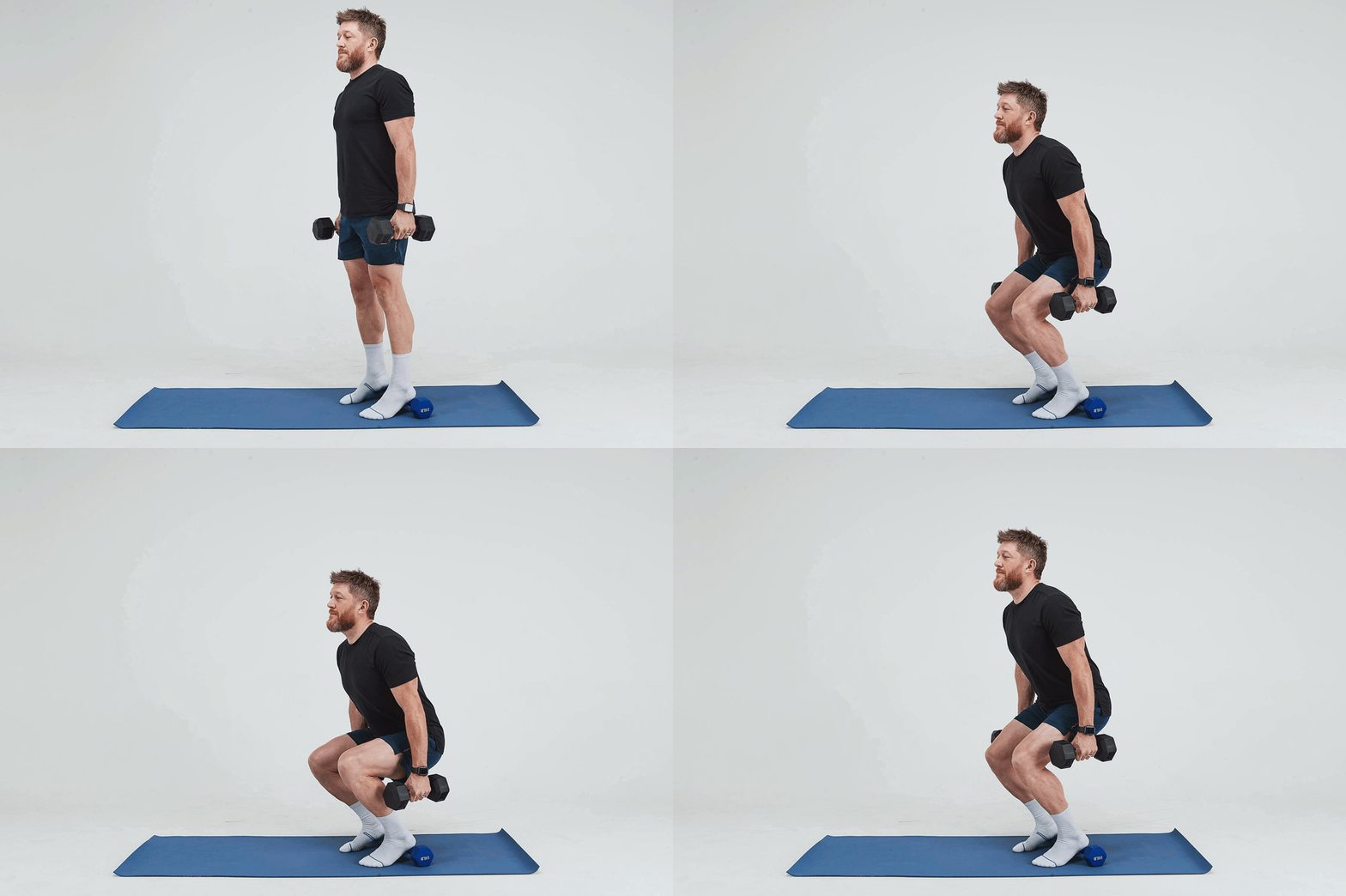
Trainers will often use the cyclist squat variation in their training programs for clients with limited ankle mobility because it allows a person to squat at full depth, even if the ankle range of motion is restricted. But it’s a move that’s also particularly valuable to cyclists because of how much more quad-dominant this variation is compared to neutral squats.
This is because of the way the heels are elevated during the squatting motion. This biomechanics tweak affects how our knee joint tracks, and elevating the heel puts more emphasis on the VMA. This move also calls for less engagement from your hips and glutes, thereby engaging the quads that much more.
There are a few important caveats and guidelines that are important to consider when discussing this move with your trainer or adding it to your workout routine. The first is the most important, and that is the health of your knees.
Anyone who experiences knee pain or has any knee-health issues like arthritis, past injuries, or knee surgery should get medical clearance first before working on this exercise. Be proactive and don’t take the “wait and see” approach by waiting to get a doctor or physical therapist’s advice until after discomfort arises–I can’t emphasize this enough.
The second is to start with body weight and take the time to learn what changing your foot position, and by extension the way your knee joints track, does to the way the rest of your body remains balanced and stable. It feels really different from a squat with a neutral foot position. Start working on this move without weights, performing it really slowly. This will give your proprioception time to catch up, and you’ll get the most balance-building benefits from this move, too.
Last but not least important is that this squat variation should not be the only squat variation that’s included in a well rounded strength training program. Make sure you are also including other neutral squat variations into your routine.
How to Perform Cyclists’ Squats