
Custom Builders Are Embracing 32-Inch Wheels. Mass Market Could Be Next.
Major brands and custom builders are betting big on 32-inch wheels, signaling a potential revolution in mountain bike performance and design.

Just as 29-inch wheels shook up mountain biking in the 2000s, even bigger 32-inch wheels are doing it again. Major brands and custom builders alike are betting on the new standard, signalling ‘big’ changes in bike performance and design.
At MADE last year – the hand-built and custom bicycle trade show in the US – several mountain bikes were built around the emerging 32-inch wheel standard.
The custom bike pictured above, for example, made by Cameron Falconer, was displayed at the Astral wheels booth. It’s a stunning example of the trend, outfitted with a suspension fork (and brakes) from the German company Intend Bicycle Components. The Falconer was at the Astral booth to showcase prototypes of their 32-inch Outback alloy MTB rims. So-called ‘32ers’ were also seen at the BTCHN and Neuhaus booths.
A show like MADE often telegraphs trends that will soon go mainstream. And it looks like we’re at the beginning of the next big wheel shake-up.
We’ve been through this before. As a grizzled old gear guy, I was testing mountain bikes for Bicycling in the late 1990s and early 2000s, when 29-inch wheels first appeared. Based on that experience, I reckon I have a good idea of how the transition to 32-inch wheels might unfold…
However, there’s a notable difference that will make adopting the 32-inch standard different from adopting the 29-inch standard: back when the 29er trend started, 29 was new to mountain bikes, but it wasn’t new to the bike industry. 29-inch was just the common 700c wheel, by another name. So, even though there were major growing pains to bring the performance of 29-inch mountain bikes to where they are today, it wasn’t like the industry was starting from scratch.
With 32-inch wheels, they are essentially starting from scratch. But I think that the knowledge gained during the 26-to-29 transition will help make the transition to 32-inch wheels much ‘smoother’, should the demand for bigger wheels necessitate the shift.
Why 32-inch?
For the same benefits that were touted when 29-inch wheels showed up as an alternative to 26-inch wheels: a bigger wheel rolls more smoothly (and therefore faster) over bumps; it offers more traction for climbing, braking, and cornering; and stability is improved.
There are some drawbacks: more material, so almost all 32-specific parts are heavier; anything longer and larger is usually less stiff; there are (currently) fewer equipment choices; there are frame geometry challenges that have yet to be overcome; and adopting a major new standard is always disruptive.
As for the best use of the new, bigger wheels, it seems that they’re most suited to cross-country (XC) racing. Creating longer-travel bikes with such large wheels is a geometry challenge and calls for even longer front centres, even longer chain stays, and steeper seat tube angles. It also seems as if 32-inch wheels will benefit taller riders on XL and XXL frames. A bike with bigger wheels obviously has a higher stand-over height and a taller minimum handlebar height.
Playing devil’s advocate, we said the same things about 29-inch wheels back when we were all riding 26-inch bikes. You can find plenty of 29-inch wheels on enduro and downhill bikes, not just XC bikes; and pint-sized Sina Frei – who is only 1.51m tall – races World Cup cross country on a 29er…
On steeper terrain, the issue of butt clearance with larger wheels also comes into play. This is already quite a challenge with 29-inch wheels, leading many riders who tackle demanding terrain to opt for a 27.5-inch rear wheel to gain better clearance. Will we see nü-mullet bikes with a 32-inch front wheel and a 27.5-inch rear? Maybe.
How practical is it?
A new mountain bike wheel size won’t – can’t – take off until there are multiple and widely available suspension forks and tyre offerings. And those things won’t be made until one of the major brands commits to a large order.
Word on the street is that brands like Trek, Specialized, Cannondale, and Scott – essentially any brand with a major presence at the top level of cross-country racing – are all testing bikes with 32-inch wheels. BMC broke the internet with their ‘Fahrenheit Project’ 32-inch prototype at the Andorra World Cup XC race in July, which Titouan Carod used on a few practice laps. We know it’s coming…
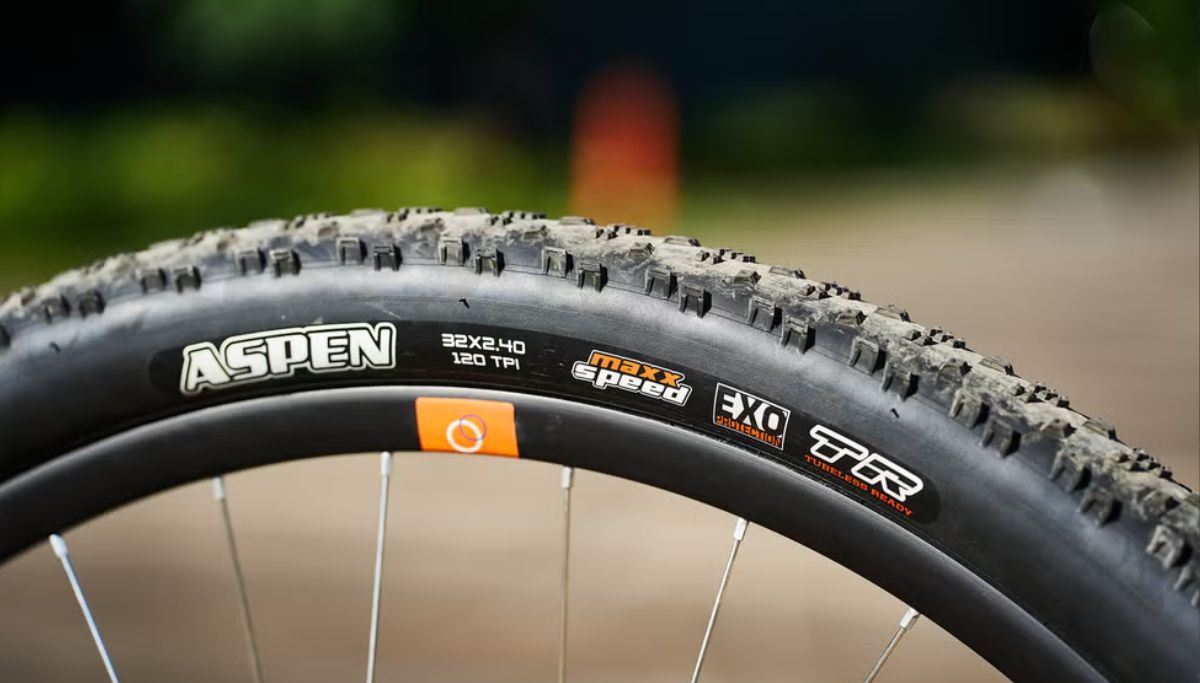
So far, there’s only one high-quality tyre available in the 32-inch size: the XC-focused Maxxis Aspen. Maxxis should be able to add more tread options more easily than most, but the challenge for them and other tyre brands is that existing moulding machines are too small to produce a 32-inch tyre. New, bigger machines will be required to enable mass production of the new standard.
With those stumbling blocks in mind, it will probably take several years before mature products fully support the new wheel size; but this timeline depends entirely on how widespread the demand is.
Until then, any custom builder worth his or her torch can build a bike that will accommodate 32-inch wheels; and smaller, more nimble brands will probably do limited runs of stock big-wheel bikes.
At MADE, for example, I learnt that Neuhaus is working on a 32-inch version of their Taiwanese-made Hummingbird Core. The 29er Hummingbird frame costs about R20k and features modular sliding dropouts that support single-speed and geared setups. The 32-inch version will probably have many of the same features, but will only be available in medium, large and extra-large.
As with any new tech in cycling, 32-inch wheels will attract early adopters, enthusiasts and sceptics, and outright haters. It will take time to develop geometry that maximises the advantages of the larger wheel. The bikes will be heavy initially, but the weight of the components will decrease as brands adapt. If demand proves to be strong, brands will improve and refine 32-inch bikes and accessories, reducing drawbacks so the benefits become clear.
Trust me: it’s happened before.
Whacky wheels through the ages
A summary of quirky wheels, from the most practical to the least.
Fat Bike (1980s)
Usually a 26-inch wheel with a massive, four- to six-inch tyre, for snow, sand and adventure riding. Handles extreme terrain where normal MTBs fail.
Mini Velo (1990s)
Typically built with 20-inch wheels for urban commuting, and for storing in small spaces. A mini velo is compact, but still efficient for city riding.
Safety Bicycle (1890s)
The forerunner of the modern bicycle, this design allowed for much smaller wheels and replaced the need for the large, directly-pedalled front wheel of the penny-farthing.
Penny-farthing (1870s)
The front wheel of this contraption could be as big as 60 inches! It offered speed before gears existed, but it was extremely dangerous and impractical.
Clown Bike (1960s)
A tiny bike with six- to eight-inch wheels. For circus tricks only…
READ MORE ON: tech talk