
What to Consider When Buying Road Tyres
Plus, our pick of the best.

In recent years, tyres for road bikes have grown wider and wider, thanks to the extra clearance afforded by disc-brake frames. And as they’ve gone wider, they’ve also gone tubeless. Here are four factors to consider when you’re shopping.
1. Tyre Width
Narrow tyres measuring 23-25mm across used to be the norm. Raise your hand if you’ve ever ridden the Cape Town Cycle Tour on brutally hard 23mm Continentals? That was the traditional racing way – narrow meant lower weight and lower aerodynamic drag, but less comfort.
Times have changed. Tyres are now much wider. New bikes with disc brakes are specced with 28- to 32mm tyres, and preliminary research shows that you might be able to go even wider. Wider tyres offer more grip, more comfort, and lower rolling resistance, especially on rougher roads.
2. Tubeless vs Clincher
Traditionally, unless you were racing on tubular tyres – which had to be glued to a special rim – the standard road tyre was a clincher, designed to be used with an inner tube. Clinchers are easy to install and repair, and for many riders, they’re still the standard.
It took the industry much longer to embrace tubeless on the road than on mountain bikes. Because of the higher pressure in a road tyre, the sealant inside struggled to seal anything but the tiniest pinprick hole. That has changed. Sealants are better, tyres are better – and because they’re wider, you can run lower pressures, meaning the sealant does its job better, too.
RELATED: What to Consider When Buying Gravel Tyres
3. Puncture Protection
It’s not rocket science; the more durable the tyre casing, the heavier the tyre is and the ‘harder’ it rides. If you’ve ridden with a set of Schwalbe Marathon tyres you’ll understand – you can ride to Cairo without issue, but it feels like you have hosepipes wrapped around your rims!
On the other end of the spectrum: super-lightweight racing tyres offer wonderful grip and road feel, but they’re prone to punctures and can wear out after a single season.
4. Tread Pattern
Many race tyres – the Continental GP5000 and Vittoria Corsa, for example – prioritise speed, low rolling resistance and cornering grip. With minimal tread, they’re best used on dry roads.
Then you get so-called ‘training’ tyres, or ‘all-season’ tyres. These often have a more pronounced tread pattern for better handling in a variety of conditions, and a harder compound and more durable casing for longer wear and puncture resistance.
In South Africa, with our (mostly) warm and dry climate, proper wet-weather tread isn’t usually necessary; but it might be worth choosing a set of tyres that have some tread, for better grip in a variety of conditions.
Best Road Tyres
FASTEST
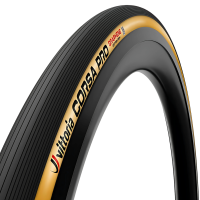
Vittoria Corsa Pro TR
This is a seriously high-performance racing tyre, used by multiple World Tour teams. The graphene and silica compound offers excellent grip and low rolling resistance, and the cotton casing gives them a soft, supple ride. This is all enhanced in the tubeless version – they’re simply dreamy to ride. The negatives? They wear out quickly, and they’re not very puncture resistant. Great for race day, in other words, but not the best for high-mileage training.
Cycle Lab / R2 400
LONGEST-LASTING
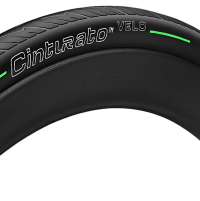
Pirelli Cinturato Velo TR
We’ve been rolling on a set of these for three seasons now – they’re incredible. If you’re looking for a durable, puncture-resistant tubeless road tyre, you won’t find many others that rival the Cinturato Velo. Although the tread is minimal, the SmartNET Silica compound provides good grip in wet and dry conditions, and the reinforced casing allows you to run lower pressures for more comfort. They might not be the fastest, but they’re an investment that pays dividends.
Olympic Cycles / R1 440
BEST FOR GOING WIDE
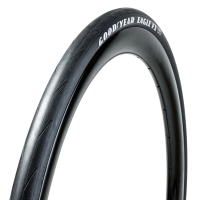
Goodyear Eagle F1 R
Like the Pirellis, these are excellent all-round tyres that balance speed and durability in an affordable package. Locally, popular sizes include 25- and 28mm, but they’re available up to 34mm wide and we’d definitely recommend going there if your frame can handle it. At 30mm-plus, the benefits of tubeless go into overdrive – you can run lower pressures, and small punctures seal with ease. No, don’t shake your head! Give wider road tyres a try, and you’ll never go back.
Olympic Cycles / R1 500
READ MORE ON: road tyres tyres