
Behind the Scenes: What It Takes to Survive & Thrive at the Tour de France
Go behind the scenes of the world’s greatest cycling showpiece with South African legends Daryl Impey and Jaco Venter.
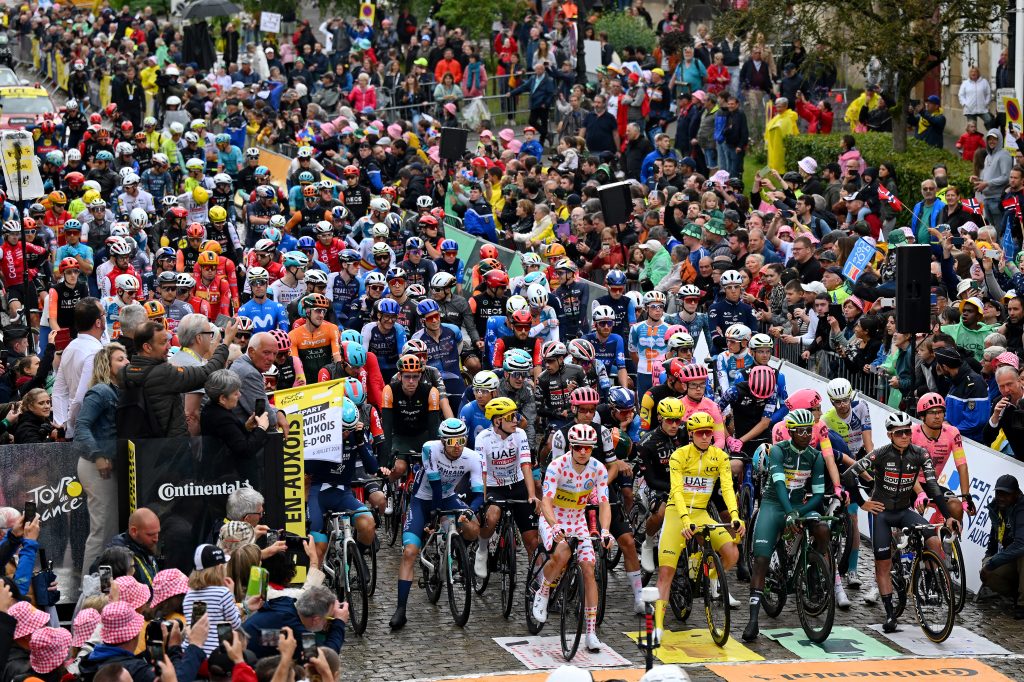
With the 2025 Tour de France in full swing, cycling fans everywhere are once again glued to their screens, absorbed in breakaways, attacks, and team tactics. Praise that little ‘minimise’ button on your computer screen, so you can watch the Tour at work… And praise the French too, for inventing ruined castles, country chateaus and the greatest sporting spectacle known to mankind.
“There’s nothing else like it,” says Daryl Impey, ex-pro rider and current Assistant Sports Director at Israel-Premier Tech. In 2013, thanks to consistently high finishes, Impey became the first African rider to wear the Yellow Jersey; and at the 2019 edition he won Stage 9. In all, he competed at the Tour eight times.
“When you arrive at the Tour de France, you know you’re there,” he says. “The Monuments are big. The Giro is big. The Vuelta is big. But the Tour is bigger.”
“The media buzz is immense; it feels like the whole world is excited. The teams all look smart – new bikes are launched, new kit is launched – and the magnitude of everything is on another level. If you have success at the Tour, like winning a stage, it can change your career.”
Another former national road-racing champion who knows a thing or two about bleeding through the eyeballs on French roads is Jaco Venter, who raced for Team Dimension Data at the 2017 edition of the race. Venter echoes Impey’s comments about the magnitude of the Tour de France: “The level of the competition, the people, the noise… everything is so much more intense,” he says. “Before I rode the Tour, I always thought, ‘But how could it be bigger? It’s the same guys I race at the Giro; the same guys I race at the Vuelta…’ But then you arrive at the Tour, and everything ramps up to levels you’ve never seen before.”
 Photo: Justin Setterfield/Getty Images
South Africans on Tour
Impey says the Tour de France is what made him an elite cyclist; but he almost didn’t get there. It’s the same for Venter, who readily accepts that without the South African influence at Team Dimension Data, he probably would never have ridden the Tour. For most professional cyclists, being selected for the Tour de France is huge. For South African cyclists, it requires a near-superhuman effort to be chosen.
“If you’re a South African, I think the main reason it’s so hard to race in Europe is that there’s no clear path,” says Venter. “Every rider has a different story. I was lucky to have my parents help me.
“But now… it’s so expensive. Where do you go? Everyone says you must go and race in Belgium. But the level is so high there that you have to win to get noticed. And besides, why would a European team take a South African over a local?”
Venter and the other South African riders of his generation raced in Europe and got decent results, but they could never take the next step. So, they came back to race at home; but then they’d fall behind the pace of the European riders.
“If it wasn’t for Doug Ryder starting Team Dimension Data, I would have been out of the sport,” Venter says. “None of what I experienced at the Giro or the Tour would have happened.”
Impey’s story is similar. After a few years of racing in Europe, he came home to race in South Africa. It took the intervention of another South African Tour de France hero, Robbie Hunter – who won a stage in 2007 – to get Impey’s mind fully focused on racing in Europe again.
“You have to be determined to succeed over there. It’s a cliché, but it’s that simple. I was home in South Africa after spending time in Europe – a period of time I thought of as a failure. When Robbie won that Tour de France stage, I messaged to congratulate him. He wrote back: ‘Why are you at home? Why are you racing in South Africa?’ Robbie was the catalyst. His comments strengthened my resolve.”
Besides determination, Impey says, to succeed you also need a healthy dose of desire – and resilience. He notes that riders like Louis Meintjies and Ashleigh Moolman-Pasio have shown that it is possible to have a successful career overseas.
“It is possible to make it, but you have to want it. “
“A lot of riders go overseas and it’s tough, so they give up and come home. I did. But I went back. I was determined to make it work. It is possible to make it, but you have to want it.
“I came from a good home, and my parents did a lot for me. But then, in France, I was suddenly cooking for myself, servicing my own bike, living with other foreign guys – totally out of my comfort zone. You have to learn to push through the initial discomfort.
“Some of the young guys now don’t want to put in the effort. They ride locally and they seem happy, which is also fine. But if you want to crack it in Europe, you really have to want it. It’s not easy, and initially you’ll get your head kicked in by the level of racing; but the smart and lucky riders will figure out what they need to do to survive.”

Photo: A.S.O./Billy Ceusters
Taming Tadej
You can’t talk about the modern Tour de France without talking about Tadej Pogačar. With a handful of huge victories already under his belt in 2025, including Strade Bianche, the Tour of Flanders and Liège-Bastogne-Liège, the three-time Tour de France winner is the hot favourite yet again.
“Tadej is definitely the favourite,” Impey concurs. “Especially since he didn’t race the Giro. A lot of people thought he’d fade last year after Italy, but he didn’t. He won the Triple Crown – the Giro, the Tour and the Road World Champs – and this year it seems he’s even stronger.”
Unsurprisingly, Venter agrees. “What Pog is doing is unreal. Looking at what he’s already done in 2025… You’d normally say, if someone has ridden that much in the year already, he’ll be tired at the Tour. But Pog isn’t normal.
“Jonas Vingegaard is right up there; but he’s had crashes, a concussion – it hasn’t been a dream build-up for him. Still, he and Tadej are the two clear favourites this year, as they were last year.”
Why does Pogačar make the world’s best and most exciting cyclists look like mere mortals? For Venter, it’s simple: “He’s just better,” he says. “As humans, we’re not all the same. If you want to level up, you can’t just work harder – you can have the same coach and do the same training as a guy like Pogačar, but you’ll arrive at the December training camp and he’ll already be flying. How is that possible?!”
Impey and Venter both agree that even without the might of UAE Team Emirates behind him, Pogačar would still be winning. “He’d get the same results racing for any team,” Venter says.
“It’s easy to look at UAE, their budget, and how they do everything right. But it’s not just that,” Impey adds. “It’s hard to pinpoint why, but Pogačar would dominate in any team. Maybe not the same way he does with UAE, but his ability leaves me scratching my head. We haven’t seen someone like this before.
“There was the Peter Sagan era – where he could win any race he entered – but Tadej is Sagan with an extra watt per kilogram. He can do what he wants.”
How does such a dominant force affect the racing? Do competitors give up before the day’s riding even starts?
“He lives rent-free in everyone’s heads. I actually feel sorry for the likes of Remco and Jonas…”
“It is a bit frustrating,” Impey says. “You can see it – nobody even tries to follow him. If you follow him, you’re doomed. He lives rent-free in everyone’s heads. I actually feel sorry for the likes of Remco and Jonas… The riders will tell their team directors that they tried to match his efforts, but they have to be realistic.
“That’s not to say that the other teams have given up. They’re definitely trying, but they’re getting bullied. The budget that UAE has, just for their riders at the Tour de France, is the same as Israel-Premier Tech’s entire budget for the whole year.”
With a handful of summit finishes (including Mont Ventoux), hilly stages and a mountain time trial, it’s fair to say that the strongest rider will win this year’s Tour de France. “There are five proper mountain-top finishes,” Venter says.
“On those days, we’re looking at around 4 500m of climbing, which is right up Tadej’s alley,” Impey adds. “I think Remco Evenepoel and the usual suspects will be at the top end of the field, but I can’t see anyone beating Tadej. His team is so strong. There are four or five riders at UAE that could place in the top 10. They destroy themselves for Tadej; so it’s not just the world’s best cyclist you’re up against, but also this monstrously powerful team.”

Photo by Dario Belingheri/Getty Images
The Lay of the Land
The beauty of the Tour de France is that the route changes every year. And with those changes come new challenges for the riders.
When the route was launched late last year, Bicycling’s review noted: “While it looks fairly mundane compared to the opening stages of the 2023 and 2024 Tours, the first weekend will be tricky for the riders thanks to tight roads, punchy climbs and a chance of crosswinds blowing in from the English Channel to break the race into echelons.”
“There’s so much adrenalin, so much excitement… It’s easy to end your Tour before it even begins.”
Venter remembers trying to survive those frantic opening stages. “You just have to get through the first few days,” he says. “Only then can you make a call on the favourites. There’s so much adrenalin, so much excitement… It’s easy to end your Tour before it even begins.”
When Venter raced the Tour in 2017, Team Dimension Data had Mark Cavendish and Mark Renshaw in their ranks. Venter’s job – and indeed the rest of the team’s – was to guide their sprint stars through the chaos, and ensure they were still in one piece so they could compete for stages.
For Venter, however, the excitement of his first Tour almost got the better of him. “There was so much going on! I was getting bottles and pacing the guys. Then I found myself in front within the first 5km of Stage 1.
“Everything was so overwhelming. There were people everywhere, and I was so in the zone that I forgot to eat or drink. I was asking people for water at one stage. I was on such a high!”
Another aspect of the Tour de France – something that caught Venter unawares – is the ferocity of the bunch. “At races like the Giro and the Vuelta, you ride through lots of tight, narrow roads. It’s exciting for the individual riders. But the Tour is different – it’s this huge bunch of riders moving in unison. It’s very difficult to move in the bunch, so there’s an enormous amount of pressure to be in front. All you hear on the radio is, ‘Be in front! Be in front!’
“That was all I thought about in 2017, when we had Cavendish in the team. There are lots of straight roads in France. You might see some speed bumps and islands, but then it’s back into the straight roads. You really have to keep your position in front – if you don’t, you’ll lose your spot.”
What was it like riding with Mark Cavendish and his lead-out man, Mark Renshaw? Their skill and dedication to their craft left a lasting impression on Venter: “The sprinters are a different breed,” he says. “You can have all the power in the world, but sprinting is about more than that – it’s about instinct.
“That’s why Rensh and Cav could float around effortlessly in the peloton. They had that instinct – something you can’t train. They were crazy, too – if one of them crashed, they’d be back on the bike doing it all over again the next day. If I had an accident, I’d be rattled for days.”
So, what’s Venter’s overriding impression of the Tour? He smiles. “The first day, your legs are sore. Then the pain gets worse. After a week, there’s no more pain. Just… deep fatigue.
“You think you’ve got no power left, but it’s all in your head – I had some of my best days late in the Tour. The main thing to overcome in your mind is doing the same thing, every day, for 21 days. It’s relentless, and you start to think, ‘I can’t do it.’
“But you can. You don’t realise how strong you are until you’ve suffered through a Tour de France.”
READ MORE ON: Tour de France