
Keep Your Riding Routine Alive This Festive Season
Use these strategies to integrate your cycling workouts into your celebrations right through the festive season.
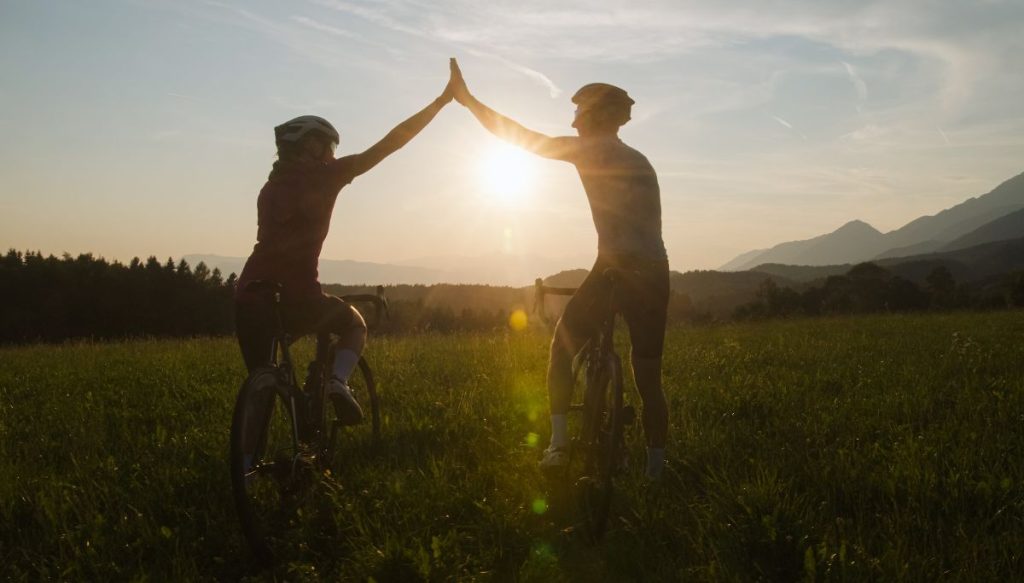
During the holidays, it’s not always easy to fit in big workouts, get enough shut-eye, and focus on balanced nutrition. And that’s 100 percent okay. The end of the year is meant to be an opportunity to relax and take some much-needed downtime.
“There’s a lot of grace involved with the holidays — expect that things won’t go as we plan.”
“There’s a lot of grace involved with the holidays — expect that things won’t go as we plan,” says professional coach Joe Howdyshell, founder of the Summit Endurance Academy.
If you want to keep riding and maintaining those goals-on-wheels throughout the holidays, though, we have the info you need to make it happen. Here are seven tips from road, track, and trail bike coaches on dealing with all the seasonal roadblocks that might keep you from pedalling.
How to Deal With: A Chaotic Schedule
The simple solution: Do your ride first thing in the morning, says Jane Marshall, a pro coach.
“Set that alarm early. It will make you feel better and manage holiday stress. You’ll be wrapping presents or going to a year-end function in the evening, and you won’t ride,” she says. Working out right when you get up also means you get the workout done, so you don’t have to think about it the rest of the day.
If you work from home, put the ride on your calendar. “Block off the time you’ll be on the trainer, riding, or lifting weights, whether it’s 30 or 90 minutes. Treat it like a meeting,” says Marshall. “If we have to cut volume back, that’s totally fine. Mine is slashed in half because of festive season chaos.” Even just 20 minutes of a good sweat does the body good, so don’t worry about getting in a full hour or more if you can’t manage it.
Brett Donelson, owner and coach of Donelson Coaching and founder of The Cycle Effect, agrees. “It’s good to give ourselves a break — reach for 50 to 70 percent of your training plan,” he says. “Set lower expectations and know that your plans might not go perfectly.”
How to Deal With: Drinking (or Eating) a Little Too Much
Enjoy one too many cocktails or mince pies? “Drink plenty of water and at least get on your bike to try a 10-minute ride,” Marshall says. “A lot of times, endorphins kick in, and you’ll end up feeling better than if you hadn’t ridden. If you still feel terrible after 10 minutes, then get off.” Sometimes the hardest part is just getting started, but you’ll likely feel so much better after.
Another trick Zach Allison suggests for treating hangovers is to drink an electrolyte beverage or mix before bed or when you wake up. They offer some extra hydration to help kick up your recovery.
How to Deal With: Long Travel Days
Static stretching doesn’t cut it after a dozen hours on the road or in flight. So, to loosen up all your tight spots, pack a lacrosse ball and/or mini foam roller so you can spend some time rolling it out when you get to your destination, the Allisons say. Your quads, calves, glutes, and upper back are smart places to focus on finding release.
Also, after a travel stint, give yourself additional warm-up time prior to a workout. This will better prep your muscles for the workout so you’re not going in cold.
There’s also a major pro to traveling for the holidays: “Visiting somewhere new is a good way to explore and do something different in that place,” says Mariana Doran, The Cycle Effect mountain bike coach. See what the area you’re visiting has to offer and maybe you’ll even find a fun new (and active) hobby.
If you’re road tripping, you can also bring your bike and trainer, Zach Allison adds. “An intense 30-minute ride on a trainer supports your fitness,” he says. This can help you keep your workout routine consistent.
How to Deal With: Family and Friends Who Don’t Cycle
If your loved ones don’t cycle, invite them anyway and modify your ride to be less intense, advises Doran. “Take cruisers around town and make the ride a group activity rather than a solo workout,” she says.
Incentivise the crew by choosing a fun cycling destination like a natural or historic site, or coffee shop.
How to Deal With: A Change of Pace
Whether you have more time off for longer rides or less time off and need to focus on getting the most bang for your buck when it comes to your cycling workouts, embrace that change of pace—it can be beneficial to your fitness. In fact, Carmichael Training Systems expert level coach Josh Whitmore says, “Look for opportunities out of the ordinary from your regular schedule.”
Whitmore manages three principles in a cyclist’s training plan: consistency, volume, and intensity. During a typical work week — or during the December holidays, when you have a potentially social-packed calendar — he suggests riders focus on shorter indoor rides on the trainer, emphasising intensity. If you have time off work, add a long outdoor endurance ride during the week, which enhances base fitness, he says.
Get these mix of workouts in as much as you can and know even just a little sweat goes a long way. But changing up your typical routine can offer some beneficial improvements to things like speed, power, or endurance, depending on what you do to switch it up.
How to Deal With: Socialisation Fatigue
Take time for solo resets. “Some of us need a break from family or our significant others because holiday visits can be intense. It’s okay to step out and go riding solo to keep your mind sane,” Doran says. “Staying active and cycling is a good way to balance the holidays. Pedal out that stress.”
If you think this will be a problem with your family, just let them know ahead of time that you plan to still go out for rides, even when home for the holidays.
“Make sure you communicate your cycling plan to your people,” said Howdyshell. Families, significant others, and athletes “get frustrated when plans conflict. A hugely valuable tool is to set expectations early. There’s often guilt, especially since COVID and not seeing people. We think we need to be a martyr, sacrificing ourselves completely. Counterintuitively, you need to fill your cup to be the best version of yourself and present in the moment,” he says.
Rather than viewing your independent time as a detraction from togetherness, clearly express how important the workout is to you and identify the benefits for them. “Instead of apologising for taking time away, say ‘I’m excited to do this bike ride, it’ll give me energy, and I’m excited to spend time with you this afternoon,’” Howdyshell says.
Lead by example. Ask your family and significant other how they need to refill their cup, too. “Ask, ‘What do you need to decrease stress?’” says Howdyshell, who realised on a recent trip to visit his in-laws that during COVID, their family units had become very accustomed to their own routines.
“We would leave for them to have their normal morning routine for coffee, and we had one hour of exercise. It was a nice benefit for everyone,” he says.
READ MORE ON: holidays