
5 Types of Foot Pain That Happen With Cycling — and How to Find Relief
Foot pain with riding can be more common than you think.
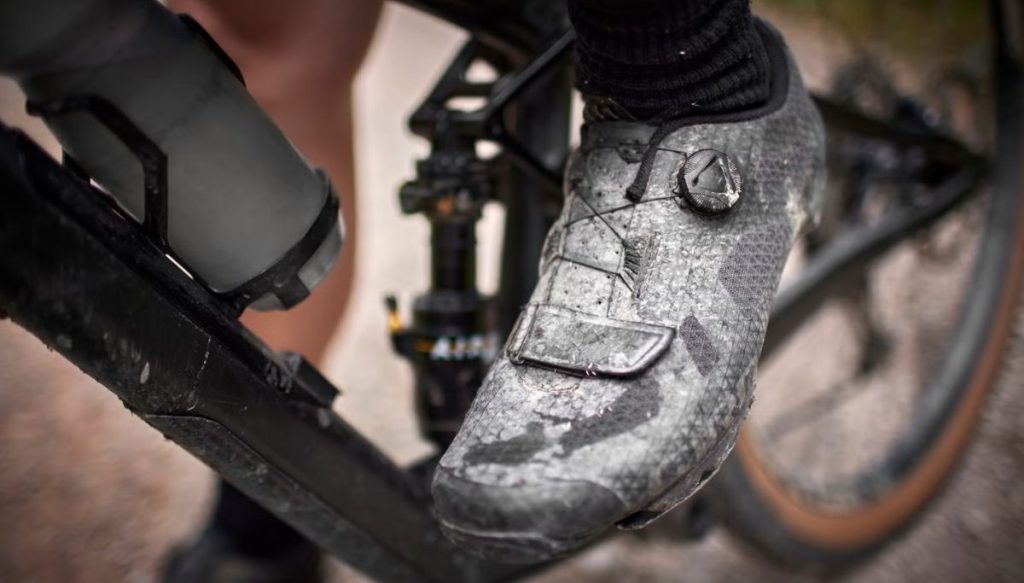
When you become a cyclist, you probably expect to deal with a little back, knee, or wrist pain from time to time. But cranky feet? Not so much.
Unlike higher-impact activities — such as running, hiking, and walking — the foot is in a mostly fixed position during cycling, Grace Horan, an exercise physiologist, tells Bicycling.
You may think this static positioning generally protects it from aches, pains, and strains — but foot pain can definitely still occur with cycling. In fact, Chris Mason, DPM, a podiatrist and avid cyclist, tells Bicycling he “fairly frequently” treats patients who have foot pain with riding.
Here’s what causes the most trouble for riders and how to find sweet, sweet relief.
1. Morton’s Neuroma
What it is: An “extraordinarily common” injury, according to Mason, Morton’s neuroma is a nerve impingement in the forefoot. Basically, the nerves in between your toes get pinched and become inflamed, causing numbness, tingling, and a sharp, shooting pain as you ride, Mason says, describing it as “analogous to carpal tunnel in the wrist.” The sensation, he says, can be similar to when you hit your funny bone, but can range from mild to so severe that it persists after your ride and is especially painful as you walk.
Most commonly, these neuromas crop up between the third and fourth toes, says Mason, who experienced this issue firsthand when he initially started cycling.
What causes it: Ill-fitting cycling shoes are typically the culprit here, says Mason. Specifically, if your shoes are not wide enough in the forefoot, they can compress the nerves between your toes, triggering this pain. Forefoot pain can also crop up if your cleat is positioned too far forward, or if you place excessive pressure on your forefoot due to long rides and/or your riding mechanics, adds Horan, who cocreated the Cycling Mechanics Analysis programme at HSS.
“The shoe needs to be tight because your foot is meant to stay in a nice, stable position.”
How to alleviate it: The solution here is often pretty simple: Make sure you’re in properly fitted cycling shoes. You’ll want a pair that’s wide enough for your feet to comfortably fit in, Mason says. Just make sure you don’t overcorrect by picking shoes that are too roomy. “The shoe needs to be tight because your foot is meant to stay in a nice, stable position,” Horan says.
Because there can be a lot of nuance in proper shoe fitting, if you’re not sure how to find the right pair for you, Mason and Horan recommend getting measured and evaluated by a professional. You’ll want someone to check not only the width of your shoes, but their stiffness, arch support, how much compression they provide at the top of your foot, and your cleat position, Horan says. Keep in mind some people have asymmetries between their feet that warrant wearing a different size shoe on each, Mason says.
In some cases, adding an insert or orthotic to your shoe can help, too, Mason says. And if the pain is intense, consider visiting a podiatrist: Mason says he treats Morton’s neuroma in his office with anti-inflammatory medications and cortisone injections.
2. Plantar Fasciitis
What it is: Another very common condition, plantar fasciitis is inflammation of the plantar fascia, a thick band of tissue on the bottom of the foot that connects the heel bone to the toes. Plantar fasciitis shows up as a burning sensation from the arch of the foot to the middle part of your heel and the pain can range from mild to severe, Mason says. Ironically, it’s typically a little worse when you take your first steps in the morning, he says.
What causes it: When you ride, you isometrically stretch your fascia for long periods of time (in some cases, several hours depending on how long you ride). This places a lot of strain on the tissue, which can become inflamed and painful as a result. Moreover, the stiffness of cycling shoes—which are helpful for improving power transfer from the feet to the pedals — also reduces the foot’s ability to naturally dissipate forces, Horan says. “Over time, that mismatch between the tissue capacity of the bottom of the foot versus the cumulative loading of long rides, high volume, and high intensity could lead to plantar fascial pain,” she explains.
How to alleviate it: Your plantar fascia connects to the calves through the Achilles, so stretching the calves can help release tension in the plantar fascia. Mason suggests doing both straight-leg and bent-leg calf stretches to target both parts of the calf complex, spending about 90 seconds per side with each stretch. Strengthening the calves, as well as the intrinsic muscles in your feet, can help, too, Horan adds. That’s because improving the strength of these muscles will reduce the amount of load transferred onto the plantar fascia. Beyond that, scaling back the volume or intensity of your cycling can help alleviate strain on the plantar fascia, Horan says. Also, similar to Morton’s neuroma, you can treat the pain of plantar fasciitis with anti-inflammatory medications and cortisone pills or shots administered at a doctor’s office, Mason says.
3. Achilles Tendinitis
What it is: An injury to the Achilles (a band of tissue at the back of your lower leg that connects the calf muscles to the heel bone) that can start as a mild ache and then progress to a more intense burning sensation, per the Mayo Clinic. According to Mason, this is typically the third most common foot issue he sees among cycling patients.
What causes it: The riding motion inherently “puts a heck of a strain” on the Achilles, Mason says, explaining that this injury is typically caused by aggressively ramping up your cycling training while neglecting flexibility work. Ill-fitting shoes can also contribute, along with your saddle being too high, which can cause you to actively reach for the pedals and plantar flex your foot (i.e., point your toe down) for longer periods of time, which can overload the calves and Achilles, Horan says. Same goes for having your cleats positioned too far forward on your shoes, adopting a low cadence at high torque, and doing aggressive climbing while standing up in the saddle. “That’s going to put the Achilles in a position where it’s going to have to do a lot of work over a long period of time, which can then sometimes lead to irritation,” Horan explains.
How to alleviate it: Stretching the calves with bent-leg and straight-leg calf stretches can help reduce tension on the Achilles, Mason says. He advises stretching before and after you ride, as well as after any time you’ve been sitting down for a while. Icing the tender area can also help: Mason advises filling paper cups to the brim with water, popping them in the freezer, and then once they’re frozen, tearing a little of the paper off the top and rubbing it on your Achilles. Another hack: Rub a nonsteroidal anti-inflammatory drug (NSAID) cream—Mason likes the brand Voltaren—onto your Achilles. “That works really well too” in reducing pain, he says.
It’s also worth considering getting over-the-counter inserts or custom orthotics for your cycling shoes. “Even though we’re not a weight-bearing sport, the orthotics do balance out the position of the foot, giving you extra cushion,” Mason explains, which reduces some of the strain placed on the Achilles.
Also, because improper shoe fit and cleat positioning can contribute to Achilles strain, consider getting evaluated by a professional bike fitter to see if you’d benefit from any adjustments.
4. Peroneal Tendinitis
What it is: Inflammation of the peroneal tendons, causing pain and achiness on the outside of your ankle.
What causes it: Doing too much, too soon with your training volume or intensity can overload this area, Mason says. And so can improper mechanics: Specifically, rolling your weight to the outside of your foot as you pedal (versus keeping it centered) can place constant strain on the peroneal tendons, causing them to become inflamed, Mason explains.
How to alleviate it: Consider getting a professional bike fit to see if there are any adjustments that could help better position your foot on the pedals to eliminate extra strain on the peroneals, Mason says. Taking anti-inflammatory medications as well as getting cortisone shots or pills at a doctor’s office can also help, he adds.
5. Metatarsalgia
What it is: Metatarsalgia is basically a fancy word for forefoot pain across all your toe joints caused by inflammation, Mason says. You feel this pain right where the toe connects to the foot, and unlike Morton’s neuroma, which typically is isolated to the third and fourth toe joint, this one spans across all five toe joints, Mason says.
What causes it: Ill-fitting shoes can contribute, Mason says. And so can spending a lot of time standing up in the saddle, since that position can place a lot of pressure on the forefoot, he adds. But most often, metatarsalgia is caused by ramping up your cycling programming too quickly without penciling in adequate rest, he says.
How to avoid it: Make sure you’re donning properly fitting cycling shoes, and incrementally build up the volume and intensity of your training to avoid overdoing it.
When to See a Doctor About Foot Pain With Cycling
Sometimes, foot pain with cycling can be resolved with a few tweaks to your footwear, ice and anti-inflammatory meds, or basic flexibility and strength exercises. But in other cases, visiting the doctor really is your best bet.
Mason’s advice: If you’ve tried at-home remedies — like icing and OTC anti-inflammatory medications — and your pain doesn’t resolve within two or three weeks, or if at any point your pain is so intense it interferes with your daily functioning, then it’s “time to get a professional opinion.”
This article first appeared on bicycling.com
READ MORE ON: foot pain injury prevention