
Nicolas Roche: Behind the Mic and Back on the Bike
These days, you’re more likely to hear Nicolas Roche than see him in the bunch-but his passion for cycling hasn’t faded.
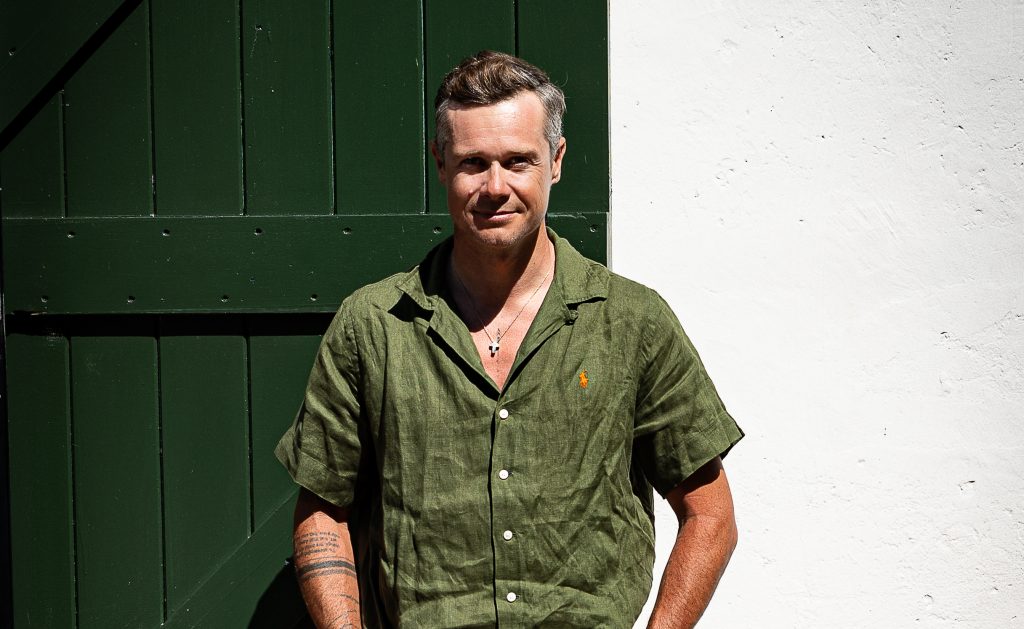
Nicolas Roche – Nico for short – arrives on time, wearing shorts, sneakers and a linen shirt. He’s perfectly groomed, and his shaved, veined legs suggest he isn’t far off the shape he was in when riding in the World Tour for some of the biggest teams in the business: Cofidis, Saxo-Tinkoff, Team Sky and Sunweb.
We meet at a quiet coffee shop in Stellenbosch while Roche’s out visiting his mate, Lidl-Trek’s Jasper Stuyven, earlier this year. Stuyven is doing his early-season training in the area, and Roche is more than capable of joining him for rides in between some down time.
At age 40, it’s been only three years since Roche retired from a stellar 16-year professional cycling career to concentrate on his job as a TV commentator, while also building his own gravel team; and figuring out, as a newbie offroad enthusiast, whether he should compete as an elite or as an age-grouper.
 The voices of the Tour de France: Nicolas Roche and Ant McCrossan in the commentary booth at the Tour de France.
For cycling fans in South Africa, French-born Irishman Roche is the voice behind much of the international cycling commentary we hear on TV – his excitable Irish accent adding colour, insight and passion alongside the voice of his regular commentating partner, Ant McCrossan, most notably at the Tour de France. The duo work for ASO, the company that runs Le Tour, and their commentary goes out to some 13 countries as part of the world feed.
Roche’s pro palmares may not match those of his famous father (Stephen Roche is one of only three riders to complete cycling’s so-called ‘Triple Crown’– winning the Tour de France, the Giro d’Italia and the World Champs in the same year), but they’re still impressive: 12 pro victories, including stages at the Vuelta a España in 2013 and 2015, 22 Grand Tour finishes, two top-10 finishes at the Vuelta, and four Olympic appearances.

Roche wore the red jersey twice at La Vuelta during his pro career. – in 2013 and again in 2019. Photo: Getty Images
He’s a household name in Ireland, despite having spent most of his life in France. His profile on the Emerald Isle was bolstered even further when he appeared on the local version of ‘Dancing With The Stars’ in 2022, where he finished sixth.
On the ‘socials’, he has more than 140 000 followers on Instagram, and he posts regularly about his riding adventures while showing off his significant flair for style.
How did you get into commentating on TV? I have a great relationship with Eurosport, which started 15 years ago. After a race, they’d interview me for their post-race recap, and I’d often be a guest on their broadcast.
I guess being Stephen Roche’s son helped your profile a bit? I don’t think it made a difference at all, to be honest. It was just that I always made myself available! And I was one of the few pros back then who spoke English, since most of the peloton was either French or Italian. I always had time for the media, and I think I was quite handy with a microphone.
In 2018, I didn’t ride the Tour de France; so they asked me to come and help. I trained in the morning, and helped with the commentary after that. That was my break.
When you retired at the end of 2021, was commentating the next step? Yeah, I had it in my head that once I retired I could commit to 100 days a year doing commentary. But it didn’t work out like that, and I quickly realised that I needed a second job. That’s when I started the gravel team, and started doing content for GCN on YouTube. My first Tour de France was officially in 2022.
You’re also still one of Bianchi’s most noticeable brand ambassadors… Yes – in 2023 I did a lifestyle series for them on YouTube, around the Giro d’Italia. Bianchi wasn’t sponsoring a team at the time, and I got a call from the global marketing director to do four eight-minute shows around the food and wine scene in Italy. It taught me a lot about being on camera, and I’ve been with them ever since.
“The best lesson I learnt from doing that is to be able to smile and carry on, even if you make a mistake!”
And let’s not forget Dancing with the Stars, in 2022? They approached me about two months before it started. I had nothing planned at the time, so I stayed with my grandparents for four months and got into the quarterfinals. The best lesson I learnt from doing that is to be able to smile and carry on, even if you make a mistake!
Back to the commentary. What do you bring to the party? It helps that I can speak four languages – French, Italian, Spanish and English – and because I’ve ridden 10 Tours, I can add a lot of value to what people see on the screen. I recognise many of the roads that the Tour de France goes on; I want to be able to bring the story to the viewers, using my personal experience as a pro rider.
Your fellow presenter Ant McCrossan is the lead commentator, with years of experience. What has he taught you? You have to prepare. We share a car; and after each stage, we review what we did that day. Ant is a real pro, and he’s very demanding. He pushes me hard, but it’s like being in a team. He demands that you do your homework and get your research done before each stage. He’s not shy to say, “You weren’t good on this.”
You do an incredible amount of talking over the three weeks. How do you manage it? It’s easy when there’s action; but there are times when there’s nothing happening, and you need something to fall back on. When you get a 200km flat stage… that’s tough.
But then we focus on the culture of France – Ant loves reading up about the castles in the area. And we do a lot of research into the stats, and focus on things like the equipment the riders use. We often talk about the specs of the bikes: discuss and explain things like shorter cranks, how TT bikes are set up, and all that.
There’s also been so much change in the way the riders handle nutrition nowadays… That’s always an interesting topic.
RELATED: Gerald de Kock: The Accidental Voice of Cycling
The broadcast goes out to various countries, and must still appeal to both casual watchers and real fans… It’s a challenge – every year we have to start from scratch and explain how the yellow jersey works, but then also talk about more detailed stuff like tyre pressure, power meters and team tactics. Plus, viewers dip in and out of the broadcast over the three weeks. Some just love the sprints, and some only watch the GC and mountain stages.
Thanks to modern tech, viewers get to hear conversations between the race directors and their riders via their radios. But we don’t really get to hear the gritty stuff. Why is that?
It’s often delayed, so that they can protect the teams’ tactics. The producers must be cautious about what they put on live TV because the teams have to trust that we won’t give too much away. It’s still very controlled; you’re not going to hear too many crazy stories. For now, anyway.
It’s the same with heart rate and power data. It’s fun to see, but we never see the numbers from the big guys like Pogačar and Vingegaard. People are hungry for data, and 99% of the peloton have no problem sharing their information. It never really bothered me – I always had my data open on Strava. But I don’t see Pog or Jonas being so open with theirs, because sharing might give away their competitive advantage.
Does it bother you that a guy like Pogačar is so dominant, and has the potential to make the sport boring? Individuals have always dominated. It was Chris Froome for four to five years, remember? I think Pog has done a lot for the profile of the sport – every kid wants to be him. We also had the Netflix series. So I think the sport is in the best place it’s ever been; I’ve never seen so many kids on the side of the road as I see now.
But such dominance also makes fans suspicious, given cycling’s doping history. It’s natural that people will look at Pog and think that. But there’s no doubt he’s created a new standard in history.
As for doping… I think the sport is cleaner than it’s ever been. But it’s always difficult to know for sure.
Follow Roche on Instagram – @roche_nicholas – and listen to him and Ant during the Tour de France broadcast on SuperSport in July.
READ MORE ON: interview