
Dancing Or Stamping? This Is How You Really Climb Faster
On steep sections, one rider might spin their gears; another pushes a much harder gear, and rocks from side to side. Yet another stands on the pedals. Which method makes you fastest? Which is most efficient? We did an experiment – and can finally put this argument to rest.
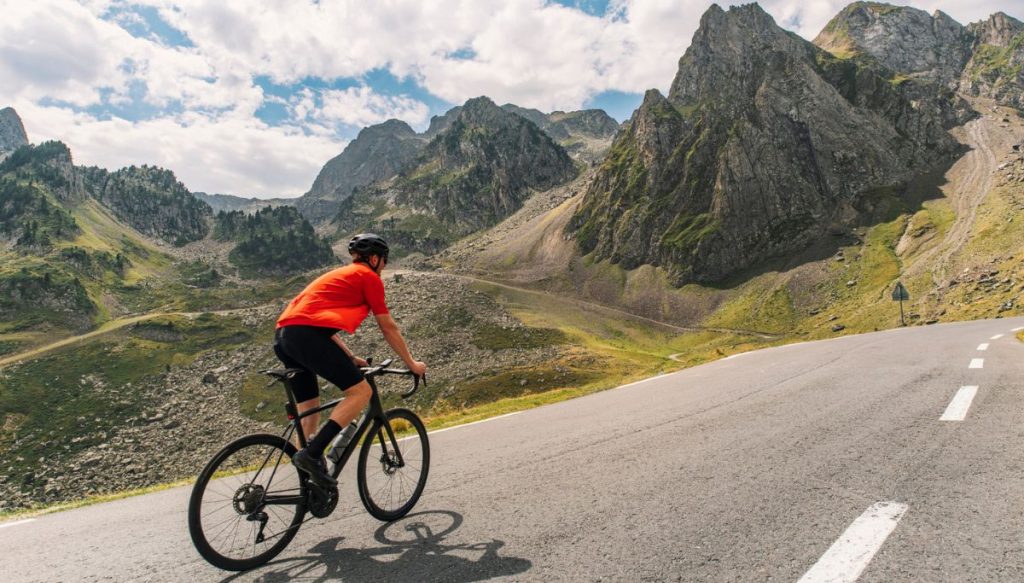
Jan Ullrich, the German climbing legend, was enormously strong.
But he was also known for his ‘restless’ style: with every pedal stroke he stamped the bike forward, his upper body moving from side to side as if forcing his way uphill by sheer willpower alone. By contrast, watch footage of equally famous Italian climber Marco Pantani: light, dancing on the pedals, seemingly weightless as he climbed.
Two extremes, two vastly different styles – but what do those differences actually mean for performance?
Anyone who’s blasted up a hill knows the temptation to do an Ullrich: out of the saddle, harder gear, throwing the bike from left to right… But what really happens when you do that – does it add significant distance? Does it take more or less time? How much energy do you gain or lose from changing your position?
Science to the rescue
To find out, we conducted a simple but revealing experiment. We tested three climbing styles:
- Stable – seated, hands on the hoods, fluid pedalling, low aerodynamic position.
- Stamping – more upright, hands on the tops, slight swaying, in a harder gear, at a slower cadence of around 65 revolutions per minute.
- Swaying – lots of riding out of the saddle, throwing the bike hard from side to side.
We did the same hill over and over again in the different styles – nine (painful) times in total. The climb measured a distance of just under 1km, rising 42 metres at an average gradient of 4.2 percent. Best of all: it was dead straight – perfect for seeing what swaying really does.
How did we measure?
To test the effect of standing while climbing, we mounted a gyroscopic sensor on the handlebars, which measured the extent of the bike tilting from side to side. We filtered out background noise – other movements that say nothing about swaying – as much as possible, so only the important metrics remained.
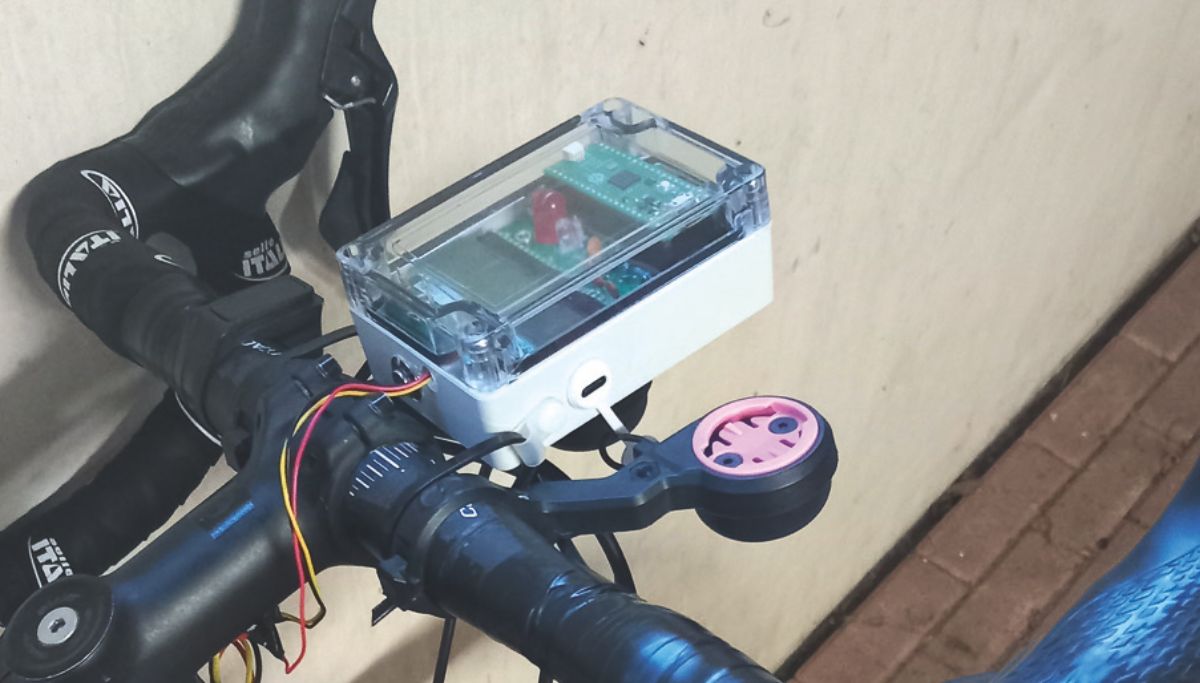
Adding up all the tilts gave us a picture of how many degrees the bike sways from side to side. Using some simple geometry, we converted that into extra metres ridden on the climb as a result of the bike’s movement.
During the test rides with lots of riding out of the saddle, we immediately saw clear distance spikes. The spikes were smaller when stamping while seated, but still clearly visible.
Along with the gyro, we also used a sensor on the frame linked to a small magnet on the wheel which counted the exact number of wheel revolutions, including the smallest remaining fraction of a turn. This gave us a fallback figure to compare to our geometry measurement, helping corroborate how much distance was actually ridden on the climb.
We also measured the time taken for each climb.
To compare apples with apples, we rode each effort at the same average power output of 250 watts. That way, any difference in time or distance was purely due to riding style, not effort.
We sat, stamped and swayed – and recorded everything as precisely as possible. And here’s the result.
To explain the numbers: the extra distance shown is based on the average of both measurement systems – gyro and wheel rotation sensor. The final column shows the time that each climb took. So riding seated and smoothly uphill covered a total distance of just under 981 metres. Stamping added an extra 4.2m and five seconds to the climb, while standing and swaying cost 7.1 extra metres and six seconds.
| Riding style | Distance | Extra metres | Time |
|---|---|---|---|
| Seated/smooth | 980.8m | 0.6 | 199.3s |
| Stamping | 984.8m | 4.2 | 203.3s |
| Standing | 987.3m | 7.1 | 205.0s |
Three lessons we learned about climbing style
- Even when seated, you still sway
Even with the tightest, most controlled style, the gyro sensor detected a small deviation: 0.6m per kilometre. Zero sway does not exist. It makes sense, though – your body is constantly correcting to stay balanced on the bike. - Standing costs a surprising amount of time
In the most extreme climbing style – lots of riding out of the saddle, and heavy side-to-side movement – the extra distance on the climb was significant, as was the time lost: nearly six seconds on a 200-second climb, which is about 3% slower. And most of that time loss didn’t seem to come from the extra metres ridden; rather, it was from the upright posture on the bike, which is less aerodynamic and creates more turbulence than you might think. - Stamping is inefficient, too
A wobbly climbing style – seated, in a hard gear, as you rock from side to side – is something you often see when someone is exhausted or inexperienced. In our experiment, this climbing style cost an average of four extra metres per kilometre, and about four seconds, or roughly 2%. Modest losses, maybe, but it could be the difference between holding on and getting dropped.
So no matter how dramatic it looks, all that swaying and stamping really does cost you time and distance. On a one-kilometre climb, for example, a stamping, swaying style can add up to five extra metres, equivalent to an efficiency loss of about 0.5%. Minimal, yes – but enough to make you lose the wheel in front of you…
It’s even worse when you stand and pedal out of the saddle. The change in posture immediately means you catch more air, which equates to more resistance. This is especially true on less steep gradients, where your speed is still high – standing can amount to as much as a 3% time loss. Again, it’s just a few seconds, but in racing, often, that’s time you never get back.
Conclusion: Smooth = fast
The numbers don’t lie: every unnecessary movement on the bike when you’re climbing is quietly costing you metres and seconds. A composed, seated style, paying attention to staying low and aero, not only looks neater – it’s genuinely more efficient.
So for anyone who wants to climb seriously, the rule is simple: climb economically, and you’ll climb faster.
Whether you’re a racer or you’re simply curious about your own performance, your riding style has more influence than you might expect.
READ MORE ON: climbing