
1x vs. 2x: How to Choose the Right Drivetrain for Your Riding
One chainring or two? It depends on where you ride, how you ride, and what annoys you.
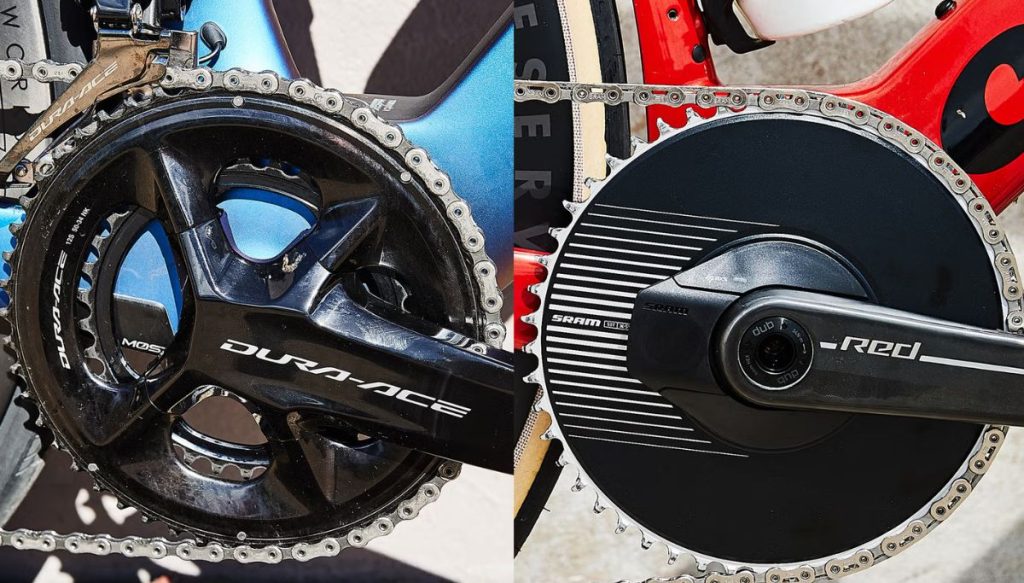
The rise of 1x in the pro peloton does not mean the front derailleur is doomed. It means the old assumption that every serious road bike needs two chainrings is no longer automatic. That is not the same thing as saying 1x is better. It means drivetrain choice has become more conditional — more about terrain, cadence, range, simplicity, and how much compromise you are willing to accept.
“Drivetrain choice has become more conditional — more about terrain, cadence, range, simplicity, and how much compromise you are willing to accept.”
Pros make those choices for one race at a time. Most riders need one setup that can handle group rides, climbs, rough roads, windy endurance days, and the occasional shortcut that turns into a farm lane with delusions of pavement. So before copying the pro peloton, ask the only question that matters: What do you need your drivetrain to do?
Choose 1x If You Ride Rough, Variable Terrain
If your riding regularly includes gravel, broken pavement, dirt connectors, or roads that seem personally offended by smooth tyres, 1x starts to make a lot of sense. Its biggest advantage is reliability. Without a front derailleur, there is one fewer component to mis-shift, clog with grit, get knocked out of adjustment, or drop a chain when the road gets ugly and your legs are already negotiating with your brain.
That is not just theory. Glen Leven, team support manager at Lidl-Trek, points to one of the quieter benefits: even a clean front shift often asks a rider to ease off the pedals slightly. With 1x, he says, there are “no front shifting potential issues” and “no need anymore” to back off mid-effort. If your riding gets rough, punchy, or chaotic, that starts to sound pretty good.
There is also the simple pleasure of simplicity. With 1x, you shift only the rear derailleur. No front shifts to anticipate, no awkward double-shift moments when the terrain changes quickly, and less to think about when you are tired, cold, over-caffeinated, or chasing a wheel you probably should have let go. That is why 1x works so well on gravel and rough roads: it does not just simplify the bike, it simplifies the ride.
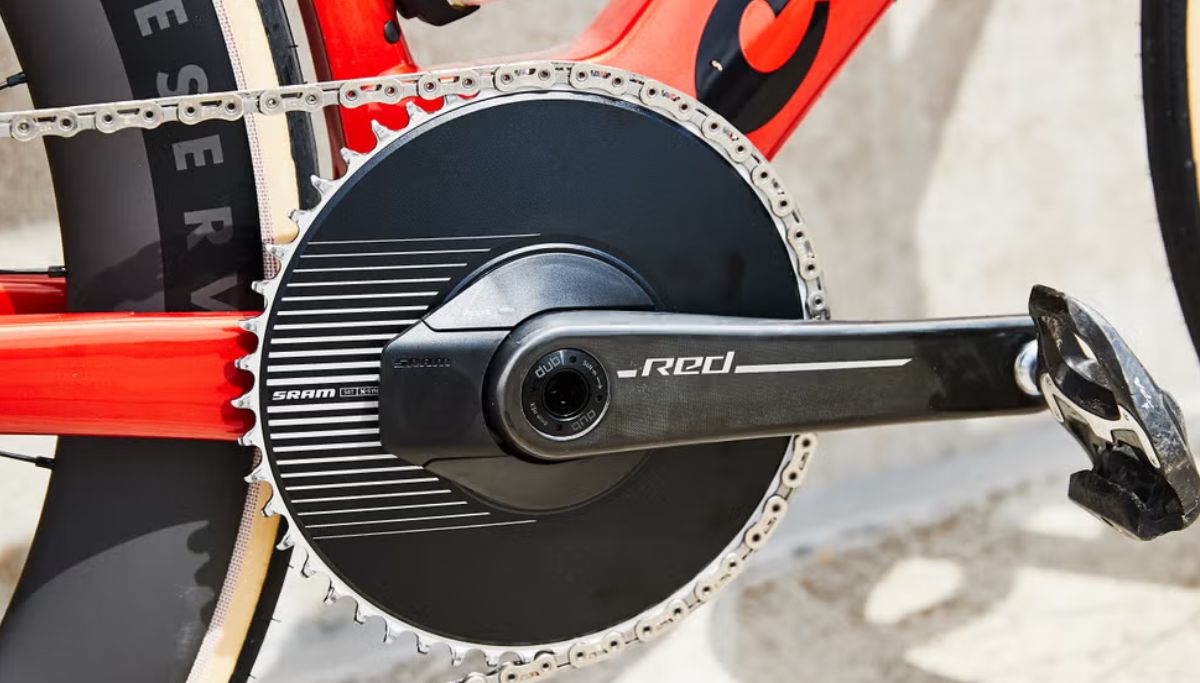
Choose 2x If You Ride Mostly Road
If your riding is mostly on pavement, especially if it includes long climbs, fast group rides, rolling terrain, or steady efforts where cadence matters, 2x still has a strong case. The biggest advantage is gear spacing. A double chainring gives you smaller jumps between gears, which makes it easier to hold a consistent cadence and keep your effort smooth instead of bouncing between slightly too hard and slightly too easy.
That is Shimano’s core argument for the double chainring. Even with modern wide-range cassettes, the company says, a 1x setup means “you have to sacrifice gearsteps.” If you are the kind of rider who notices every change in cadence, that matters more than any cool-factor story about what the pros are doing.
It is not simply about having a very low gear and a very high gear. It is about having the gears between them arranged in a way that feels natural on the road. If you want one bike to handle hard pacelines, long mountain days, fast descents, and casual endurance rides without much pre-ride thought, 2x remains the safe, elegant, and often better-feeling answer.
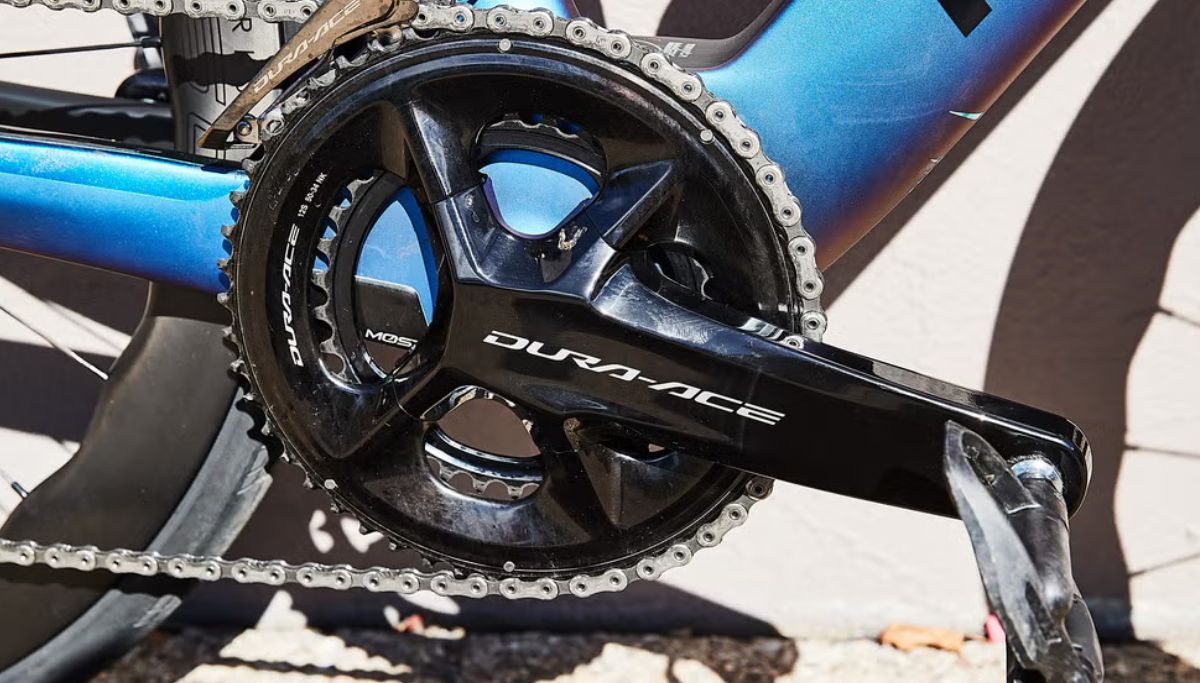
Think About Gear Jumps
Gear jumps are one of the clearest differences between 1x and 2x, and they are also one of the most personal. Modern wide-range cassettes have made 1x far more versatile than it used to be, but a single-ring drivetrain still asks you to accept larger steps between gears. Some riders adapt immediately and never think about it again. Others notice every missing in-between gear and quietly resent the drivetrain for the next three hours.
If you are cadence-sensitive, 2x will probably feel more natural. If you are comfortable changing cadence slightly to match the available gears, 1x becomes much easier to live with. Both are valid. It is simply a matter of how you ride and what your legs tolerate before filing a complaint.
Decide Whether You Need One Bike to Do Everything
This is where the pro comparison gets dangerous. Pros can run 1x because their bikes are set up for a specific day. If the course changes tomorrow, the gearing changes tomorrow. Most riders do not live in that world. They need one drivetrain to cover a messy range of real life, from smooth roads to rough shoulders to climbs that looked much friendlier on the route map.
That is also why pro trends can be misleading. A WorldTour team can swap gearing day by day, even race by race. Most consumers are not living that way. They need one setup to cover group rides, climbs, rough roads, windy endurance days, and whatever shortcut turns into farm-lane nonsense halfway through the ride. So a drivetrain that makes perfect sense for one specific course is not automatically the right everyday answer.
SRAM’s most useful consumer-facing point is also its simplest: ask whether the benefits solve problems you actually have. If you want one road bike to do nearly everything, 2x is usually the more versatile choice. If your riding is more specialised, or if you are building a bike around rough terrain, gravel, mixed-surface events, or simplicity above all else, 1x becomes far more compelling.
Simplicity Versus Flexibility
In the end, the choice is less about one chainring defeating two than about what you value more. 1x gives you fewer parts, cleaner operation, better chain security, and less to manage while riding. It rewards riders who want a quiet, direct, low-fuss drivetrain that thrives when the surface gets unpredictable.
2x gives you finer gear selection and better versatility across different kinds of road riding. It rewards riders who care about cadence, climb a lot, ride fast in groups, or want one bike that feels right across many different speeds and terrain profiles.
What About Classified?
There is, technically, a third way. Classified’s Powershift system ditches the front derailleur and puts a 2-speed shift in the rear hub, trying to give riders the range of 2x with some of the cleaner operation and chain security that make 1x appealing.
But it is not a full drivetrain in the way SRAM or Shimano is. The hub has to work with another brand’s rear derailleur and shifters, and because Classified also uses its own cassettes, you are dealing with a mixed system rather than one fully integrated package. That does not mean it is bad. It does mean it is a little more specialised and a little less tidy than just running a complete setup from one of the big drivetrain brands.
For now, it is a niche answer. Still, it is one I’d keep an eye on, because it looks like a pretty smart attempt to split the difference between 1x and 2x without fully inheriting the weaknesses of either. If you’re willing to invest the extra work required to pull a Classified system together for your bike, it is highly compelling.
The Bottom Line
The rise of 1x does not mean 2x is going away. It means riders have more good options than ever, and that drivetrain choice is becoming less about tradition and more about matching equipment to the way you actually ride.
The smartest approach is not to copy the pros, but to understand why they use 1x when they do. If those same problems show up in your riding, 1x may be the better tool. If they do not, 2x remains a deeply sensible, highly refined solution. The best drivetrain is not the newest, cleanest, or most pro-looking one. It is the one that makes your rides better.
This article first appeared on bicycling.com
READ MORE ON: drivetrain pro trends tech talk