
Tested: The Five Best Bike Radars
Real-world ride testing revealed which cycling radars deliver early, consistent car-back alerts — and which ones to avoid
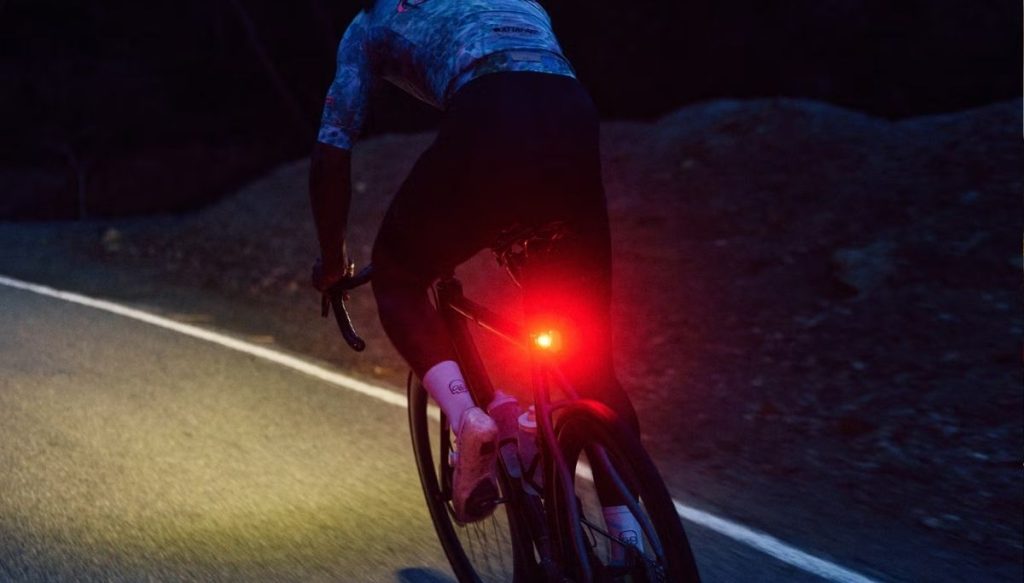
Radar (Radio Detection and Ranging) may have been a sophisticated military application when it was first developed seventy years ago, but it’s commonplace today. It’s used to develop weather forecasts and to help planes navigate, but also to track the speed of a cricket ball, operate parking sensors in cars, and even control contactless taps in public bathrooms.
Almost every radar device works by emitting pulses of electromagnetic radio waves that bounce off objects (a.k.a. targets) before returning to the device. Using the reflected beams, the device calculates and tracks the targets’ distance, direction, relative speed, shape, and other factors.
Over the years, those emitters have shrunk to the size of postage stamps. The first bike radar system appeared in 2014 when the South African company iKubu developed the Backtracker. The following year, Garmin acquired iKubu and launched the Varia RTL500. Future models from the brand gained Bluetooth connectivity, mobile apps, and integrated cameras. Most recently, Garmin launched the RearVue 820, which features vehicle-size detection and same-speed tracking capabilities. Over the past three years, Wahoo, Trek, Bryton, and Lezyne have developed their own radars.
All cycling radar systems basically work the same way. The radar unit sends tracking data for multiple vehicles to your cycling computer. The head unit then provides an audible warning and graphically displays the relative location and speed of vehicles, thus allowing you to react accordingly. Most devices also integrate the radar with an LED taillight to alert drivers to your presence.
What separates the good models from the bad ones is the proprietary algorithms each brand uses to tune and adjust the sensitivity and detection for their respective device. A good radar will consistently provide you with clear warnings of approaching vehicles and give you sufficient time to react. Bad ones can provide frequent false alarms, or worse, fail to warn of an approaching vehicle.
As the radar brands caution, and as our ride-testing shows, the devices aren’t foolproof or perfect. When shopping for a radar, it’s important to understand its limitations and what separates the better ones from those to avoid.
There are four possible outcomes of radar detections and alerts to the rider. The first two are expected from a cycling radar. The third is (mostly) annoying and (usually) an occasional occurrence. The last one can have potentially disastrous results for the rider.
🟢 True positive: Vehicle is present
The radar detects it and alerts the rider.
🟢 True negative: No vehicle is present
The radar does not detect anything or alert the rider.
🟡 False positive: No vehicle is present
The radar detects something and alerts the rider.
🔴 False negative: Vehicle is present
The radar does not detect anything or alert the rider.
Ideally, you only want true positive and true negative outcomes from an on-bike radar system. This means the radar is doing its job: locating, tracking, and notifying you of vehicles approaching from behind.
False positives (sometimes referred to as “ghost cars”) occur when the radar alerts you that a vehicle is approaching, but there isn’t one when you glance over your shoulder. A false positive can happen for various reasons — another cyclist, reflections off windows or buildings, chain-link fences, or a variety of other causes.
With the best on-bike radars, these alerts are rare and simply an annoyance. However, as we discovered with some radars, the false-positive alerts happen so often that you lose faith in the device’s ability to detect and track vehicles. The frequency of false-positive notifications is what we found to be the biggest difference between the radar systems we recommend and those we advise avoiding.
The most dangerous outcome is the false negative, when the radar fails to alert you about an approaching vehicle, or when it sends an “all clear” notification but a vehicle is still present.
We spent several months testing twelve radar systems. One trait defines the radars we like, versus the ones we avoid: Trust. Since you’re trusting a radar with your life, the device must reliably do its job. We rode these units on multiple bikes and routes to evaluate their overall functionality in common riding situations— w inding roads, climbs, busy streets, and multi-use trails. We also tested them in weather conditions ranging from 30-degree heat to nearly freezing temperatures in wintetr.
After thousands of kilometres of use, Bicycling’s test team determined seven radar units worth considering for your rides. Of these, five systems particularly stood out above the others for their consistency, reliability, and durability.
Several radar systems failed frequently enough that we lost trust in them. They produced too many false positives or did not reliably track targets, either notifying us too late to move over or giving us an all clear when a vehicle was still present.
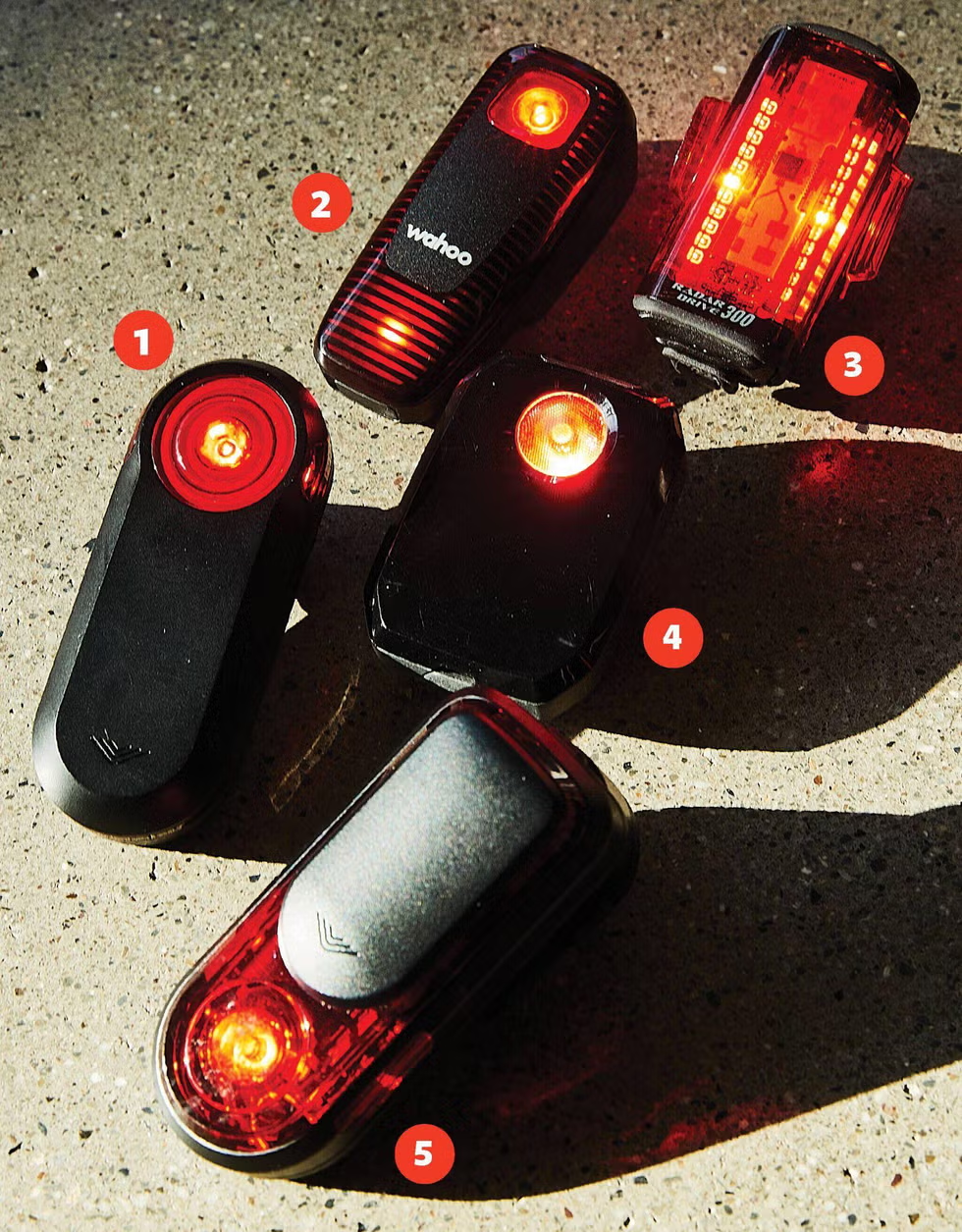
The Five Best Radars
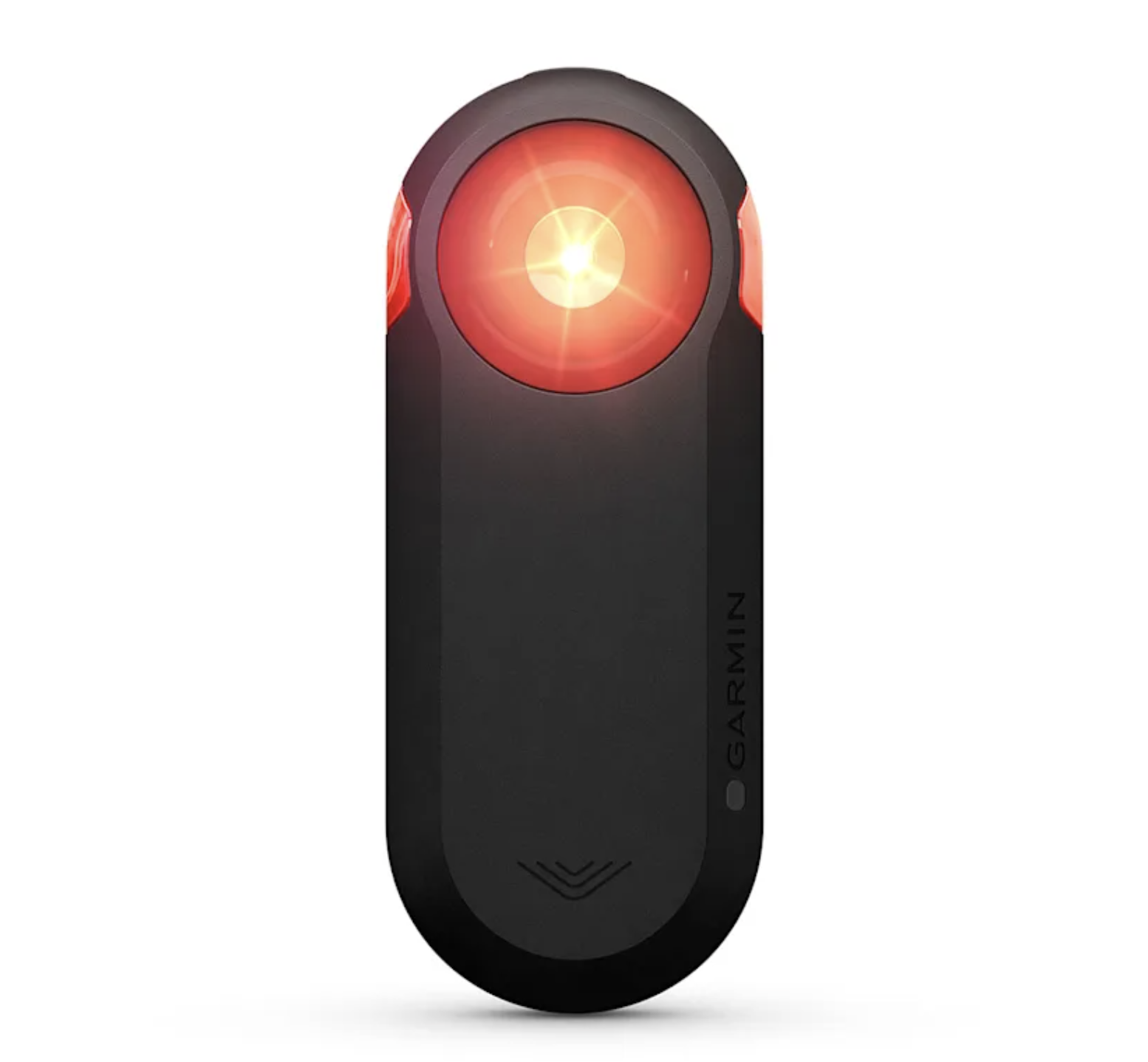
1. Garmin Varia RTL515 (R4,399) The RTL515 works more reliably than any other radar we tested. Other systems might have longer battery life, weigh less, or pack a brighter light, but none are as well-rounded or as easy to use as this Garmin. The radar’s app is also stellar. It can serve as a display if you ride with your phone on your bar, and it will deliver audio notifications through headphones even if you’re not listening to music or a podcast. We also tested a similar version from Garmin called the RCT715 (R8,799), which adds a rear-facing camera. However, it is bulkier and heavier, and has a shorter battery life.
2. Wahoo Trackr Radar (R4,999)
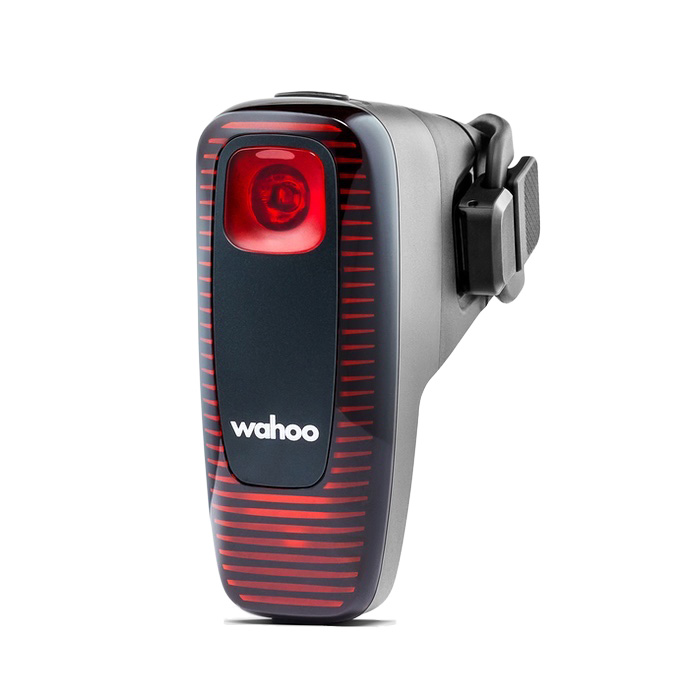
Introduced in 2025, Wahoo’s Trackr Radar became the first true competitor to Garmin’s supremacy. The unit weighs slightly less than the Varia RTL515, yet it boasts a longer battery life and slightly longer detection range. Wahoo’s device also incorporates a brake-light feature that brightens the light as you slow down, and a battery-saver mode that decreases luminosity when no vehicles are around. For some riders, the Trackr’s biggest downside is its lack of an on-bike mobile app. That means you have to use a compatible cycling head unit to get alerts.
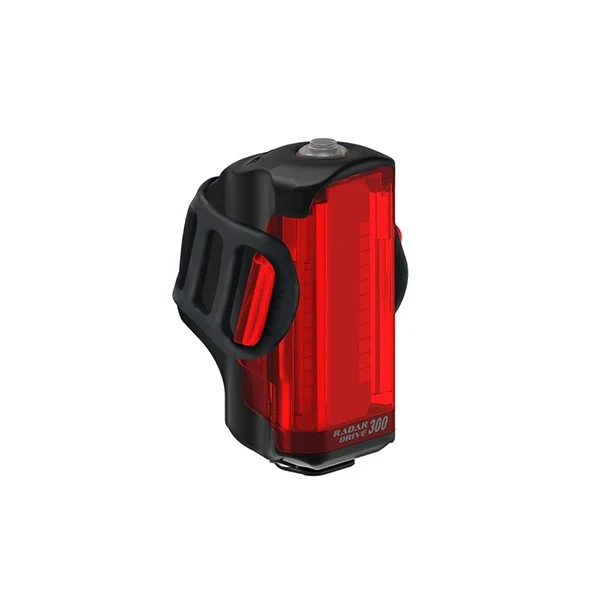
3. Lezyne Radar Drive (R3,200)
On its own, this taillight is a solid unit that packs a category-leading 300-lumen flash and radar technology that functions well when paired with a cycling head unit. It will also provide audible alerts through Lezyne’s mobile app, even if your phone is in your pocket. If you don’t use a cell phone or cycling computer to track your rides, no worries. The back of the React Drive front light (R2,000) provides visual alerts when paired with the Radar Drive. Lezyne sells the devices individually or as a system from certain retailers.
4. Trek CarBack (about R4,000)
The CarBack is tricky to get hold of in South Africa (speak to your local Trek dealer), but it’s a goodie. The compact, square profile helps it fit better on smaller bike frames or when mounting it to a saddle. Trek claims it has the greatest detection range; we found it to be similar to other top radar units. And the CarBack’s 90-lumen flashing light is brighter than those on Garmin’s and Wahoo’s devices. Trek’s mobile app is also useful if you don’t use a cycling computer; it notes both the lane position and the distance of approaching vehicles.
5. Garmin RearVue 820 (R5,999)
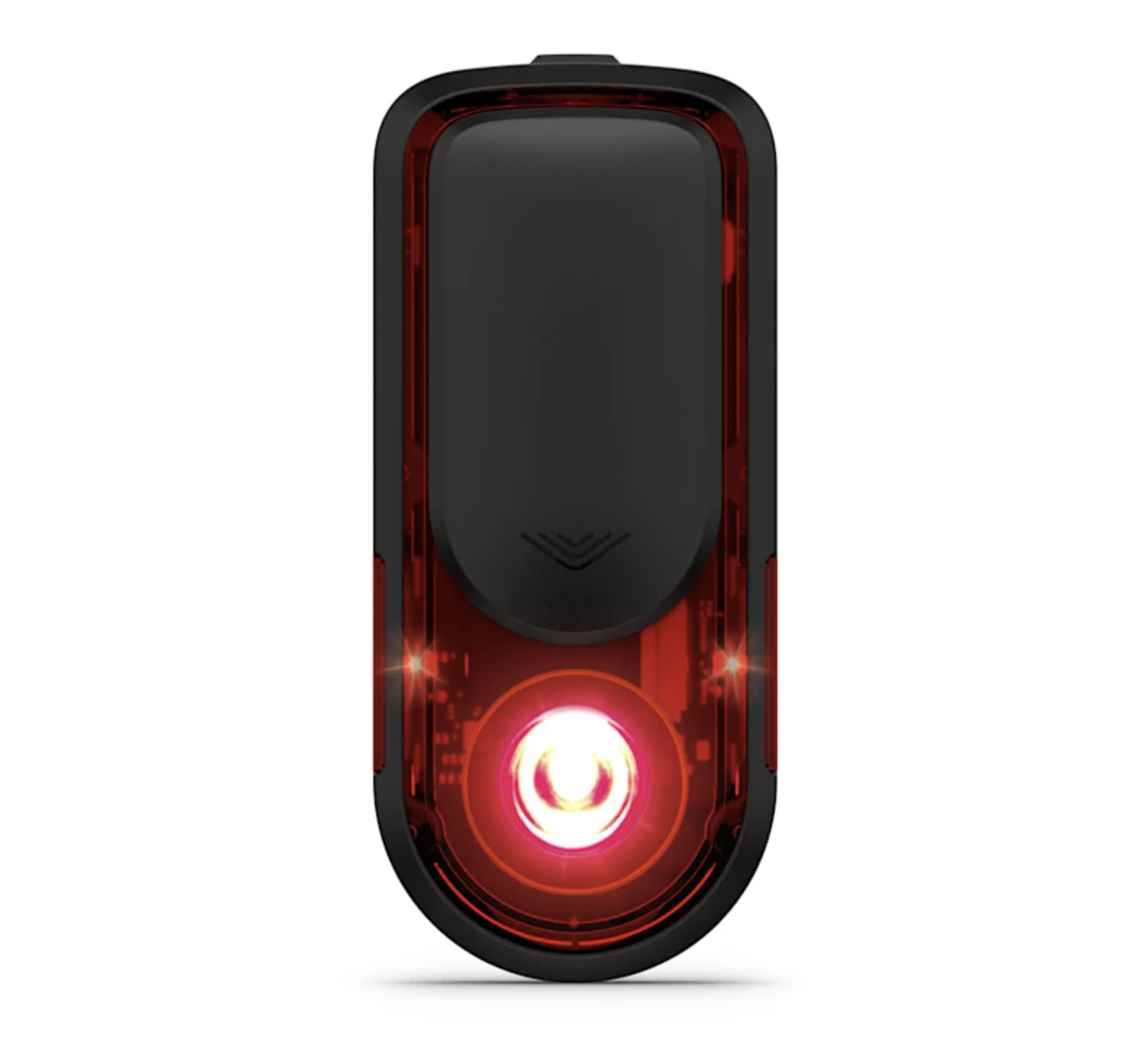
Garmin’s newest cycling radar improves upon the Varia RTL515 with a longer battery life, brighter flashing light, and greater vehicle-detection range. Plus, the 820 adds a brake-light feature that increases the intensity of the rear light as you slow. It also tracks vehicles traveling the same speed as you. If you have a Garmin Edge X40- or X50-series computer, the radar also displays when vehicles change lanes and displays icons that indicate each vehicle’s size.
Cheap Radar Systems
Online retailers like Temu are flooded with budget radars. They’re often advertised as “radar lights” and cost as little as R500. Be wary. Many of these are simply lights that use radar to brighten when a vehicle is detected. They do not provide the rider with any warning or notification.
We tested several lower-cost radar lights that do provide sufficient warning to riders. The Magene L508 (R2,300) and Bryton Gardia R300L (about R2,000) provided mostly reliable alerts. While both had slightly more ghost cars than Garmin, Wahoo, Lezyne, or Trek radars, we did not experience any false negatives on rides.
I also sampled budget radars from iGPSport, Cycplus, Ravemen, and Magicshine (all just under R2,000). They were unreliable and registered excessive false positives. The Magicshine’s SeeMee R300 was especially egregious. On my second ride with the unit, it produced so many false positives that I shut the device off to maintain my sanity.
READ MORE ON: bike lights bike radars safety