
How Do You Stack Up Against a Tour de France Rider?
The numbers are more brutal than you think.
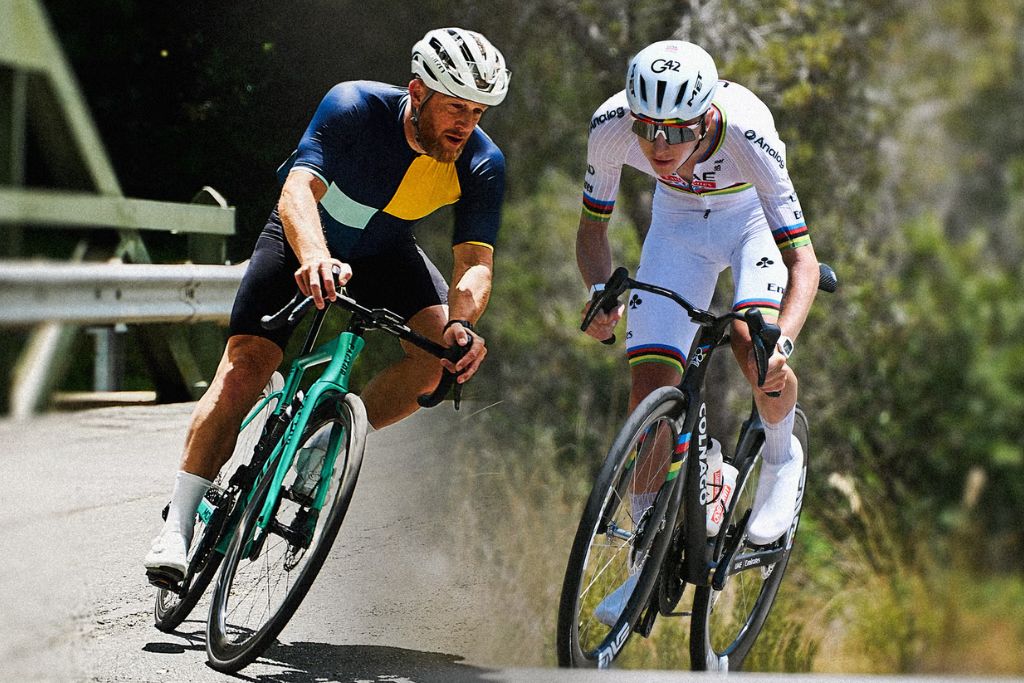
Ever wonder how you’d fare against a Tour de France pro? Well, in 2015 we looked at key performance metrics (as well as some fun ones) to see how average riders might stack up against the pros riding the Tour de France.
Everyone’s faster thanks to advances in training, equipment, and nutrition.
But here’s the thing: things have changed a lot since then – for you and the pros. Everyone’s faster thanks to advances in training, equipment, and nutrition. For example, last year’s Tour de France was the fastest in history, with Slovenia’s Tadej Pogačar (UAE Team Emirates XRG) completing the 3,302km route in 76 hours, 0 minutes, and 32 seconds, which set a new record with an average speed of 43.4km/h, which is 3.5 kph faster than Chris Froome’s average speed when the Briton won the race in 2015.
To help us revisit the comparison, we turned to Adam Pulford, Head Coach with CTS Cycling and host of the “Time-Crunched Cyclist Podcast, and the staff at EF Education-EasyPost and EF Education-Oatly, which are sending squads to both the Tour de France and the Tour de France Femmes avec Zwift this summer.
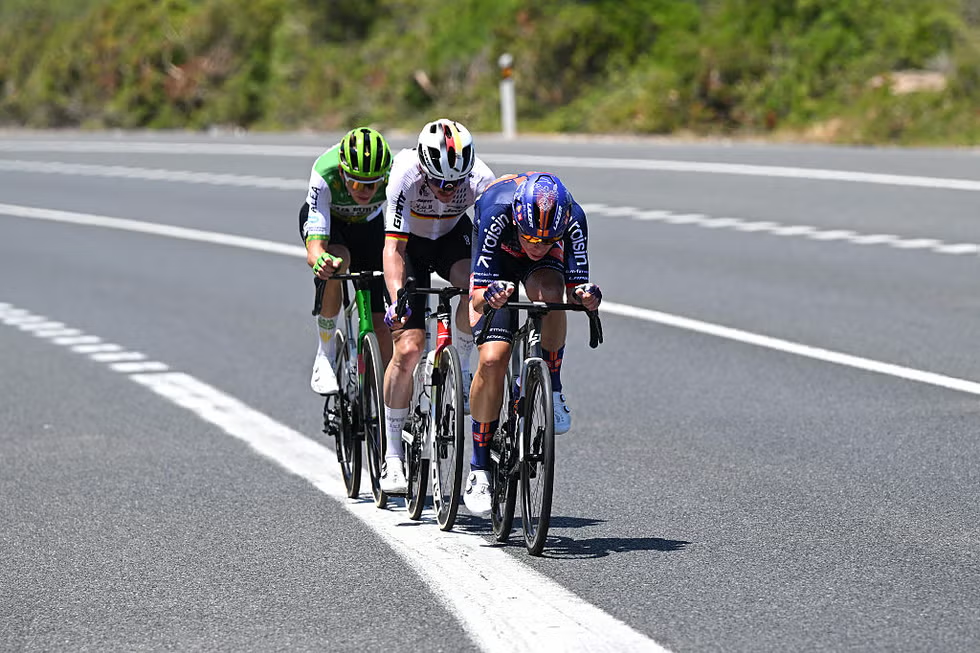
Average Speed on Flat Terrain
Average Rider: 24–29 km/h
Tour Pro: 43–48 km/h
Pro teams have spent considerable time analysing and improving aerodynamics over the past 10 years, which means things like bikes, helmets, and clothing have been optimised to ensure that every watt a rider produces goes into moving them forward.
When coupled with improvements in how riders train and fuel themselves – plus the fact that Tour de France stages have gotten much shorter over the years (to encourage more aggressive, and therefore more exciting, racing) – stages are raced at much faster speeds – especially on flatter ones.
These advancements have reached you as well, so you’re much faster than you would have been in 2015. But the pros would still probably complete the same course in about two-thirds the time of the average rider.
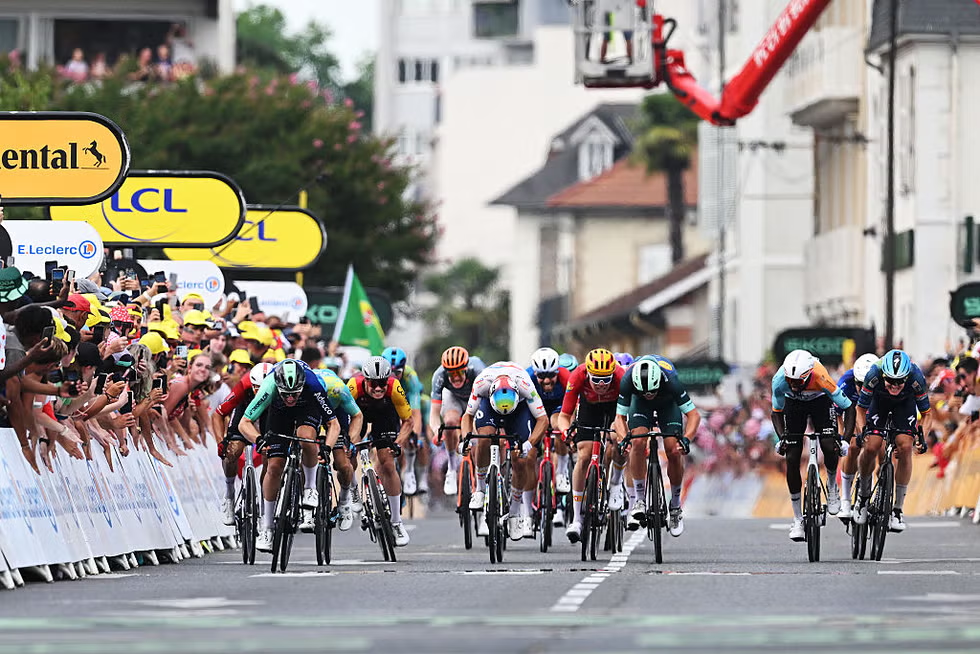
Maximum Sprint Power
Average Rider: 600-800 watts
Tour Pro: 1800-2000 watts
Sprinters generate incredible amounts of power in the dash to the finish line, with a larger rider like Italy’s Jonathan Milan (Lidl-Trek), who won the green jersey in the 2025 Tour de France, maxing out at around 1800-2000 watts at the end of a flat-field sprint.
The reason? Well, bikes are stiffer and more aerodynamic than they were 10 years ago, which means less power is wasted. Sprinters have also improved their training, allowing them to push larger gears at higher cadences, yielding even more watts.
But as we’ve seen in other areas, these advancements have trickled down to riders like you, which means your bike, kit, and helmet have probably increased your power output without you really knowing it.
To train it, Pulford suggests focusing on 20-second maximum efforts. “Go hard for 20 seconds,” he says. “Then refine your sprint by changing your gearing to find the perfect balance between getting bogged down at first and spinning out at the end.” The goal is to know what gears to use at different speeds–without having to shift in the middle of the effort.
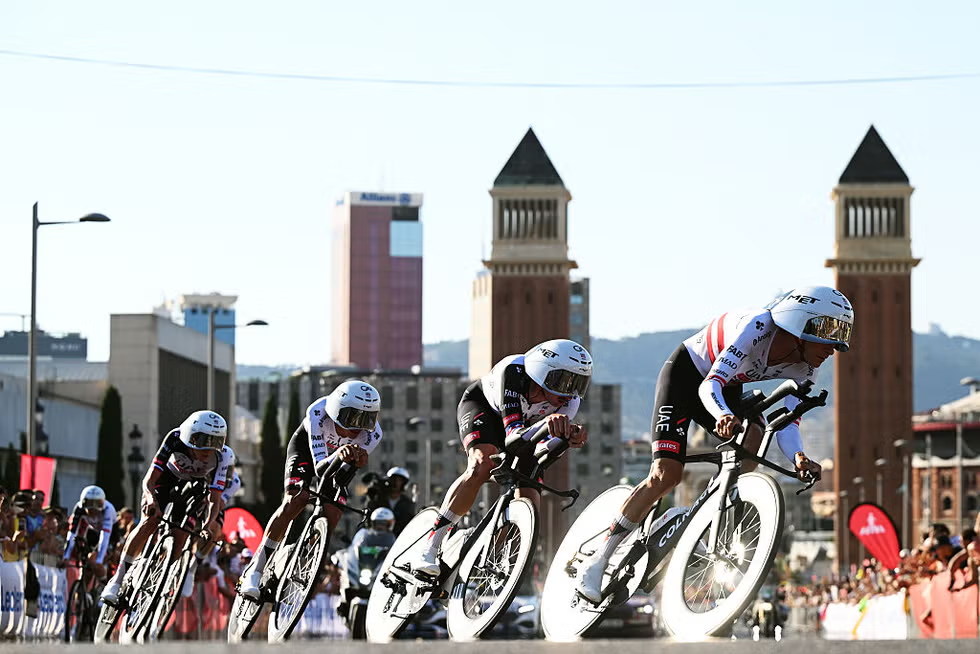
Average Time Trial Speed
Average Rider: 31–32 km/h
Tour Pro: 47–53 km/h
The Tour de France and the Tour de France Femmes avec Zwift each feature an individual time trial this summer, with the men completing a 26.1km race against the clock on Stage 16 and the women completing a 21 km time trial of their own on Stage 4.
In 2015, we said that a Tour pro’s ability to produce more power for longer means that, alone, they would probably finish cooling down by the time you cross the finish line. That’s probably still the case today, but as in other areas, your gear alone might make you faster than an average rider from 2015.
But it’s not just about the gear you’re riding. According to Pulford, many of the Tour’s best time-trialists focus on metrics such as “Watts per Aerodynamic Drag” or “Power to CdA.” Not every pro knows their CdA, Pulford says, and riders like us definitely don’t. But that doesn’t mean we can’t train it.
If you have a power meter, Pulford suggests focusing on longer intervals: 4×8 minutes at about 95-100% of your FTP (Functional Threshold Power) should do the trick, with a 4-minute rest between intervals. And if you don’t have a power meter, you can use your heart rate or RPE (rate of perceived exertion) to simulate the types of intervals Pulford’s talking about.
Carbs Consumed
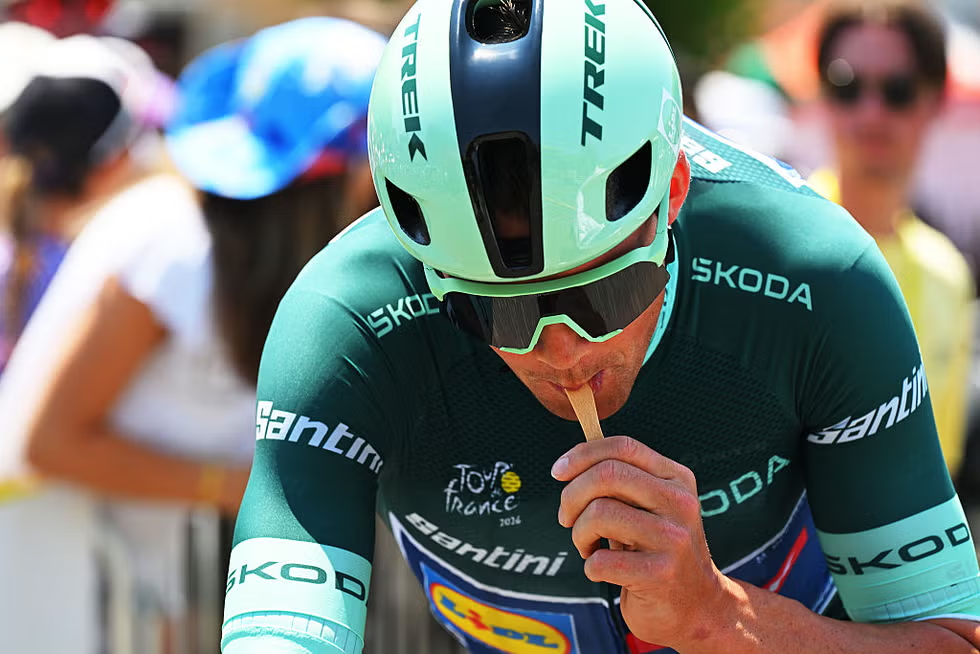
Average Rider: 60-70 grams carbs per hour of riding
Tour Pro: 90-120 grams carbs per hour of racing
Once upon a time, soigneurs (all-purpose team assistants) filled musette bags for the riders with mini-paninis, rice cakes, and other snacks for them to eat mid-race. But things today have become much more streamlined with each rider aiming to consume between 90-120 grams of carbohydrates (about three gels) per hour as quickly and as simply as possible.
For example, according to Kristen Arnold, a nutritionist with EF Education-EasyPost/Oatly, riders might eat a rice cake every once in a while, but for the most part their mid-race food intake consists of gels and energy bars made by Amacx because they’re packed with carbs, easy to eat, and gut-friendly. They usually down about 3 gels per hour depending on the stage.
In your case, shoot for about 60-70 grams of carbs per hour on your rides, but remember that your gut needs training just like your body. Gradually build up to consuming more carbs over a few weeks. You might need to do some math given the amount of carbs in each gel packet.
Bottles Guzzled
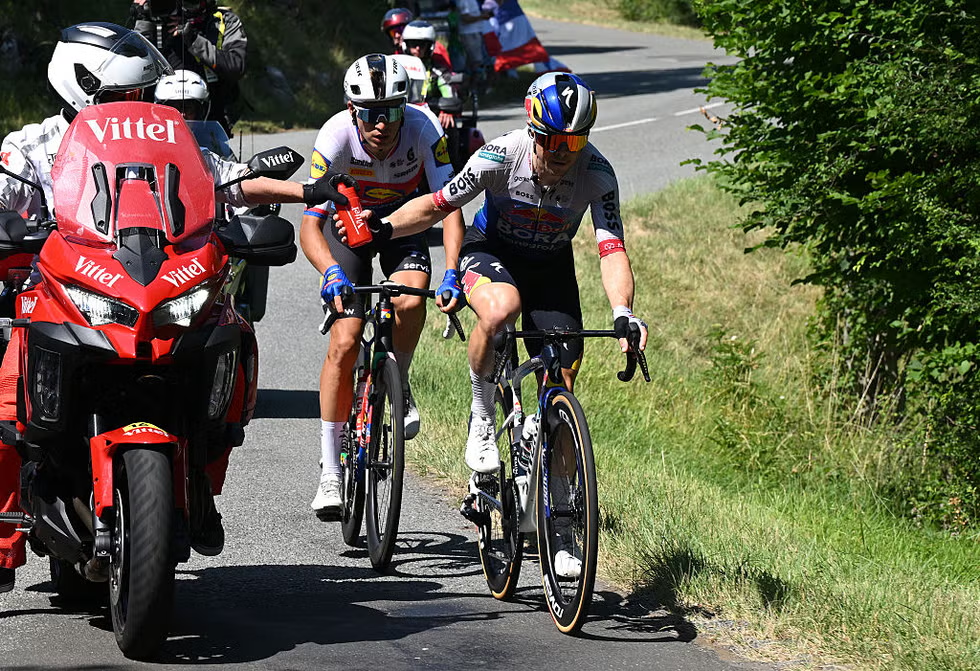
Average Rider: 1-2 per hour
Tour Pro: 3-4 per hour
According to EF Education-EasyPost/Oatly soigneur Dayna Haythorne, a Tour pro guzzles at least three bottles per hour of racing: two with a mixture of electrolytes and simple carbs plus one with just water. The mix is crucial because it replaces missing electrolytes and minerals while providing additional carbs.
Believe it or not, most of us still don’t drink enough before, during, and after riding. Depending on how long and how far you’re riding, you should drink one to two bottles of water or drink mix per hour. But that’s not enough: what you drink before and after makes a big difference as well.
An easy way to gauge your fluid intake is to weigh yourself as you’re getting ready for your next ride. (Yes, this means naked or au naturel.) After the ride, step on the scale a second time to see how much weight you shed due to fluid loss. Then, drink about 1 litre of water or a recovery drink for every kilogram of body weight lost.
Before your next ride, use the same formula to pre-hydrate: essentially, drink about 1 litre for every kilogram of body weight you anticipate losing. Do this regularly, and you’ll begin to notice – and then anticipate – how things like temperature, duration, and intensity affect your fluid loss so that you can prepare and replenish accordingly.
Calories Burned
Average Rider: 600-800 calories per hour
Tour Pro: 1000-1125 calories per hour
During the course of a 4-hour stage, a typical Tour de France pro burns between 3,500 and 4,500 calories – so they need to start recovering, replenishing, and refueling for the next day’s race right away.
After a stage, Arnold says the riders will immediately chug cherry juice to start replenishing carbs and prevent inflammation. (Cherries contain lots of natural anti-inflammatory compounds called anthocyanins.) They’ll even eat some sweets (Haribo gummies are a popular choice) to add more carbs. Finally, they’ll drink a recovery shake and eat a simple post-stage meal with some carbs (rice or pasta) and some lean protein (chicken or salmon).
You can do similar things after your own rides. But the main goal is to eat or drink something with a mix of carbs (to replenish glycogen stores) and protein (to rebuild muscle) – either a recovery shake or a simple meal. And save the post-ride beer until you’ve had a chance to get your recovery started with something healthier.
Hours of Sleep Per Night
Average Rider: 6-7 hours per night
Tour Pro: 8-10 hours per day
Most recreational riders miss the low-hanging fruit when it comes to improving their performance on the bike. After all, fancy drink mixes, cherry juice, and that expensive integrated bar-stem combo you just bought are great, but if you’re taking care of the simple things – many of which are free – you’re missing out on the benefits of the more expensive and sophisticated things you’re investing in.
Take sleep for example. Most of us don’t get enough sleep, which means we come into big events without the rest and recovery we need in order to perform at our best.
Riders at the Tour de France get this: when they’re not riding or eating, they’re resting. EF Education-Oatly’s Magdeleine Vallieres – the current world road race champion – shoots for about 9 hours of sleep per night during the Tour. Many of her teammates sleep in or nap on the bus to cram in a couple extra hours when they can.
Thanks to stressful jobs, teething toddlers, or just “life” in general, you might not have the same luxury as they do, but focusing on things like getting to bed a little earlier, putting down your phone a bit sooner, and staying away from alcohol in the days before a big ride will help you get the most out of all the other things you’re doing to ride your fastest.
Bikes To Ride
Average Rider: 1-2
Tour Pro: 4-5
Ten years ago, most pros came to the Tour de France with a quiver of bikes suited to each type of stage: an aero road bike for flatter stages, a lighter “climbing” road bike for the mountains, a road bike designed for wider tyre clearance and comfort over cobblestones (when stages included them), and a super-aero time trial bike for races against the clock — and a few spares depending on the rider.
But thanks to advances in frame technology, most riders today use the same bike for every road stage, as designers have found ways to make bikes aero, light, and comfortable. That makes life a lot easier for team mechanics like EF Education-EasyPost/Oatly’s Cedric Legrandois, who tells us that Tour de France riders today will bring a total of 4-5 bikes to the race: a “race” bike for road stages, 1-2 spare road bikes, and 1-2 time trial bikes.
Tyres Changed
Average Rider: 1-2 per season (if you’re lucky)
Tour Pro: 1-2 per Tour (if they’re lucky)
EF Education-EasyPost/Oatly mechanic Jorge Santos says that he and his colleagues check each tyre after every stage. The team is sponsored by Vittoria, and primarily uses one of two tyres for most stages: the Corsa Pro, a more durable, all-round tyre that they expect to last about 5-6 stages; and the Corsa Pro Speed, a faster, lighter tyre with less rolling resistance that they run for just 1-2 stages depending on wear.
Since they check them after each stage, mechanics are able to anticipate when tyres need replacing – and it helps that they have an unlimited supply of free spares. So over the course of the Tour the team might have to change one flat per stage – sometimes fewer if luck is on their side.
Chains Replaced
Average Rider: 1 per season
Tour Pro: 1 per Tour
Most mechanics recommend changing your chain every 3200–4800 km, but we’ve gone much longer. As long as you clean it, lube it, and check it regularly, your chain will last a full season (depending on how often you ride).
Santos tells us that EF riders start the Tour with new chains and usually don’t need them replaced during the race. While cleaning, lubing, and tuning the team’s bikes each night, mechanics inspect each one and use a SRAM chain tool to check for wear.
This article first appeared on bicycling.com
READ MORE ON: 2026 Tour de France pro cycling Tour de France