Four Tips for Better Cycling Later in Life
Decades of training have set you up to be athletic well into your later years. Here’s how Joe Friel stays on the bike at 82.
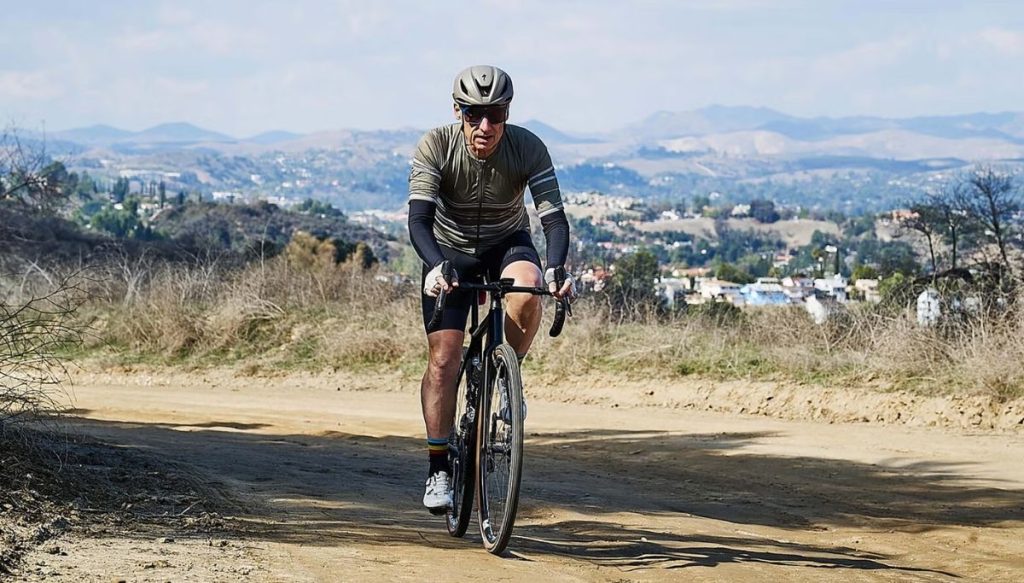
Over a decade ago, Joe Friel, a lifelong athlete and cofounder of TrainingPeaks, wrote the first edition of Fast After 50: How to Race Strong for the Rest of Your Life. Since that time, not only has the landscape of training for older athletes shifted, but so has his own.
If you want advice on how to remain a competitive athlete and coach, ask Friel — he’s now 82, just published the second edition of the book, and, to do so, he studied the latest scientific research to learn how your training should change while still challenging yourself.
“At this age, “your sport-specific movement skills have become well refined, meaning it takes less effort at a given pace, power, or speed to do whatever your sport demands of you physically.”
For more real-life inspiration, Friel also interviewed many “superager” cyclists for the book. Each of their stories, including injuries and illness, illustrates how, with the right mindset, you can continue to ride energetically, powerfully, and happily as you get older.
In fact, at this age, “your sport-specific movement skills have become well refined, meaning it takes less effort at a given pace, power, or speed to run, cycle, swim, row, or do whatever your sport demands of you physically,” Friel says.
In other words, your future can be bright, even though it won’t look like the past.
Lesson No. 1: Keep Your Motivation Because Your Spirit Knows No Age Limit
“My biggest and best thought is that motivation never stops with athletes,” Friel says. “Even if they get injured or have an illness that makes them have to start their training all over again, they will always find motivation.”
With motivation, though, sometimes comes an eagerness to do too much, too soon. “You may have been riding for a lifetime, but when you’re older, you need a longer base period,” Friel explains. “Too many athletes cut this short and because of this, they don’t experience their full potential. You have to build a good aerobic base before we do higher things.”
In the athlete profiles, Friel details all the various illnesses and health issues each athlete has overcome to continue cycling. Bruce Bird, three-time UCI Grand Fondo World Champion, underwent cardiac cryoablation (in which unhealthy cells are frozen to fix arrhythmias), and later won his gender and division in the 2025 Canadian Gravel Championships. This proves two things: first that being athletic does not automatically save you from encountering health challenges, and, second, that facing those circumstances does not have to stop you from winning races.
Don’t talk yourself out of an athletic future if you get a diagnosis that stops you in the present. Stay motivated to overcome those challenges or work within the boundaries of your health condition in order to remain active, and, possibly, competitive.
Lesson No. 2: Focus on Building Power to Stay Strong
While riding fast is how athletes often define their ability, it may be more helpful to focus on power, which will, in turn, help create speed on the bike.
You know that you lose muscle mass as you age, but consider the ramifications of that: it’s muscle, including cardio power, that allows you to push up hills and pedal fast. If you mourn your speedy rides, you need to build strength, which means lifting weights.
“If I were your coach,” Friel writes in the book, “I would have you do gym workouts once or twice weekly throughout most of the season.”
In fact, he says, “I strongly suggest you include two types of gym training in your routine: weight lifting and joint mobility exercises.” This will help you avoid injury and improve performance. “You can’t bypass this,” he adds.
Concurrently, on the bike, build power through sprints and hill work, Friel says, even if you haven’t been that type of cyclist in the past. Remember, you are now using those aspects of your ride to stay strong, not as a performance metric.
“My cycling has changed a lot, and it’s mostly a loss of power,” Friel says. “In your 80s, it diminishes quite quickly, so it’s a concern of mine to lift weights and do sprints and hills. I want to maintain the force.”
As long as you’re at the gym or using weights in your home, do a little balance work, too.
If you’re worried that all of this exercise will leave you stiff and sore, be more observant about how you feel after workouts compared to being sedentary. “Discomfort usually comes after missed workouts, not hard workouts,” Friel explains.
Lesson No. 3: Measure Active Days, Not Cycling-Specific Metrics
Over the years, Friel has seen the research flip-flop numerous times on the value of high-intensity training and lower-intensity training, but there is one thing that has remained true: “You can reverse what once appeared to be inevitable when it comes to age if you remain a consistent athlete.”
Challenge yourself to “maintain,” Friel says, “because you are fighting loss,” and to do that push yourself on the bike and in the weight room, but also be as active as you can on the low end of intensity, such as swimming and easy bike rides.
“My goal is to always stay as active as I can given the range of possibilities,” Friel says. In the past, maybe you kept track of metrics such as kms or watts, and it’s fine to do that now, but you might consider adding “days I am active” to your training log, and feel free to expand your idea of “active.” For example, taking a walk on days when you don’t cycle will reduce your chances of developing a metabolic disease, according to the National Institutes of Health.
Lesson No. 4: Limit Comparison and Invite Inspiration
Friel discusses the importance of caring for not only your body, but also your mental health, too. He reminds you to not assume that exercise is enough to save you from mental health issues or the everyday emotional struggles that come with aging.
This is especially true if your physique has changed. Maybe you’ve gained weight or notice changes in your musculature. Worrying about these changes should not impel you to push yourself to reach the goals you did when you were younger. Overtraining is associated with detrimental physical and psychological consequences for athletes of all ages, even older, wiser ones.
Therefore, try not to focus on what you have lost over the years, and instead observe what you have gained through experience and, yes, mistakes. Cultivate a beginner’s mindset to remain young because that frame of mind will help you continue to learn and grow, i.e., stay young.
That’s because it’s literally never too late to learn, change, and improve. A recent Yale University study found that in a survey of 11,000 adults over 65, those with “more positive age beliefs were significantly more likely to show improvements in both cognition and walking speed.” If you think of this time of your life with excitement and for the potential of growth, you will be more likely to actually be happy and fast!
“I try to avoid comparing my fitness today with my fitness years ago, although it is sometimes inevitable,” Friel says, “but I also remember that I’m going in the direction of a longer, healthier life.”
This article originally appeared on bicycling.com
READ MORE ON: expert tips Older athletes