
How to Use Data Without Losing the Joy of Riding
It starts with learning how to listen to your body, not your watch.
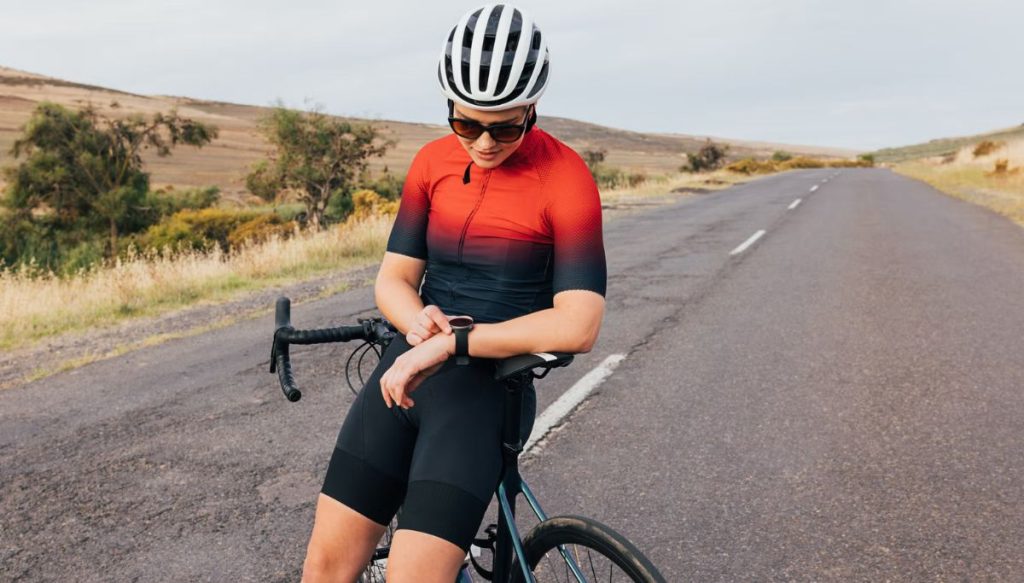
I have a somewhat uneasy relationship with my personal performance data.
If I track anything, from heart rate to mileage, it can get out of hand pretty quickly if I let it. When that happens, data becomes a constant mental hum, with numbers and digital feedback taking up too much space in how I experience physical exertion.
“It’s not the data itself but how you choose to engage with it that matters most.”
Of course, data tracking is a powerful and useful training tool. Research has found that fitness trackers positively influence people meeting their training goals, and I’ve seen this confirmed with clients many times over.
While I recommend a wearable for all my clients to get the most out of their training, I personally didn’t start wearing one all the time until about two years ago, having resisted any kind of fitness tracker outside of workouts or rides for as long as they’ve been around.
My apprehension about full-time wearable use is more existential than anything else. A completely analogue life, cycling and otherwise, is something I grew up with and still long for. I sometimes wonder if that’s part of why our current, always-digital existence can feel so depleting.
If that makes me sound like a curmudgeon, so be it. At least I’m not alone. Studies have identified the unique negative stressors that can arise from data obsession, and have even given the phenomenon a name: technostress.
But I still want the performance benefits that data provides! To get those benefits while keeping technostress to a minimum, I’ve found a way of using a wearable that supports my mindset, while still informing my training. It’s all about being flexible – try to meet yourself where you are. Often, it’s not the data itself but how you choose to engage with it that matters most.
The guidelines I use for tracking data have also worked for many of my clients, particularly those prone to all-or-nothing thinking or those rebuilding motivation after relying on external drivers for so long.
Before going further, it’s worth emphasising that your body is always the highest authority. Pay attention to how metrics make you feel, both mentally and physically, and adjust accordingly.
Find the Device and Interface That Work for You
There’s a huge range of wearables on the market, so it’s important to get clear on what data you want and how you want it delivered.
Personally, I don’t wear a watch and have no desire to start, which ruled out most devices. I also don’t want to be digitally connected 24/7, so anything linking to email, calls or messages was a non-starter.
This narrowed my options to a fitness tracker – in my case, a Whoop band. I also like that it’s unobtrusive on my smaller wrist, unlike bulkier devices that can feel restrictive.
That said, what works for me may not work for you. The goal is to find a device that fits your needs, not to mould your needs around the device.
Pick One Metric That Will Have a Big Impact
One of the biggest contributors to technostress is information overload. I’ve seen this first-hand with clients who feel overwhelmed trying to track and improve multiple metrics at once.
It helps to start with one meaningful metric. I recently joined friends on a cycling trip, and I decided the only thing I’d focus on was my recovery score. That single metric gave me useful, actionable insight without becoming restrictive. It enhanced my experience rather than detracting from it, allowing me to enjoy the ride instead of obsessing over performance.
Compare Yourself to No One but Yourself
Comparison is a common trap. It’s another source of technostress, and it can quickly drain the joy from riding while fuelling unhelpful perfectionism.
When I fall into that pattern, I reset by asking a simple question: am I better than I was yesterday, last week, last year? Compete with yourself. Because, as Theodore Roosevelt said, “Comparison is the thief of joy.” And joy, ultimately, is the whole point of riding bikes.
Natascha Grief is a personal trainer and one of Bicycling’s Health and Fitness editors. In a previous life, she was a bike mechanic, frame builder’s apprentice and spin instructor.
This article originally appeared on bicycling.com.
READ MORE ON: Data