
The 20-Minute Session That’s Changing How South African Cyclists Train
Could 20 minutes of targeted strength work make a meaningful difference to your riding? EMS training is gaining traction as a time-efficient way to build power, improve muscular conditioning and support recovery.
Cyclists are accustomed to putting in the hours. Long weekend rides, intervals, hill repeats and seemingly endless kilometres are all part of getting stronger on the bike. But riding more isn’t necessarily the answer to every performance problem.
Strength, muscular balance, core stability and recovery all influence what happens when the road tilts upwards, the bunch accelerates or fatigue sets in several hours into a ride.
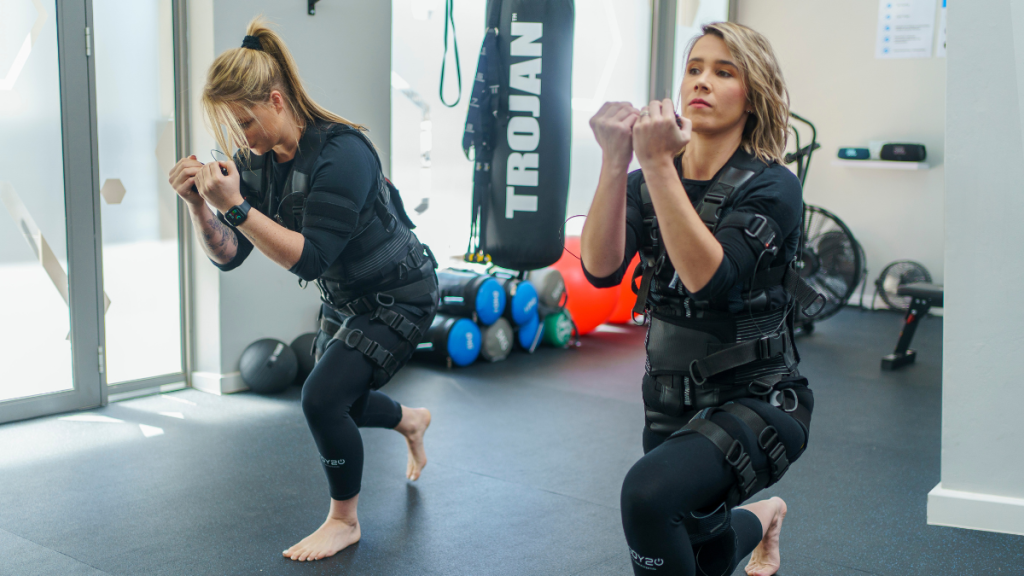
That is where Electro Muscle Stimulation (EMS) can fit into a cycling programme. Rather than replacing time on the bike, Body20’s EMS Cycling Programme is designed to complement it, using a 20-minute whole-body session to stimulate multiple muscle groups simultaneously.
More strength in less time
During EMS training, controlled electrical impulses trigger muscle contractions while the rider performs guided movements under a coach’s supervision.
The attraction for cyclists is simple: multiple muscle groups can be recruited simultaneously without the heavy external loads traditionally associated with strength training. For the time-crunched rider trying to fit work, family, riding and recovery into seven days, that matters.
Body20 says its technology can activate up to 90% of muscle fibres simultaneously during a session. The aim isn’t to replace your long ride or interval session, but to make the strength component of your training more time-efficient.
And strength is key. Whether you’re trying to stay with the bunch, grind up a technical MTB climb or find something extra in the final kilometres of a race, your ability to generate and sustain force ultimately determines what you can do with the pedals.
Can EMS make you faster?
One of the most interesting applications of EMS for cyclists is its potential effect on power.
The Body20 cycling programme targets major muscle groups involved in pedalling, including the glutes, quadriceps, hamstrings and core, while also stimulating fast-twitch muscle fibres associated with explosive force.
Using Wingate testing, a widely used laboratory test of anaerobic cycling power, improvements in power output of up to 20% have been recorded among cyclists following the EMS programme.
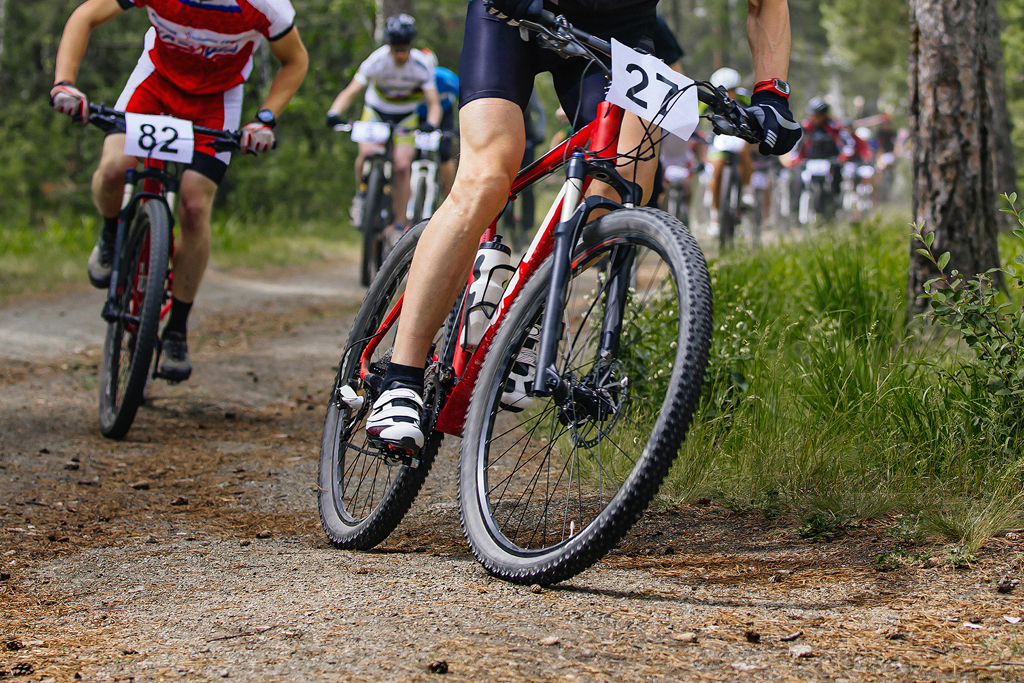
For a cyclist, additional power isn’t simply a gym statistic. It’s what you call on when accelerating out of a corner, attacking a short climb, closing a gap or sprinting for the line.
Endurance matters too. VO2 max measures the maximum amount of oxygen your body can use during intense exercise and is a key indicator of endurance capacity. Results from the EMS cycling programme show improvements of up to 15% in VO2 max, suggesting that targeted muscular conditioning may complement conventional endurance training.
The important word is complement.
No 20-minute session can replace developing bike-handling skills, aerobic conditioning or the physiological adaptations that come from riding. EMS is best viewed as another tool in the cyclist’s training arsenal.
The case for stronger knees
Cycling may be relatively low impact, but thousands of repeated pedal strokes can expose weaknesses in the kinetic chain. Bike fit, training load, technique and muscular imbalance can all contribute to knee discomfort.
Strengthening the muscles that control movement around the knee and hip is therefore an important part of conditioning. EMS recruits the quadriceps, hamstrings and glutes simultaneously without the heavy external loads associated with exercises such as weighted squats.
For riders who want to add strength work while being conscious of unnecessary joint loading, this can be a useful supplement.
And what about that aching back?
The cyclist’s position isn’t exactly what nature intended for spending several consecutive hours. Your trunk remains flexed, your pelvis relatively static, while your core and hip muscles work continuously to maintain position as your legs produce power. As those stabilising muscles fatigue, posture can deteriorate and stress on the lower back may increase.
Core conditioning is therefore about more than developing abdominal muscles. A strong trunk provides a stable platform against which your legs can generate force.
In one documented whole-body EMS cycling case study, chronic lower-back pain decreased by 54%, while measures of trunk extension and flexion strength improved by up to 30%.
For riders who regularly climb off the bike with their legs feeling fine but their backs complaining, improving trunk strength may be as valuable as adding another set of intervals.
Recovery is training too
Hard riding creates muscular stress, which is part of adaptation. But continually adding training stress without adequate recovery can compromise subsequent sessions.
EMS can also be used at lower intensities as part of recovery sessions, with research examining its potential to support neuromuscular recovery and reduce post-exercise muscle soreness.
For stage-race riders, cyclists training on consecutive days or anyone balancing quality riding with limited recovery time, this may be one of the more interesting applications of the technology.
Not a replacement for the bike
The most useful way to think about EMS is not as a shortcut to cycling fitness, but as a shortcut to one particular component of it. You still need to ride. You still need endurance, intervals, skills, appropriate nutrition, adequate sleep and enough kilometres in your legs to prepare for your goals.
But strength and conditioning can be harder to fit into a programme, particularly for amateur cyclists juggling training with careers and families.
If a targeted 20-minute session can help address strength, muscular balance, core conditioning and recovery without taking another evening from your week, the proposition becomes compelling.
Riding stronger isn’t about spending more hours training. It’s about making the hours you already have work harder.
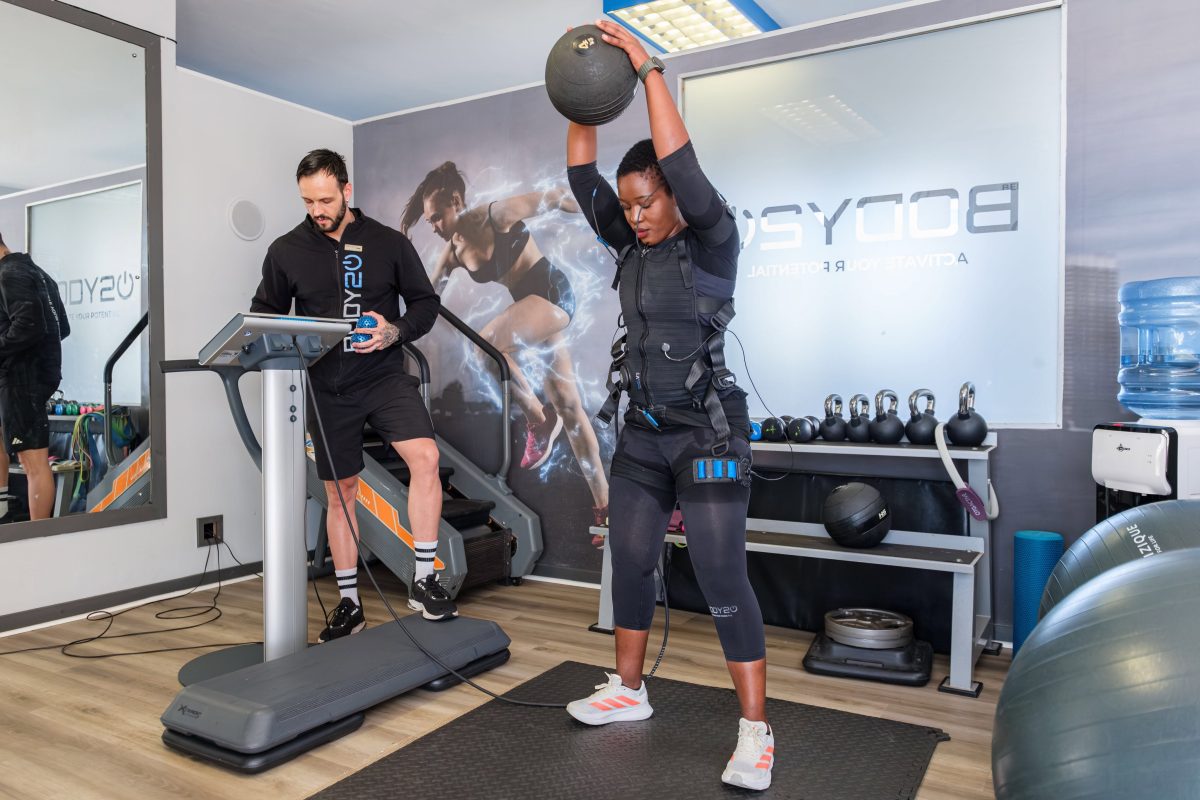
EMS Cycling: The quick guide
Session: 20 minutes
Frequency: Once or twice a week
Designed for: Road cyclists, mountain bikers, triathletes and indoor cyclists
Focus: Strength, power, muscular conditioning, core stability and recovery
Where: Body20 studios across South Africa
Want to put it to the test?
If you’re looking to add targeted strength and conditioning to your cycling programme without another lengthy gym session, try a complimentary EMS session and see how your body responds.
Book your free evaluation session: body20.co.za/cycling
READ MORE ON: EMS training