
Why It’s Time To Go All In On Kettlebells
These powerful tools are all you need to boost your speed and endurance while helping to prevent injuries.
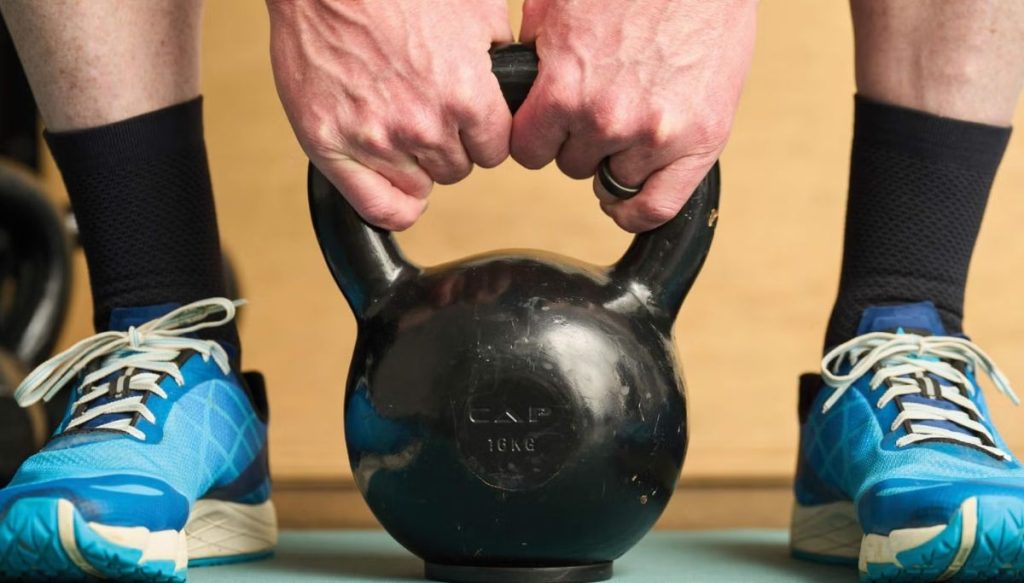
Riding a bike looks simple – feet on pedals, hands on bar, legs turning – but real performance, injury prevention, and enjoyment are built on more than that. Kettlebell training is no different: The exercises look straightforward, but most of the benefits happen beneath the surface. You feel them more than you see them. I believe kettlebells are one of the best training tools a cyclist can add to their programme.
“Kettlebell work builds power, stability and physical durability in ways that transfer directly to stronger, more injury-proof riding.”
When you use good technique, kettlebell work builds power, stability and physical durability in ways that transfer directly to stronger, more injury-proof riding. They’re compact, relatively inexpensive, and perfect for riders who want to do efficient strength work without having to leave the house. The science is clear on the benefits of strength training for endurance performance. It’s no longer a question of if you should strength train to improve your ride, but how you should be doing it to maximise the outcome. “Strength training increases power output by improving force production and neuromuscular efficiency,” says personal trainer and cycling coach Stephanie Holbrook. “It also enhances core stability, which helps maintain control on steep climbs and prevents injury by addressing muscle imbalances.”
If you’re going to start strength training or want to add to your current workouts, there are few better options than kettlebells. Here are the biggest reasons we recommend them, plus some practical guidance to keep in mind when you’re starting out.
Build Functional Strength and Power
Kettlebell drills don’t isolate individual muscles the way gym machines do. They link the hips, core and posterior chain (glutes, hamstrings, lower back) so you produce whole-body force that looks and feels similar to the demands of riding: powerful hip extension, stable torso, and smooth transfer of force.
Improve Core Stability and Power Transfer
A dynamic and strong core stabilises your torso during sprints, surges, and efforts in the aero position. Popular kettlebell moves like Turkish get-ups, windmills and single-arm carries train core anti-rotation and antiflexion under load.
Think of your core like the trunk of a tree: It keeps you stable while your arms and legs move. Anti-rotation under load means your core resists twisting when an external force tries to rotate your torso. Imagine holding a heavy kettlebell in one hand while someone pulls on your opposite shoulder. Your obliques and deep core muscles fire to keep your torso from turning. Anti-flexion under load means your core prevents your spine from folding forward under weight. Picture holding a heavy suitcase in front of you. Your core and spinal stabilisers activate so your torso stays upright without folding over.
Both are about bracing and control: learning to stiffen your midline while breathing diaphragmatically (taking deep belly breaths while inhaling slowly through your nose and exhaling through your mouth) so that forces from your arms and legs as you ride transfer through your body efficiently, keeping your spine safe and letting you produce more power on the bike.
Because kettlebells require you to hold weight further from your body, they force your stabiliser muscles and core to work in the same uneven, dynamic ways your body does when you stand up and slam power into the pedals.
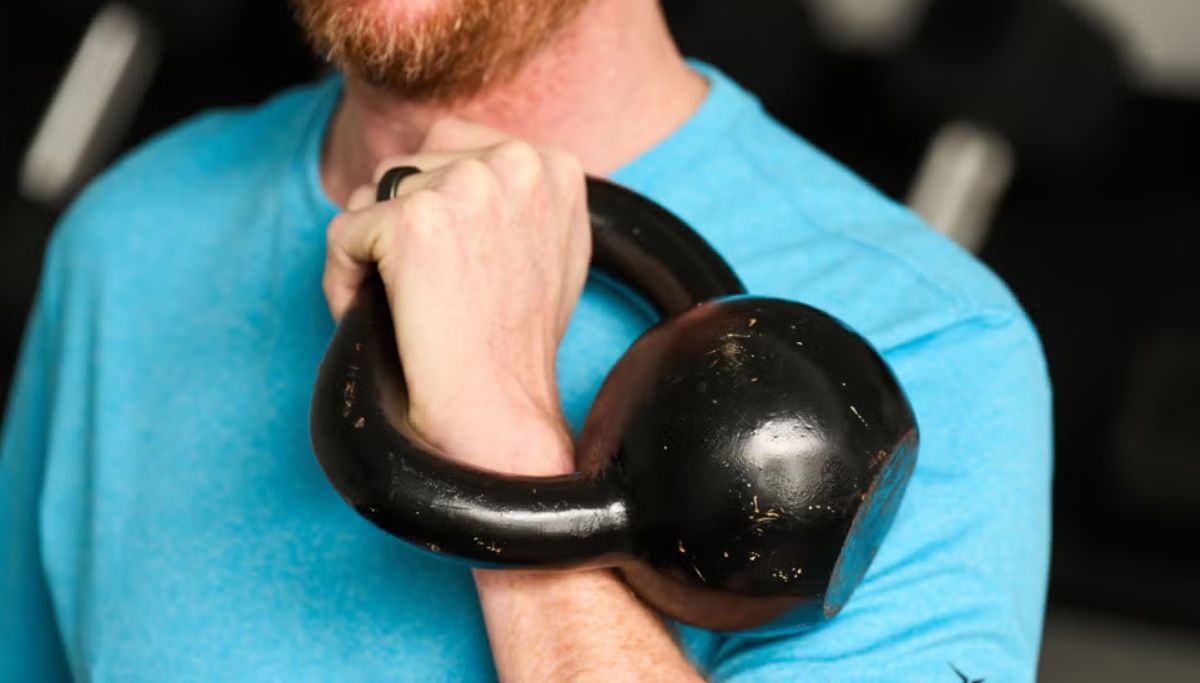
Increase Cardiovascular and Metabolic Benefits
Short, intense kettlebell sessions spike anaerobic capacity and improve metabolic conditioning in a way that complements endurance sports. Kettlebells allow you to string together exercises and make it easy to do circuit-style workouts, both of which raise your heart rate while preserving lean muscle mass — an ideal combo for cyclists who want to build endurance and increase power.
Reduce Injury Risk and Aid Recovery
Kettlebell work strengthens the posterior chain and improves upper-back strength, countering the forward and rounded posture that many cyclists develop. This lowers injury risk and reduces neck, shoulder, and lower-back pain, and annoying issues like hand numbness.
How to Get Started
Before you start swinging a kettlebell for the first time, master these basic moves. First, make sure you can comfortably do a hip hinge — keeping your back straight while you push your hips back, engaging the hamstrings and glutes as you lower your torso down. Then, get comfortable with diaphragmatic breathing. Finally, check that you can properly brace your core; think of bracing as the tension you’d create in your midsection (especially your abs) if someone were about to punch you in the stomach. A poor hinge or an unbraced core is the fastest route to lower-back strain; a clean hinge is how you create efficient power.
Once you can do all that, it’s time to start swinging some ’bells. Start light and increase weight only when your form is flawless. Have patience and prioritise higher-quality reps first, then gradually increase load.
Click here for a kettlebell workout that will take your strength and conditioning to new levels.
This article first appeared on bicycling.com.
READ MORE ON: Kettlebells strength training