
Are You Ready For The 32-Inch Revolution?
Some of the world's fastest mountain bikers are already rolling on 32-inch wheels . And bigger gravel wheels are right around the corner.
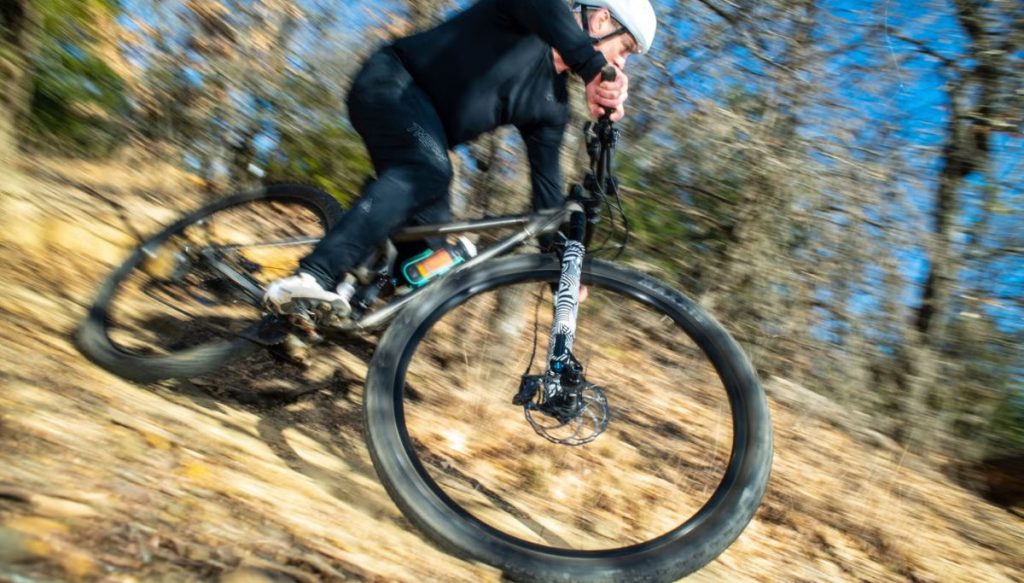
It’s fitting that I’m taking my first ride on a 32-inch-wheeled mountain bike in Texas, USA, the state that embodies this motto.
I’m near Dallas, meeting a Cannondale engineer to ride two prototype full-suspension mountain bikes built around 32-inch wheels. I’m about to find out if the Texas-size wheels really are better. Thirty-two-inch wheels are a massive change to mountain and potentially gravel equipment – a disruption that could make bikes smoother and faster. But at what cost?
When it comes to a new wheel size, surely there will be strong opinions and hot takes, early adopters and holdouts. You may already have your own. So might your riding buddies, and the customers of your local bike shop, and the denizens of internet comment sections the world over. Ian Moore, Cannondale’s mountain-bike product manager who I’ve come to Texas to meet, has thoughts too. He believes 32s, as many now refer to the new wheel size, is more than hype. He believes that it offers a step forward in performance. Still, he has an engineer’s pragmatism.
“It’s just another wheel size,” he says. “There is a performance benefit, but it’s not for everyone. Ride what works for you – 29ers are not going away.”
Undoubtedly, the transition from 29 to 32-inch will be bumpy, due at first to the limited number of wheels, tyres, forks and other equipment available. The many companies rushing to produce the first 32-inch-wheel bikes have divergent ideas on frame geometry and handling.
“There is a performance benefit, but it’s not for everyone. Ride what works for you — 29ers are not going away.”
I also expect the initial bikes and components available will be expensive, limiting their adoption. That’s because 32 is aimed now at cross-country racing, where brands sell the lightest, top-tier options before offering less-expensive options for riders who care less about weight.
However, Moore noted that everyone, not just weight-weenie XC racers, can benefit from 32s. Cannondale put novice riders on its 32-inch prototypes, he said, and those riders reported that the bikes were smooth, easy and enjoyable to ride. So, after the first wave of XC bikes, round two of 32s may include more lower-priced hardtails.
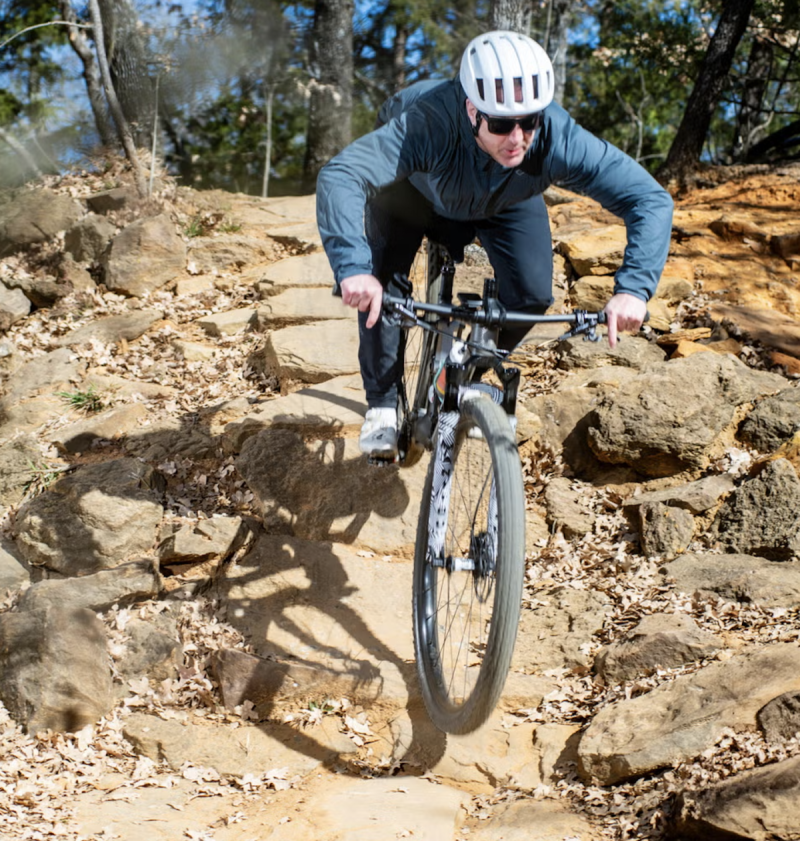 Over two days in Texas, I tested some of the very first 32-inch prototypes from a mainstream brand. The full-suspension XC bikes from Cannondale felt smooth, fast, comfortable, and surprisingly ‘normal’.
Outside of XC racing and hardtails for newer riders, the future of 32s is murkier. The prevailing opinion is that the wheels are too large to accommodate rear suspension beyond 120mm of travel, unless the frame is for a very tall rider.
I’m wary of that prediction, because I remember when we said the same thing about 29-inch wheels. Today, some downhill race bikes with 200mm of travel run 29ers.
Knowing how mountain bikers like to experiment, it won’t take long for riders to pair a 32-inch front wheel with a 29 or 27.5-inch rear. The idea is simple: smoother rollover and traction up front, with better butt clearance and quicker handling out back. For XC racing, dual 32s will probably dominate. For more gravity-oriented riding, mixed-wheel experiments will follow.
Even though 32s is still a nascent trend in mountain bikes, I’ve been struck by how quickly it’s gaining interest among gravel-oriented brands. 32-inch gravel bikes are coming. They’ve already popped up at hand-built shows, and Maxxis and Schwalbe have committed to making gravel-focused 32-inch tyres. The bikes, many believe, will be fast, smooth and incredibly compelling for long-distance gravel events.
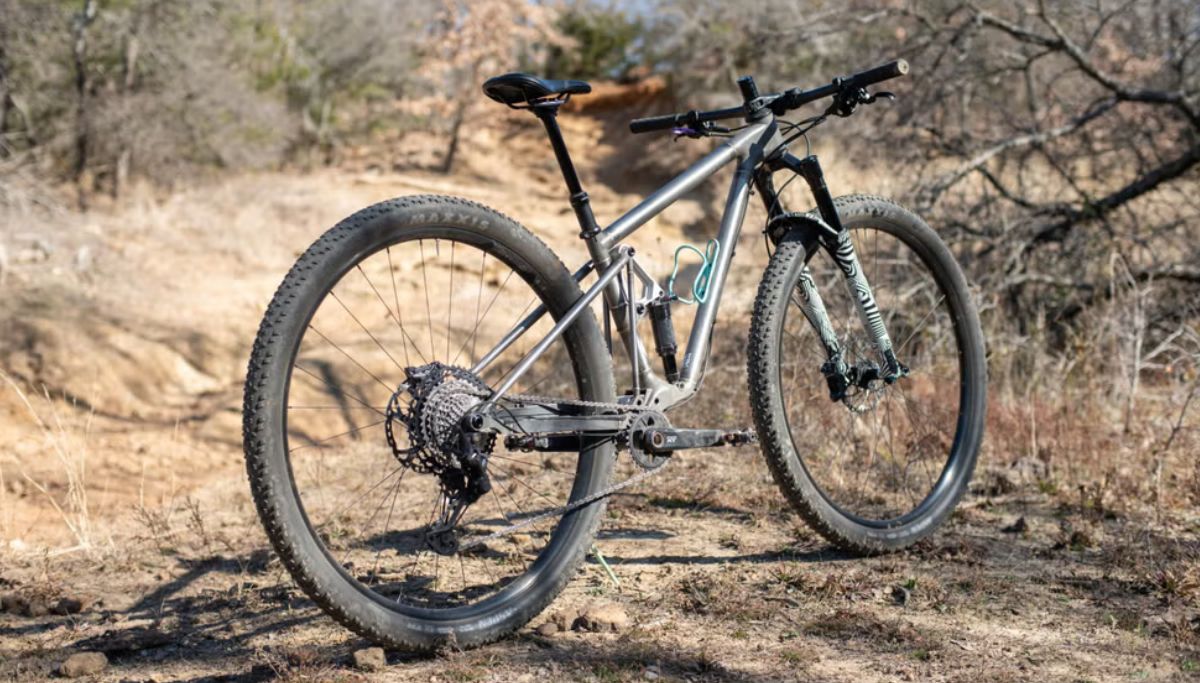 The prototype frames are steel tubes joined by 3D-printed steel lugs, assembled with a mix of scavenged, mismatched, and prototype parts. Only the 32-inch Maxxis Ardent 2.4 tires are available to buy now. This one is built with a prototype of Manitou’s forthcoming 32 inch XC fork.
Why Bigger Wheels Win
As we learned during the transition from 26-inch wheels to 29ers, bigger wheels roll faster, more smoothly, and with better traction. There are downsides, of course. They’re heavier, and can slow down handling. But many of the experts I spoke to believe that the positives of 32-inch wheels outweigh the negatives. Tyre makers have proven that already. “The naturally higher weight [of 32] has had virtually no noticeable negative effect on uphill performance. In addition, our laboratory measurements confirm that 32-inch tyres offer measurable advantages in rolling resistance on uneven terrain,” said Sean Cochran, Schwalbe’s marketing manager.
While early testing reveals benefits, so far there haven’t been conclusive tests that show exactly how much faster 32-inch wheels are than 29ers. To do that, the experiment would need to isolate the wheel from other components. However, I’m told that’s not possible now because the other parts (like forks and tyres) needed for comparative tests are not yet available.
At this point, we’re left to rely on limited testing, Strava data, and good old ride feel. Moore told me that once he began riding 32s on trails, he started racking up Strava PBs. He believes testing will eventually catch up and show that while 32s might not be faster across every inch of trail, total times will be notably quicker than on 29ers.
After talking to engineers and product developers from more than 50 cycling brands, and then testing the wheel size for myself, I suspect that Moore is right. But only to a degree. The advantage over 29-inch may be smaller than what we ultimately realised during the 26-to-29 transition.
Compared to today’s equipment, mountain bikes of the mid- to late-2000s were kind of a mess. During the shift to 29, the sport also saw a sweeping modernisation that went beyond wheel size: geometry, suspension, disc brakes, drivetrains, wheels, tyres, tubeless systems, through-axles, dropper posts and more. Everything leapt forward at once. Today’s mountain bikes are way more capable than they were at the start of the 29er era. Developers of frames and components for 32 are building on a better foundation than the first 29s ever had. So the gains may be smaller.
At least, it seems that way. It’s also possible that another wheel size will spur paradigm shifts across bike design the way 29ers did.
 |
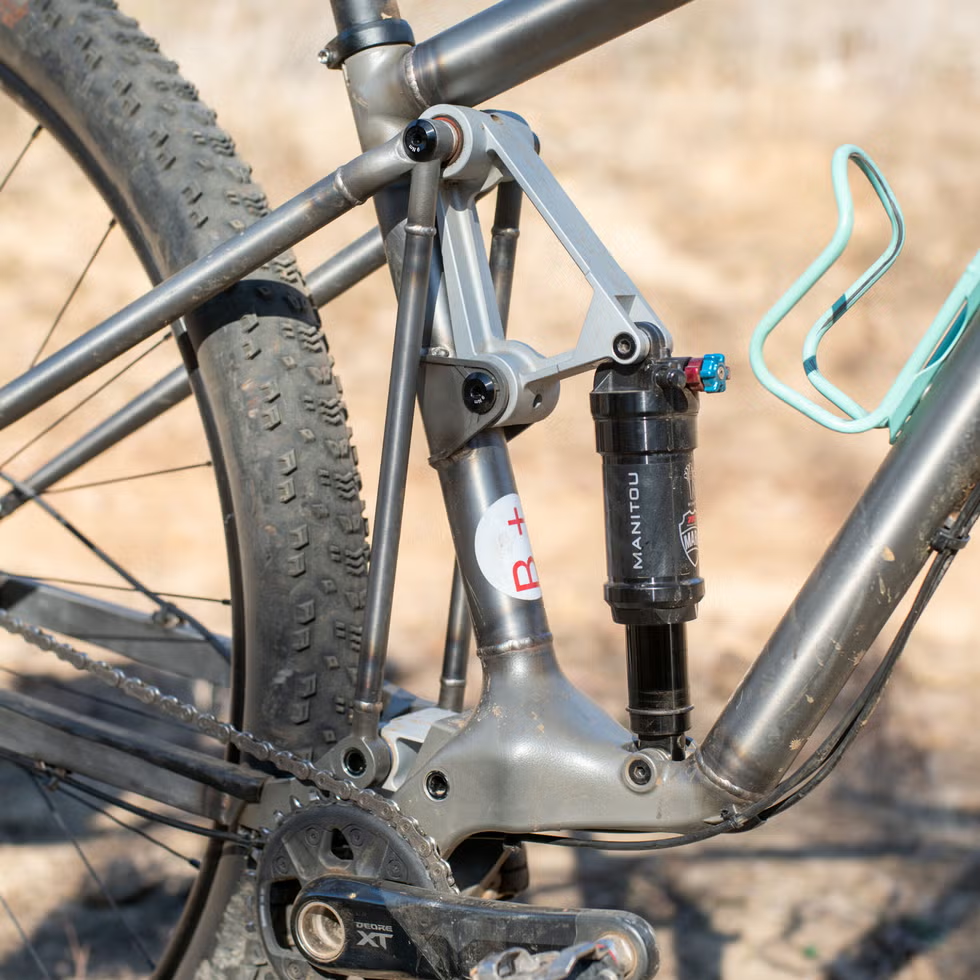 |
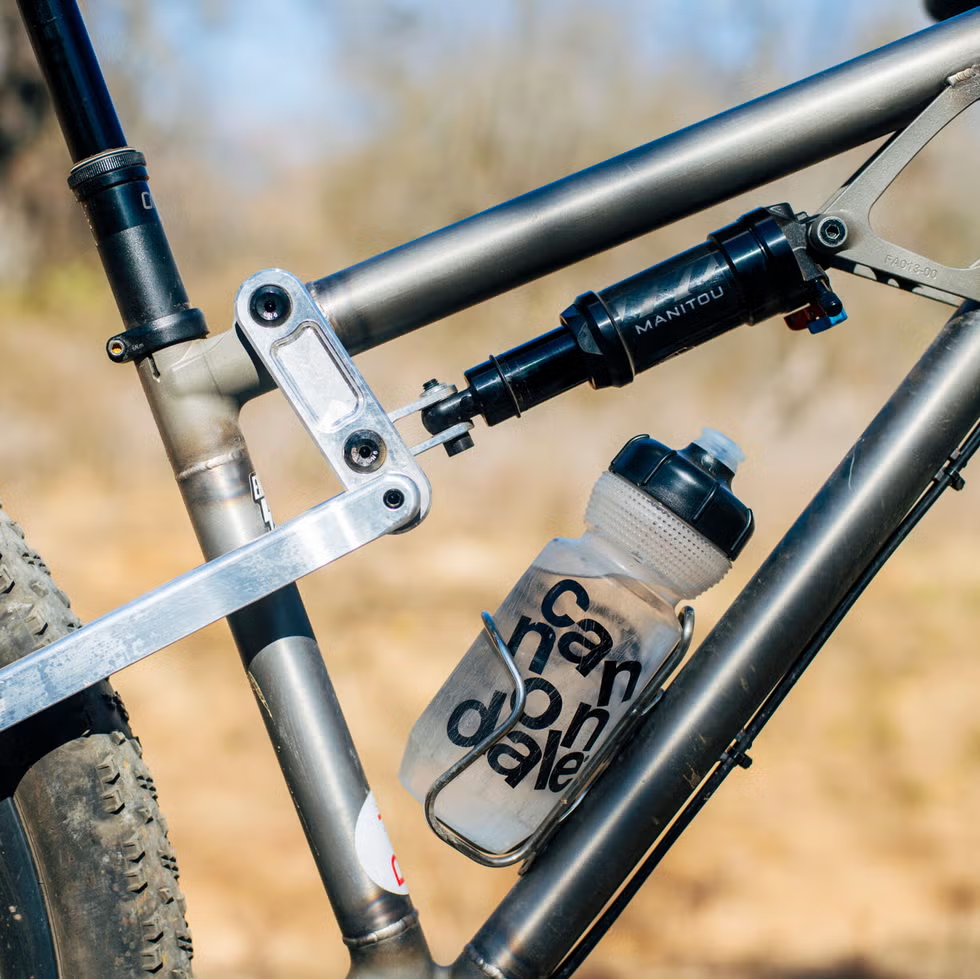
Cannondale showed me two full-suspension designs. This version uses a single pivot with a swing link. A production version would likely use a flex stay instead of a seatstay pivot near the rear axle. |
This dual-link design is the other system I rode. Despite their different appearances, both had similar kinematics. |
Test-Riding the Cannondale 32
Over two days in early January 2026, I spent roughly four hours riding Cannondale’s prototypes on the Northshore trail system in Flower Mound, Texas. Day one was on a dual-link bike with a Manitou fork and aluminium rims; day two on a single-pivot prototype with a Fox fork and carbon rims.
Though the suspension layouts were different, Cannondale tuned the kinematics to provide similar suspension characteristics. Both bikes had 120mm of front travel and 100mm rear.
Because the bikes are prototypes, much will change by the time Cannondale’s production version lands in bike shops near the end of 2026 at the earliest. The one thing that should remain largely the same is the geometry. Notably absent was Cannondale’s Lefty fork. Moore explained that the current Lefty 29 chassis is already at its limit, and creating a 120mm Lefty for 32 would require an expensive redesign. A 32-inch Lefty is not currently planned, he said.
Northshore is a demanding place to evaluate a new wheel size. The trails are tight, twisty and punchy, with short bursts of climbing and descending that rarely last more than 20 seconds. You’re always pedalling, always accelerating, and constantly loading and unloading the bike through corners. There are few places to settle into a rhythm.
What stood out for me was how normal the bikes felt. The jump to 32-inch wheels was not the awkward experience I expected. Within five minutes, the bike felt familiar. It was like an ‘extra’ version of a 29er rather than a clean break from that platform.
The longer chainstays – required to fit the larger wheels – were noticeable, mostly at the limit of traction in faster corners, where the rear contact patch sat slightly further behind me than I’m used to. That altered the timing when lofting the bike over obstacles or drops. The rear wheel arrived a fraction later than I was used to, but that never caused me any problems.
Despite its size, the bike didn’t feel slow, long or sluggish. In tight trees and quick direction changes, it felt light on its feet and easy to place. The payoff was clear.
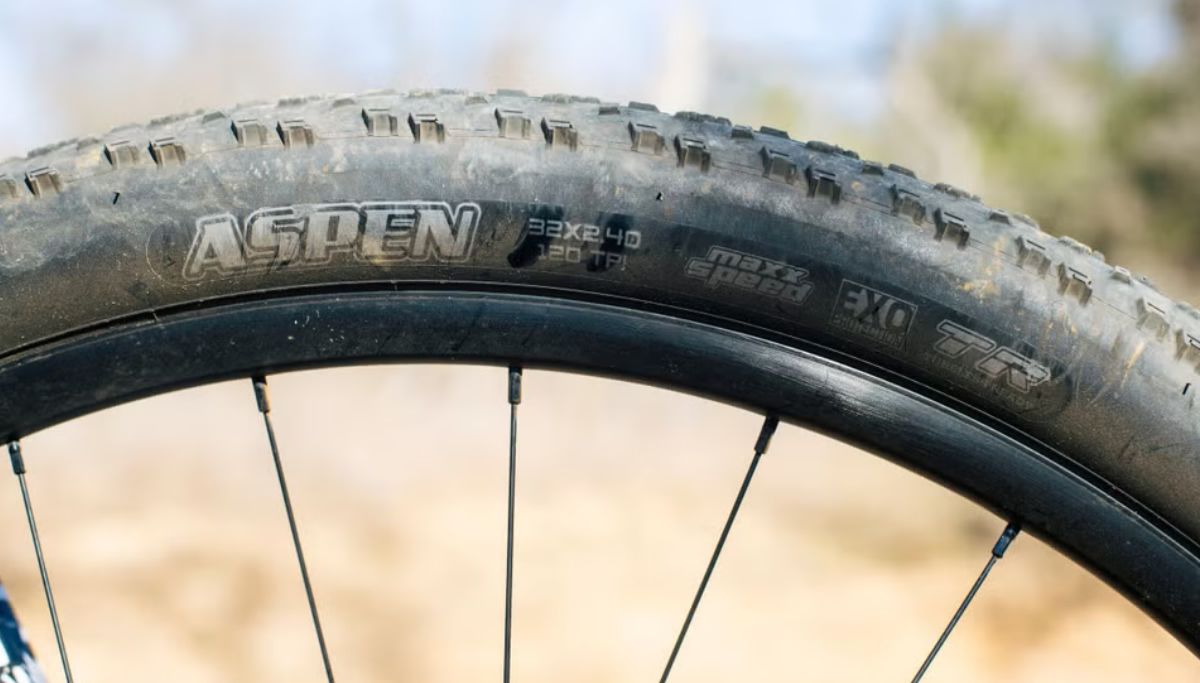
Traction and smoothness stood out immediately. The bikes motored across terrain, gobbling up roots, rocks and loose surfaces. Cornering traction was exceptional, even on Maxxis Aspen tyres, which have minimal tread. And it floated through deeper sand better than I expected.
Compared to when on smaller wheels, I felt a bit more disconnected from the trail, especially at the front. It was harder to sense the precise limit of traction – it felt more drive-by-wire than purely mechanical. This was most noticeable on high-traction surfaces and much less so on loose dirt. The suspension never felt like it absorbed bumps or carried speed through hairy lines better than a 29er with similar travel. But the bike’s stability and composure felt more like a 140 or 160mm trail bike than a 100 or 120mm XC bike – although the extra weight of the steel frames may have contributed to that sensation.
The bike really shone when I stopped trying to ride it precisely, and let it run. It rewarded wider arcs, smoother lines and a carving style. I could aim it straight through rough sections and worry less about how loose or janky the surface was. It’s a bike that encourages trust – and speed.
My takeaway: these bikes are fast, with excellent traction, and they’re not weird in the ways people expect. They’re different; mostly in how smooth and forgiving they feel. Whether that slightly muted connection to the trail is a benefit or a trade-off will depend on what a rider values most.
Solving the 32 Geometry Puzzle
Adopting a 32-inch wheel requires rethinking the most critical aspects of the bike. One key mistake brands made during the early 29er era was that they tried to make 29s handle nimbly, like their 26-inch predecessors, instead of maximising their unique advantages in speed and stability. Hopefully, that mistake won’t be repeated. A 32-inch bike won’t – and shouldn’t – handle like a 29.
Moore said one of Cannondale’s early 32 prototypes allowed engineers to adjust how far below the axles the centre of the bottom bracket sits. Called ‘BB drop’, this measurement is a key factor in establishing a rider’s centre of gravity and how well the bike reacts to rider input. Test riders reported that when Cannondale moved the bottom bracket too low, the bike became almost too stable – locked in while cornering, and making it difficult to change lines. That’s not ideal for XC racing, where riders want a lively bike that changes direction easily. The engineers went back to work.
Once the Cannondale team reached consensus on BB drop, they built another round of hardtails with adjustable head-tube angles and chainstay lengths. Moore says the lessons learned from those test mules informed the two full-suspension prototypes that I rode.
I’m curious where Cannondale and other brands will end up on seat-tube angles on their new 32-inch bikes. Proper tube alignment can put the rider in an efficient, seated pedalling position and help keep the saddle and seat tube clear of the rear tyre on a full-suspension bike. Both prototypes I rode had seat tubes attached well forward of the BB, and laid back at very slack angles. It’s a solution mountain bikes have used for decades. It works, but it comes with quirks.
The higher you go in saddle height with a slacker actual seat angle, the more dramatically the effective angle (the one that matters for rider position) changes. Riders outside the intended sizing window may end up with an effective angle that’s very steep or very slack. A slack actual seat angle also puts a dropper post in a less vertical orientation, which can increase binding, accelerate bushing wear and eventually lead to play. Moore gave me the impression that Cannondale is happy with the Scalpel 29’s 75.5° effective seat-tube angle, so I wouldn’t expect that to change. But achieving that effective angle with real-world saddle heights, while maintaining tyre clearance for 32-inch wheels, may require more creative solutions.
Larger wheels and longer forks also raise bar height. For shorter riders or those who prefer a low cockpit, that could be an issue on a 32. I found it less problematic than expected. The bikes I rode had 120mm forks, very short head tubes, a negative 20° stem, and flat bars. I rode the first day with the stem slammed; on the second day, I raised it 10mm and wished I’d gone higher. That said, I don’t typically ride super-low bars. Riders who want to replicate their 29er fit exactly will probably explore every option to get the front end down. Anyone familiar with the development of 29ers recalls that rollercoaster of fork offsets: we began with around 40 to 45mm, jumped briefly to 51mm, then returned to the mid-40s. Nicolò Fregnan, head of marketing for Italian suspension brand EXT, said, “It’s reasonable to assume that an offset change may also be required.”
Then there’s the challenge of developing frames for shorter riders. It’s already difficult to build small bikes around 29-inch wheels, and 32-inch wheels exacerbate the issue. But Moore says Cannondale has a size-small 32 prototype that has been ridden by a 155cm rider, with positive feedback.
The Weight Tax
All else being equal, 32-inch bikes will be heavier than 29ers. Several brands told me they anticipate production 32s to weigh about 10% more than a comparable 29er. So I don’t expect weight-obsessed riders to rush to adopt yet-larger wheels.
There is one production 32 part we can compare to its 29er counterpart: the Maxxis Aspen tyre. A 2.4-inch wide, 32-inch Aspen has a claimed weight of 834g, while a similar 29er is 710g. That’s a 248g penalty for a set of tyres…
Loren Mason-Gere, director of sales and marketing for US wheel manufacturers Rolf Prima and Astral, says that he expects increases of 260 to 320g for aluminium 32-inch wheels over similar 29ers. He added that early carbon wheels may come in at around 1 600g, about 100g more than the brands’ carbon 29er wheels. “At that point, the speed of the larger wheels will almost assuredly outweigh the weight penalty,” he said.
Suspension forks will be heavier as well. German suspension brand Intend BC is one of the first to sell a 32-inch suspension fork. Its founder, Cornelius Kapfinger, says Intend’s 32 forks are about “50 to 60g” heavier than a comparable 29er fork. Mavic product line manager Manuel Berschandy offered a hopeful note for weight-obsessed riders: “29-inch wheels are now lighter than the lightest wheels at the end of the 26-inch era, so it’s only a matter of time before somebody shows up with a sub-1000g 32 wheelset,” he said.
Buy Now Or Wait?
Late 2026 will probably serve as a coming-out party for mainstream 32-inch bikes. Still, it probably won’t be until 2027 before carbon 32-inch bikes become widely available. In the meantime, smaller brands and boutique builders will offer some options for the earliest adopters. Make no mistake: every major brand will have 32-inch equipment, especially those competing at the highest levels of XC racing. Everyone wants their 32-inch products dialled for the 2028 Summer Olympics in Los Angeles.
Between now and then, expect cautious and vague updates from brands about their 32-inch equipment. Of the more than four dozen brands I contacted while reporting this story, very few were eager to share details. That makes sense: The products aren’t ready to sell yet, and cycling brands still have a lot of products developed around 29-inch wheels that they want to unload before unleashing a new wheel size.
Most riders have heard that it’s generally best to avoid buying a first-year product. As 32s become more common, they will evolve, and later generations will undoubtedly be better. Early adopters should also expect limited wheel, tyre and fork options, making upgrades and replacements more challenging at first.
I vividly remember the long, bumpy road from 26 to 29. Many early 29ers were deeply flawed, and it took several evolutions for the category to truly mature. But that design shift began nearly three decades ago, in the mid-1990s. Engineers today have a better understanding of frame geometry and more powerful design tools. As the Cannondale test bikes I rode show, bike brands can prototype faster, with better results. I’m confident that first-generation 32s will be far better than first-generation 29ers were.
After experiencing those big wheels float, grip and fly, I believe the category has real potential. Maybe 32 will become the new mountain-bike standard, the way 29ers did? Maybe it’ll stay a niche for racers and tinkerers? Either way, mountain biking is doing what it always does: chasing small advantages with big conviction.
This article originally appeared on bicycling.com