
Behind the Scenes of the Double Century: What Riders Never See
In his decades-long involvement with the Old Mutual Double Century, organiser David Bellairs has seen it all. While the riders agonise about what flavour gel to pack, he makes decisions on everything from weather cancellation to community unrest. This is what’s happening behind the scenes…
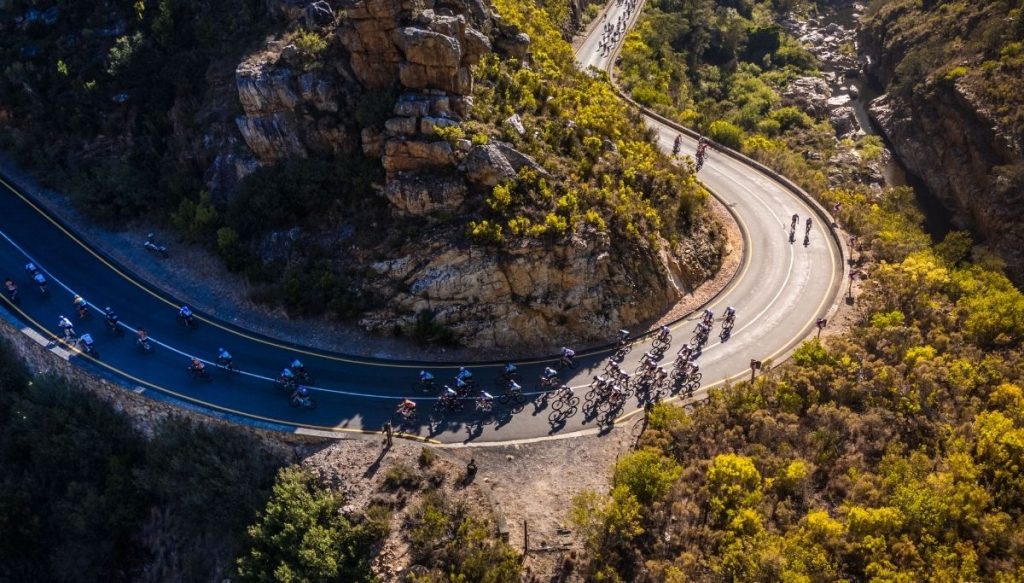
As a rider, you can prepare for almost everything the Double Century throws at you. You can train for months, eat properly, service your bike, plan your pacing and make sure every member of the team arrives in Swellendam on time.
But behind the scenes, there are many things you have zero control over.
The first prize – always – is that the riders arrive at the start, ride 200km and finish the race, blissfully unaware of what actually happened in the lead-up to and during their epic ride.
You can’t control the weather, a collapsing road, a labour dispute, natural disasters, or the politics involved in closing public roads. Those issues become our problem, as organisers, and most of the time the riders know nothing about them.
The first prize – always – is that the riders arrive at the start, ride 200km and finish the race, blissfully unaware of what actually happened in the lead-up to and during their epic ride.
RELATED: Double Century Survival Guide: What To Do Before, During and After
Roads to success
Roadworks have been a recurring challenge for us. About 12 years ago, serious flooding damaged Cogmanskloof Pass between Montagu and Ashton. The road had to be rebuilt and there was no way through, meaning we couldn’t do our traditional Double Century loop.
The provincial authorities eventually said we could use the route, but only if the contractors agreed; at that stage, the contractors had assumed legal responsibility for the road. Only one lane was open while they worked on the other, and they considered it too dangerous for cyclists.
We appealed, but they wouldn’t change their position. Eventually I tracked down their attorneys – and discovered that a senior person at the firm was someone I knew. Through discussions with them, we finally received permission to use the pass. We neutralised the race before the construction zone, and arranged to close the road for a limited period.
Disaster averted!
Driven to distraction
Once, two weeks before the DC, we received a call from the local taxi association.
The race was taking place near month-end, when people needed transport between Ashton and Montagu. Workers had to reach the Ashton canning factory, and residents needed to get into town to do their banking and shopping. We were told that we couldn’t close the pass, and the event might be boycotted.
We rushed to Montagu for a meeting with the association – and the municipal officials, road representatives, and other interested parties. After a lengthy discussion, I asked how many taxi trips would actually be affected by the closure.
The answer: two.
We arranged for those passengers to be transported; problem solved. Subsequently, the taxi association has helped us with transport at the event! So, something that began as a potential confrontation developed into a useful relationship.
Nature knows best
The weather is less open to negotiation.
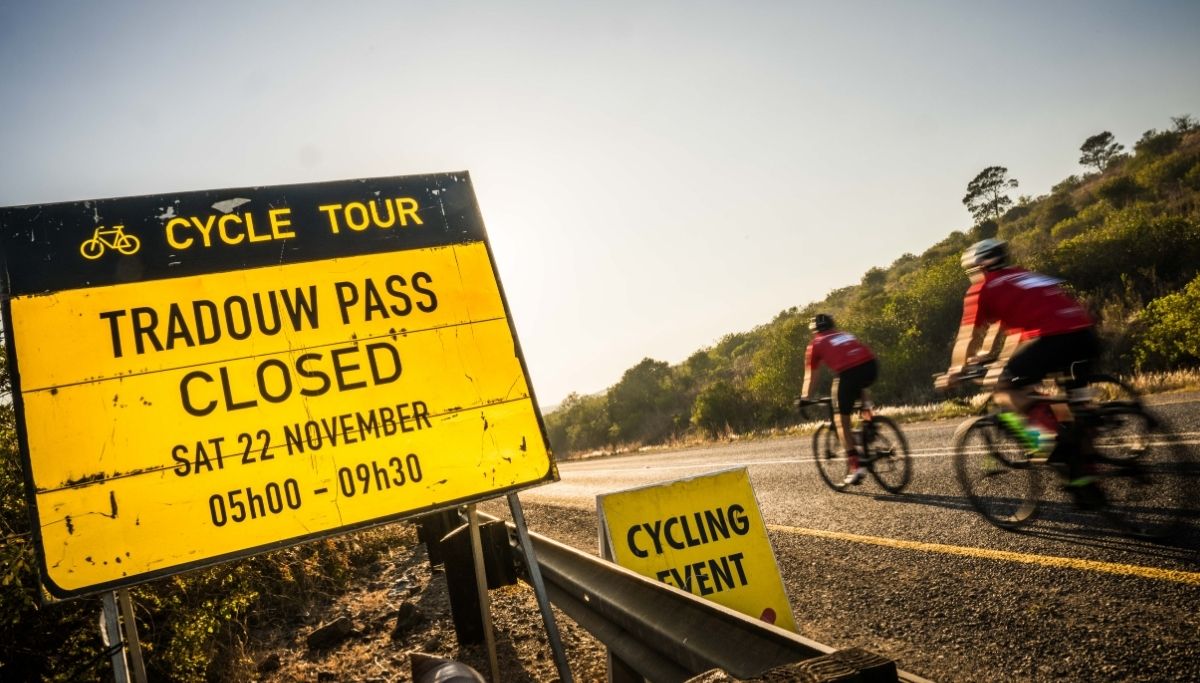
In 2021, heavy rain fell on the morning of the race. The road through Suurbraak was flooded and unrideable, and we were receiving reports of rockfalls on Tradouw Pass.
We delayed the start by half an hour, and then by another half hour; but the rain did not let up. The traffic authorities told us we couldn’t delay indefinitely. Our advertised road-closure times affected freight, residents and other road users. If we waited much longer, the roads would have to reopen.
Then an official warned us that rocks were still falling on the pass. We didn’t know the full extent of the danger; but we had no doubt that if we sent riders through and somebody was struck by a rock, then as we had been warned about the risk, we would have been negligent.
We had to make a decision. The reputational consequences for the event and its sponsor were significant, but the safety consequences of proceeding could have been far worse. Ultimately, we cancelled.
Later that morning the sun came out, and it turned into a beautiful day.
From the outside, it may have looked as though we’d made the wrong call. Some riders accused us of not understanding how much work it took to get a team to the start. But I understood it all very well! My team was due to start second, and I was standing there in my cycling kit. I, too, had trained and prepared.
It was an extremely disappointing day, but I still believe cancelling was the correct decision.
There have been times when flood damage has forced us to find other solutions. On one occasion, roughly six weeks before the event, a section of road on the approach to Swellendam disappeared completely – water moving between dams above and below the road caused the surface to collapse. There was no obvious way to get riders from the second support point to the finish.
Working with local farmers, we found a small gravel road that crossed a dam wall and rejoined the route beyond the damaged section. Initially, the provincial authorities raised concerns about environmental approval and access across private land, but when we met the farmer, his response was simple: it was his land, he maintained the road, and we were welcome to use it.
We thought riders might still have to walk parts of the diversion. But on race morning the gravel was in excellent condition, and everybody rode it without difficulty.
RELATED: Insider Tips from the Man Who Helped Build the DC
Calming the cars
Traffic management has probably driven the biggest visible changes to the event.
In the early years, riders had almost no support. Later, support vehicles were allowed onto the route – supposedly moving ahead of their teams, rather than following them. But in practice, many drivers followed their riders.
As the event grew, that became more dangerous. Vehicles stopped in unsuitable places, inexperienced drivers tried to manoeuvre between groups of cyclists, and faster teams arrived at speed just as slower teams were pulling back onto the road.
Removing support vehicles from the race route and creating neutral support zones was one of the best decisions we’ve made. Riders can stop safely now, meet their crews and refuel, away from moving traffic. Their race time is paused within the permitted limit, and they rejoin the route in a controlled environment.
Every rule usually has a problem behind it that we don’t want to experience again.
Some riders dislike neutral zones, but they exist for a reason. So do reverse-order starts, cut-off times, road closures, restrictions on support crews… Every rule usually has a problem behind it that we don’t want to experience again.
Anything can happen, and usually does
Agricultural politics is often part of our planning. The route passes through farming communities, so we maintain relationships with unions, municipalities and provincial departments.
Over the years, there have been threats of farm-labour protests, linked to wage disputes. These may have nothing to do with the Double Century, but they can affect the accessibility of the roads we use; and therefore, they affect whether or not the event can proceed safely.
The same applies to fire. We monitor any fires in the region closely, particularly when strong winds are forecast. Wind itself is a constant concern; the south-easter can make an already difficult route considerably harder, especially for slower teams spending longer on the road.
These are all things that most Double Century riders never see. While they’re worrying about tired legs, team tactics and the next climb, we’re watching the weather, speaking to traffic officials, negotiating access, monitoring labour activity, and checking that the roads we use still exist!
But if we do our job properly, the riders will never need to know how close some of those problems came to changing their day.
READ MORE ON: Double Century Old Mutual Double Century