From Paarl to the World: How WCC Africa Is Developing Cycling Talent
Future generations of African cyclists are finding their way in the world – thanks to the guidance of a small, dedicated team at the World Cycling Centre Africa in Paarl, headed up by JP van Zyl.
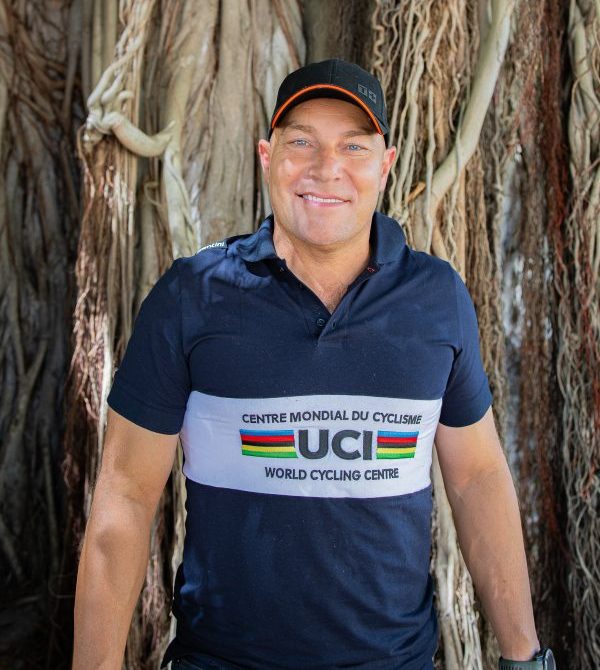
Just off a quiet street in Paarl, with the Berg River as a scenic navigational beacon, in the leafy grounds of a multipurpose hostel, you’ll find the unlikely home of the World Cycling Centre (WCC) Africa, a UCI WCC Continental Development Satellite.
The UCI satellite sites are extensions of the World Cycling Centre in Switzerland, offering a central access point for education and cycling development services, as well as programmes for National Cycling Federations (NCF) and their members.
“At the end of the day there’s always sport, and that’s the secret spice of life.”
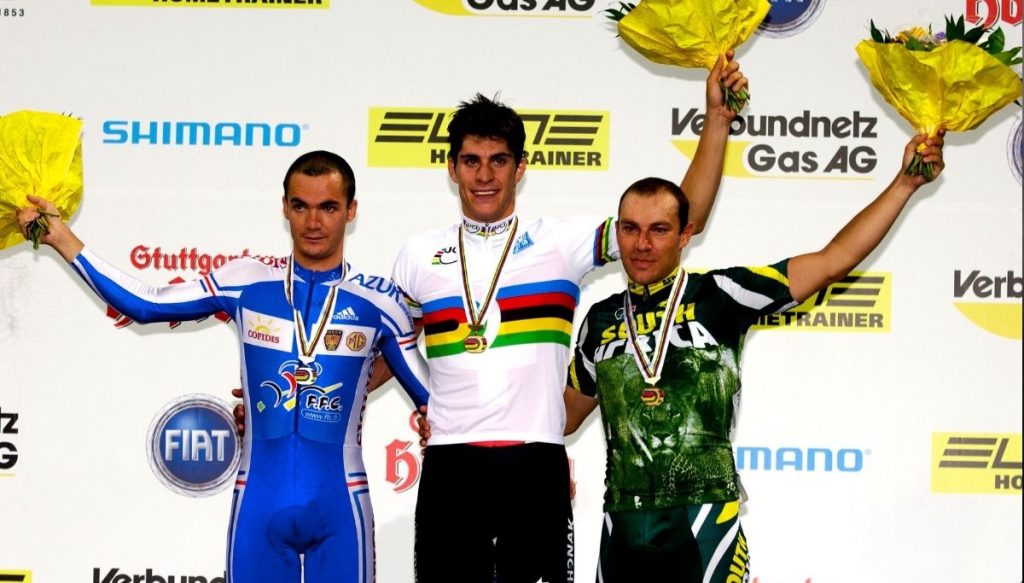
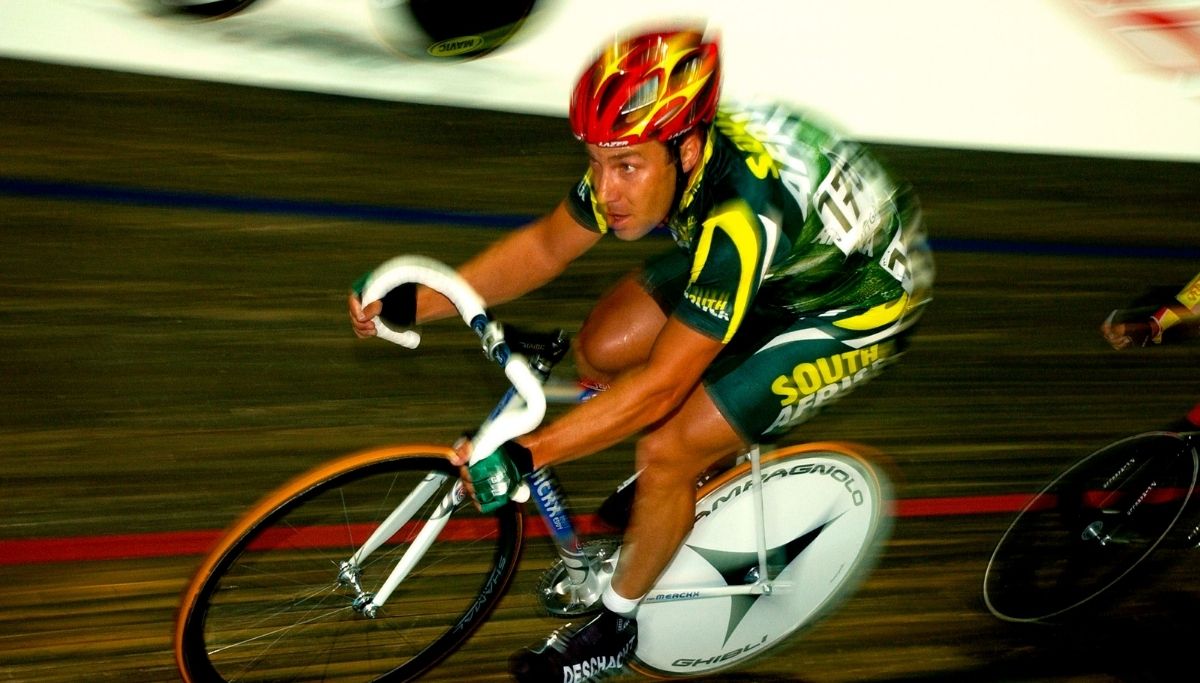
Indeed, unknown to many, Africa’s cycling excellence and development is being run by a handful of dedicated staff in picturesque Paarl. Chief among them is former South African track cyclist Jean-Pierre (JP) van Zyl, who now transfers his knowledge and passion to the brightest young riders in Africa in his role as director of WCC Africa.
It’s a small team, with humble tools at their disposal – a far cry from what one might expect from a UCI-backed institution – but with their desire to grow cycling in Africa, they pour heart and soul into the operation.
What’s happening here in Paarl? This is where champions are born! This is where we create opportunities for young African cyclists to move on to the next level.
It’s a big continent – how do you identify the talent? We’re in constant contact with the national team coaches, who have gone through the UCI coaching development process, to discuss which riders they feel need the opportunity to train at the WCC in Paarl. We also keep a close eye on the performance of U23 riders at the various Africa Tour races.
When it comes to Junior level, our team attends the annual African Continental Championships to identify the riders we feel have talent. We then discuss this with their national federations and create the opportunity for the riders to come to the development training camps in Paarl. Once they’re in Paarl we do the UCI Protocol Tests; and we look at their skills and their abilities, and identify what they need to work on.
We sometimes send them to Switzerland, where they’re exposed to international racing. We need to do quite a bit of work to get the riders ready for Europe because we’re a little bit behind in development. In Europe, a ‘youth’ rider would be considered from under-11; whereas in Africa, we only have kids starting around 16 or 17.
How did the centre come to be? Back in 2004, when the World Cycling Centre was established in Switzerland, they soon realised that Africa might be a gold mine for finding talent. It was ‘unexplored’, in a way. We knew about the potential in nations that were already passionate about cycling – like Algeria, Morocco and South Africa – and we also knew that there was plenty of potential in other countries.
Pat McQuaid, the UCI president at the time, realised that cycling needed to broaden its horizons. At that stage, the sport was very Eurocentric. It wasn’t long until we had some success stories: Biniam Girmay, Daniel Teklehaimanot, Natnael Berhane, Merhawi Kudus, Ryan Gibbons and others all came through here.
How long have you been involved at WCC Africa? Twenty-one years! From the start. When I stopped cycling in 2004 I was approached by the UCI, and they asked if I wanted to help develop cycling in Africa. I said, “That would be a dream!” I was so eager to teach cyclists the things that I’d learned in my career; but more importantly, not to make the same mistakes I made early in my career.
That’s a long time to be steering the ship – you must have seen it all by now? You know, I think we’ve gone from strength to strength. But some years are better than others. Sometimes there’s a lot of talent coming through – better age groups, and better development. That’s just how sport works.
But in general, I’ve seen Africa grow from 16 national federations that were active two decades ago, to 54 federations that are now affiliated with the UCI.
Take Eritrea: in the past – as recently as 2007, at the African Continental Cycling Championships – they were not competitive; but now they’re dominating Africa. Ethiopia… They’re up-and-coming. Kim le Court from Mauritius, who is now doing brilliantly in Europe: she also used the WCC as a stepping stone.
Were there unique challenges in the beginning? We had to deal with simple things back then, things you maybe take for granted now – like getting athletes to arrive on time, or getting visas for athletes, and communicating with the various national federations.
In the beginning we also had to explain that we’re not planning for next week, or next month, but rather for 10 years down the line. We had to create an understanding of the programme and the vision.
Something else that stands out from the early days was working with athletes who’d had malaria! That was tricky for us, as coaches… After 10 days of hard training, when the body is fatigued, the malaria would come back. There was a lot of time spent in hospitals, and working to understand what was happening with the athletes.
“We aim to help the cyclist understand everything from race tactics to nutrition. It’s not just about winning.”
What are you teaching the riders – is it simply all about performance, or a more holistic approach? I like to think it’s a little bit of everything; a bit like being in school. We aim to help the cyclist understand everything from race tactics to nutrition. It’s not just about winning. We coach on aspects like where to sit in the breakaway, or to ask the question, ‘Why am I even in this break?’
We coach on nutrition – and here was another learning from the early days; because the riders were using products they’d never used before, which were having an impact on their stomachs.
Actually, now that you ask me these questions and I look back on what we’ve done here… it’s been an amazing journey.
What about the different cultures – how have you been able to pull everyone together at the camps? There are so many different cultures. You could have 50% French-speaking and 50% English-speaking riders in a training camp at one time, and then the riders speak their native languages too. And sometimes the communication comes down to what we call ‘continental centre language’, where it’s broken English, broken French, but I’m looking everyone in the eye and using hand gestures to let the riders know what I need from them.
It can also be a hard time here for the athletes. In a lot of African cultures, family is everything. Sometimes when a rider comes here, this is the first time they’ve been away from their family and their home town. I always tell them that coming here will be the hardest time for them, simply because of that.
We also have riders from different religious backgrounds, and now they’re living together in dorms. But we all get together, and we all get along, because at the end of the day, there’s always sport; and that’s the secret spice of life. I think the world needs more of that. I’ve seen how sport brings people together. I’ve seen riders squabble at the start of a camp, and by the end they’re best friends.
What is the average stay at the centre, for the athletes? In the past, the athletes would stay for around seven months. You make the biggest impact with a longer camp.
But there isn’t enough turnover. We might have five athletes who really stand out from the 35… The other 30 would be good riders, but seven months was just too long to keep everyone in camp when the abilities didn’t quite match.
Now we do two to three months. You end up with a select group that you can focus on.
But it’s not just about creating an elite rider. An athlete can leave here and become a coach, or just share the knowledge. That’s how the next gem is unearthed.
How do the riders change while they’re here? I see kids arriving, and by the end they’ve matured so much. I think they learn a lot about cycling and about themselves.
They’re very raw when they come here. Many of the kids come from communities where they have to fight for everything. So one of the first things we have to do is tell them: “Guys, there’s enough for everyone.”
But then again, that mentality… Those kids have the fight in them; they’re the ones who often have the most potential. So it’s a balancing act for us.
For me, the most important thing is that they learn to take care of themselves. I can show them what to do, but I can’t make them do it. If they want to succeed, if they’re serious about cycling, then they must follow instructions. They have to be self-motivated to succeed.
What impact did the recent World Champs in Rwanda have on the centre? It was a massive thing, and it’s no surprise that after those World Champs, our most recent training camp was the best we’ve had in ages. The sheer number of riders, the enthusiasm, the excitement about cycling… You can link it all back to Rwanda.
This year, we also had our youngest riders here in about a decade, and that’s really what you want to see. It’s all the result of making riding more visible on the African continent.
Where’s the growth coming from in Africa – which are the up-and-coming powerhouse nations? The North and East African countries – Algeria, Morocco, Tunisia, Egypt, even South Sudan – those will be the big drivers of African growth in cycling.
Kenya, too: they have the Team Amani project, where South Africa’s Clint Hendricks is involved; and also one of my former riders, Tsgabu Grmay, who raced three Tours de France. They’re doing great things in that part of Africa.
What do you think the riders have learned once they leave the camp? To me, it’s more of a sports training camp than a cycling training camp. Because sports in general can give you so many skills for life. We use cycling as a tool.
As the UCI Africa development director, I want to see the sport of cycling grow in all disciplines, not just road. I dream of success across the board; and life without a dream is not a life worth living.
That’s what I try to teach the young riders here.
READ MORE ON: interview