Kim Le Court-Pienaar: Chasing Cycling History
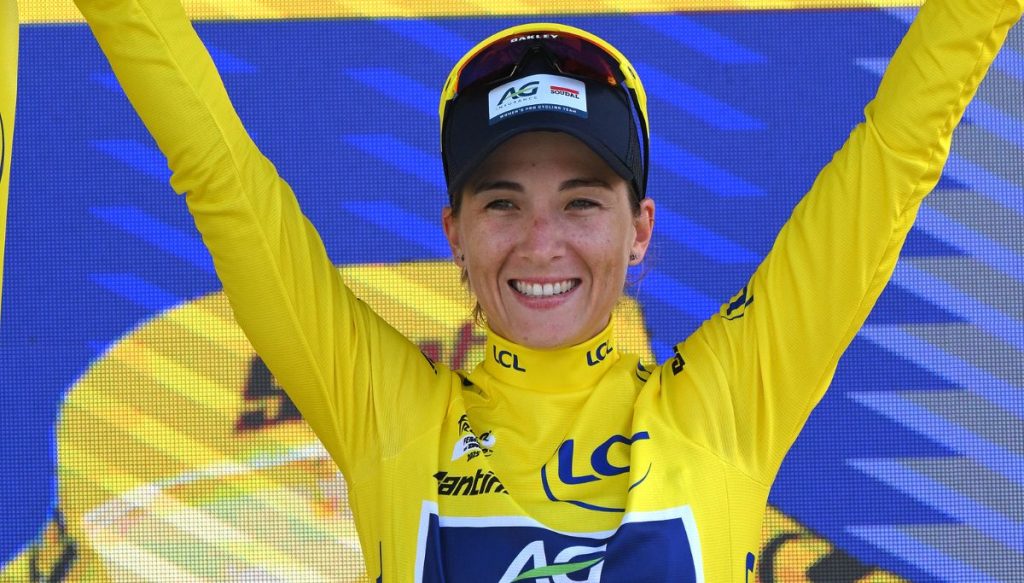
From making history as the first African cyclist to wear the Tour de France Femmes yellow jersey in 2025 to returning as one of the favourites in this year's race, Kim le Court-Pienaar has become one of the biggest names in women's cycling.
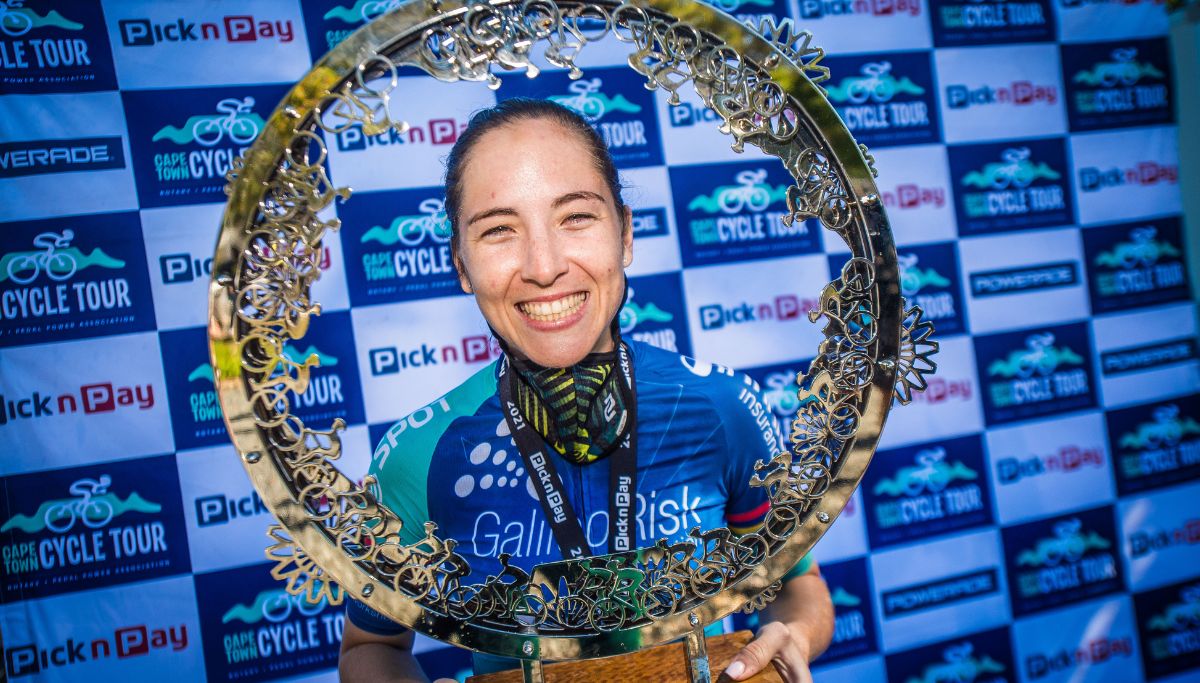
The story of how Kim le Court-Pienaar reached the pinnacle of women’s cycling is legendary. After spending most of her career racing in South Africa, the Mauritian-born former Absa Cape Epic champion and four-time Cape Town Cycle Tour winner finally got a crack at the big time in 2024 after AG Insurance-Soudal took a chance on her, despite her relatively old age of 28.
In 2023 her husband, Ian Pienaar, had contacted every one of the pro teams in a last-ditch attempt to finally get her on a World Tour team and it was eventually the then team manager of the Belgian outfit, Natascha Knaven-den Oude, who saw something in Le Court’s results and believed in her potential.
“I want to win everything – or at least try to win everything.”
Her faith in Le Court has since been richly rewarded. With Giro d’Italia and Tour de France Femmes stage wins along with her historic yellow jersey in the TDF last year – the first African woman to achieve the feat – Le Court is now one of the most exciting racers in the women’s peloton. Now, lining up at the 2026 Tour de France Femmes as one of the peloton’s genuine contenders, Le Court-Pienaar has gone from outsider to one of the riders everyone is watching.
How crucial is teamwork in an event like the Tour de France Femmes?
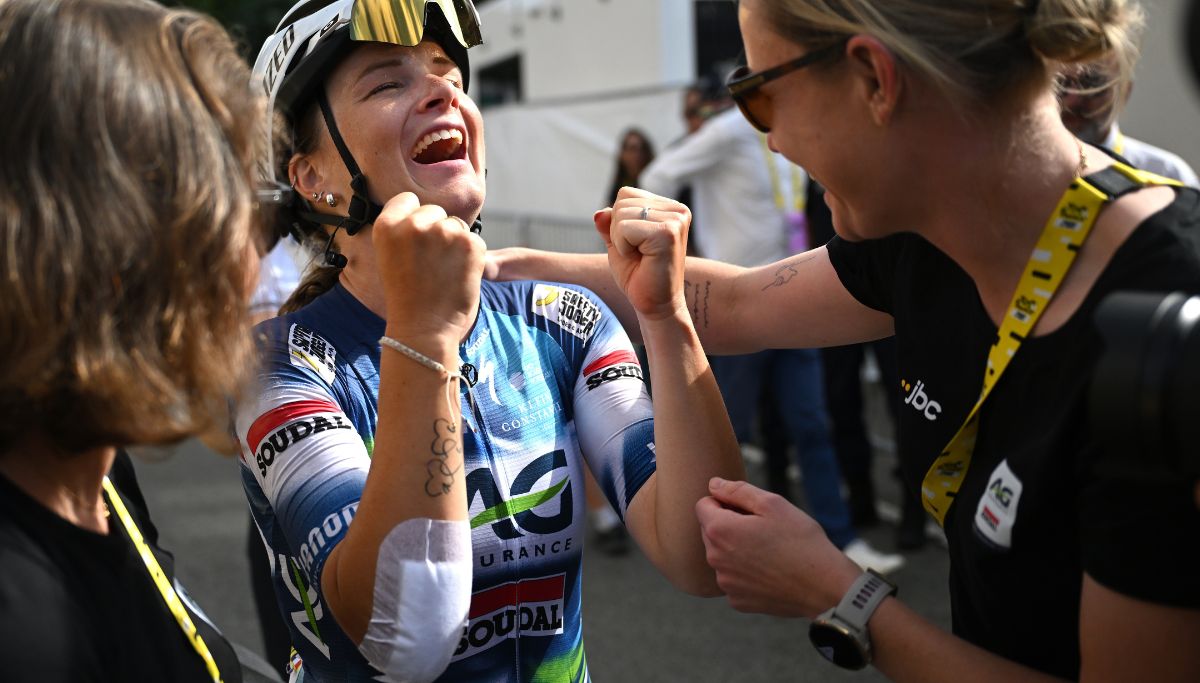
Teamwork is honestly everything. We might not have the biggest budget like some of the big teams, but we make up for it with how close we are as a group. At the Tour, every rider played their role perfectly, whether it was protecting their leaders, covering moves, or just making sure I had bottles or ice when I needed them. The staff behind the scenes: the soigneurs, mechanics, coaches, DS’s everyone plays a massive role that people don’t always see. What I achieved there was only possible because of the whole team, on and off the bike.
Did you surprise yourself with your performance at last year’s Tour de France Femmes?
To be honest, it went way beyond what I thought I could do at this point. Wearing yellow and realising I was the first African to do that in the Tour de France Femmes avec Zwift was surreal. It’s something I’ll never forget. And on top of it, breaking the record and being the first African Rider (men and women) to wear the yellow jersey for four days. But at the same time, it showed me what’s possible, not just for me, but for African cycling, and that makes me hungrier for more.
Women’s cycling seems to have reached a new level of competition and support. Does that feel the same for you?
The sport has changed so much in just the last few years. The races are harder, more on the calendar, the level is higher, and the support from fans is incredible. You really feel the momentum building. It’s special to be part of this generation that’s shaping women’s cycling for the future.
Your team is one of the smaller women’s pro teams. How do you compete against the big budget outfits?
For us, it’s about racing smart and believing in each other. We don’t have the same resources as the super teams, but that actually makes us sharper. We must take our chances, be brave, and fully commit when the opportunity comes. Sometimes being underestimated can be an advantage. But to be honest, we might not have the biggest budget, but I believe we are one of the best teams out there. And we are only getting started. It’s very exciting what the future will bring.
Tell us a little about your training to compete at this World Tour level?
My training is quite structured. I do a mix of endurance, polarised intensity, and specific strength and sprint work. Altitude has also become an important part of my preparation. It’s not about endless hours; it’s about making every session count. I work closely with my coach, and we adapt things depending on how I’m feeling and where we are in the season. My motto is: It isn’t about the quantity, it’s about the quality.
Who coaches you?
I’ve been coached by (Cape Town-based South African) Jeroen Swart since early 2022, and honestly, he’s changed my life as an athlete. When I switched to him, the first big goal we set was to win Cape Epic in 2023, and we did. Then, once I signed WorldTour, our target was a first pro win, which came at the Giro d’Italia in 2024. Last year’s big goal was Liège–Bastogne–Liège and achieving that was massive. At the Tour, the plan was a stage win, wearing yellow, and testing myself for GC and we managed to check so many of those boxes, with more to aim for next year. Of course, I also have great support from the team coaches, but Jeroen is really the foundation of everything I’ve achieved so far.
There have been a few references from athletes like Demi Vollering and yourself recently, around the challenges of being a female athlete in top-class sport, in particularly, around the effects of the menstrual cycle on performance.
It’s something that still doesn’t get talked about enough, but it’s a reality for every female athlete. The menstrual cycle affects so many aspects of performance energy levels, recovery, hydration, and even concentration. For me, being aware of my cycle and tracking it closely has been a significant help, as it allows my coach and me to adapt our training or expectations as needed. There are days when you just don’t feel at your best, and that’s not weakness, it’s just biology. At the Tour, I spoke openly about it because I think it’s important to normalise these conversations. The more open we are, the less stigma there is, and the more it helps younger riders coming through to realise they’re not alone in experiencing it. If we want true equality in sport, then this side of female performance must be part of the discussion.
After Frenchwoman Pauline Ferrand-Prevot won the TDF in 2025, she was criticised by some for having lost too much weight. What are your thoughts on the issue?
There’s always pressure in cycling when it comes to weight, but for me health must come first. If I fuel properly and keep my body strong, the results come. I don’t obsess over the scales, I focus on feeling powerful and consistent. That being said, in some races or for certain goals, you must do what’s needed to perform at your very best. Men do it in their sport too, so I don’t think it should be such a big taboo in women’s cycling. We are professional athletes, and sometimes that means making physical changes depending on the targets we’ve set. The difference is that we do it with the guidance of the best experts in the business: nutritionists, coaches, doctors. So, it’s done in a healthy, controlled way. It’s never about extremes; it’s about giving yourself the best chance to perform at the right time while keeping long-term health in mind.
There has been a lot of talk around consuming high amounts of carbs during races with some pro riders claiming to use well over 120g per hour. What’s your fuelling strategy?
Nutrition is huge in performance. In races, I aim for around 90 grams of carbs per hour, sometimes even more depending on the intensity, race duration or weather conditions or even race goal. Hydration is just as important, especially in hot conditions so I make sure I’m taking electrolytes, not just water. And I always test my fuelling in training, so it feels natural on race day. That way there are no surprises when it matters most. I train my gut in training days so on race days it’s easy to eat so much.
You’ve already achieved so much in a relatively short WorldTour career. What still motivates you?
Last year’s Tour gave me so much confidence. I’ve said it before and I’ll say it again: I want to win everything, or at least try to win everything. The Classics remain a huge focus, but I also want to keep developing as a Grand Tour rider. I still believe my best years are ahead of me, and there are plenty of races and goals left to chase.
Fast FactsKim Le Court-Pienaar, 29 |
READ MORE ON: interview women's cycling