
Meet The Ordinary Man Behind Extraordinary Adventures.
Guy Jennings is on a mission to push his mental and physical limits by participating in the longest, toughest mountain bike events in the world. All for the love of the challenge. And once that’s all done? He’ll just keep on riding.
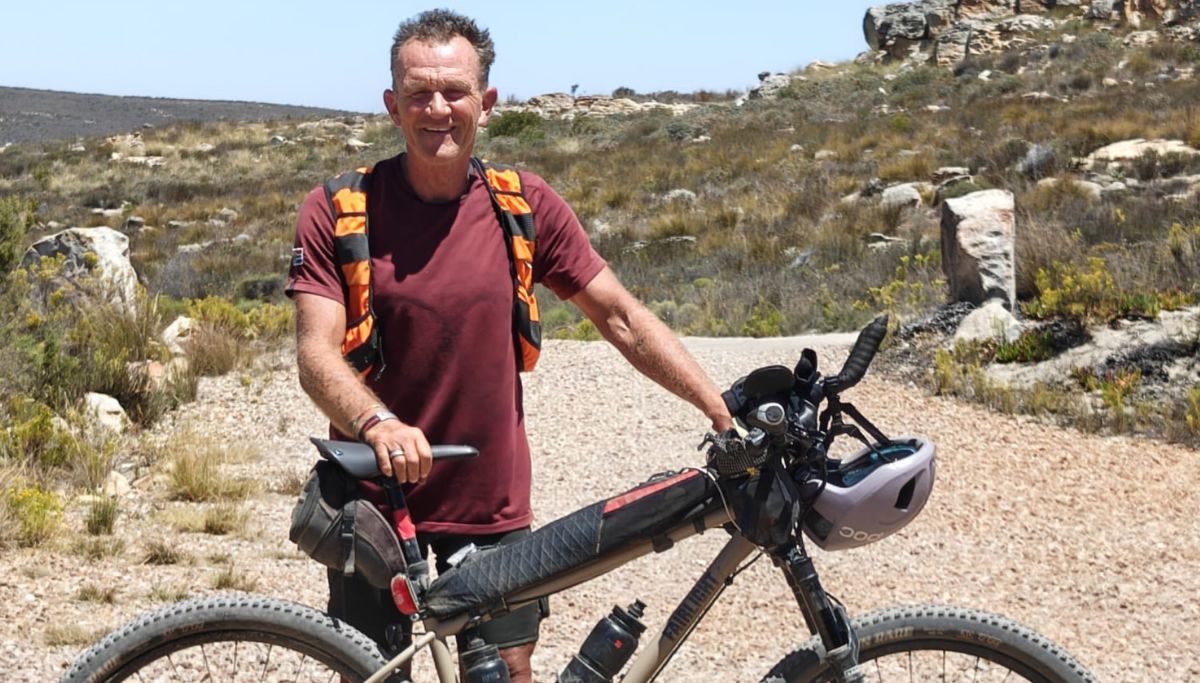
Here comes a man. Fleece sweater, sensible pants, dog in tow. A suburban man. A normal man.
He can’t be the man we’re supposed to be meeting. Because that man is superhuman; someone who rides over the world’s biggest mountain ranges for fun; someone who seeks out the most brutal endurance events for the ‘simplicity’ of it all.
But this is indeed Guy Jennings, former ad man turned conservationist turned ultra-endurance mountain biker. He looks like he should be walking around a botanical garden, categorising the plant life. He’s actually between adventures, plotting and preparing for his next mighty feat.
Not that you’d ever know it. Until you start talking to the man…
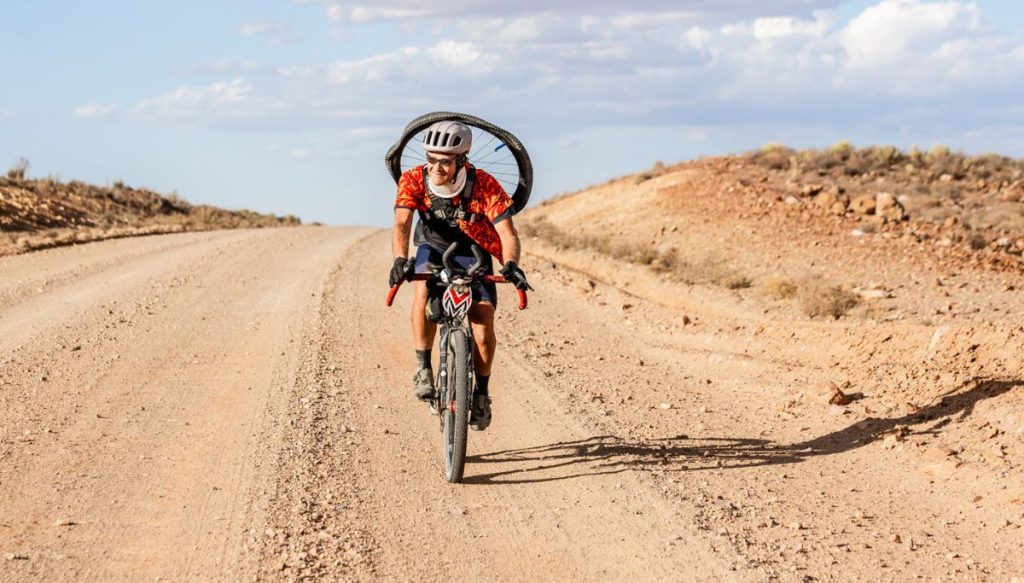
You’ve done Comrades, UTMB-style running events, stage races and Cape Epics. How did you eventually end up in ultra-distance bikepacking? It happened quite naturally, actually. I did 11 Comrades, and lots of the big ultra-running events and stage races where you’re carrying gear and moving through remote areas.
Then I got into mountain biking, and started doing Cape Epics and other stage races. But eventually I realised I wanted something less structured.
“I wanted the unknown, movement, remoteness…”
What was the spark of inspiration, then? I didn’t want another heavily organised event, where every hour of the day was mapped out. I wanted something that felt more like an adventure. I remember watching Ewan McGregor in Long Way Round, riding through Mongolia on motorbikes, and thinking: “That’s the feeling.”
I wanted the unknown, movement, remoteness… Then I had both hips replaced, which pretty much ended the running side of things; so cycling became the outlet. And eventually I found ultra-distance racing.
The ridiculous thing is that the first proper ultra I did was the Iditarod Trail Invitational, in Alaska, which is not exactly a sensible place to start. And I hate the cold!
That’s quite a dramatic step into the unknown… I was completely underprepared. But I also immediately realised that this kind of event suited me far better than traditional mountain-bike racing.
I’m not an explosive athlete. Put me on a flat road, and a lot of people will ride away from me. But if the event carries on long enough, and if conditions get hard enough, then I tend to stay in the game.
I’ve always been drawn to endurance. I think there’s a big difference between suffering for a few hours, and settling into discomfort for days on end. Longer races become less about speed and more about managing yourself mentally.
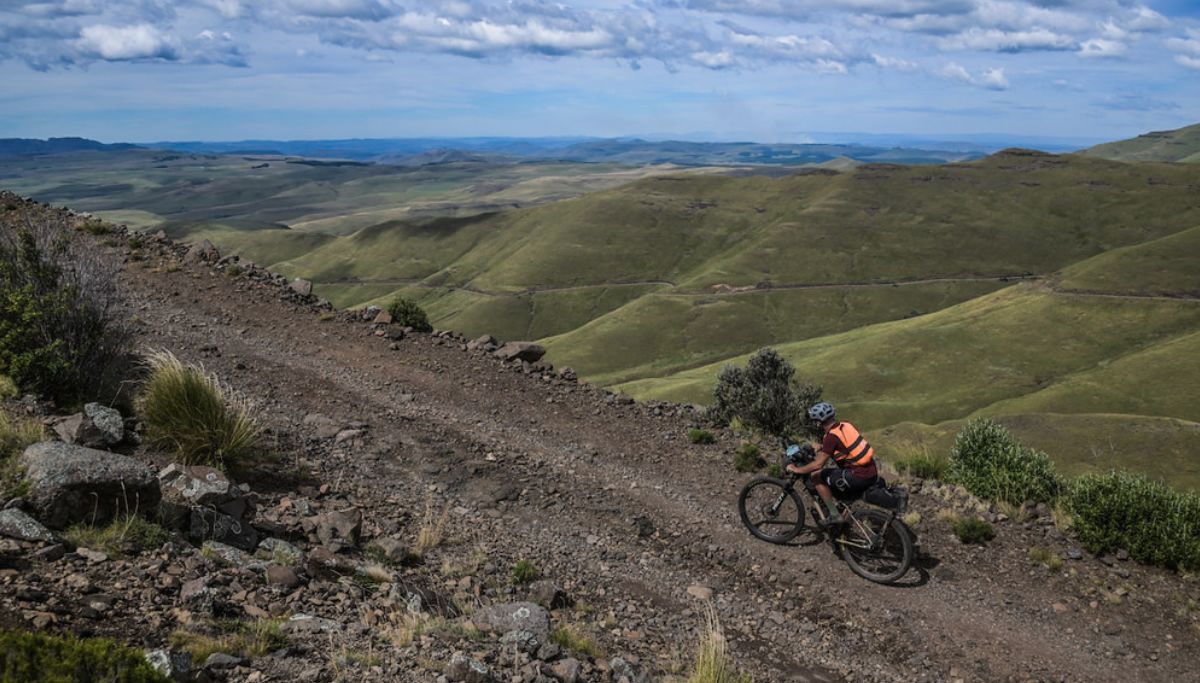
What kind of personalities are drawn to these races? One of the coolest things about ultra racing is that the world-class endurance athletes – the best of the best – often look completely ordinary. You arrive at some little restaurant or briefing venue before the race, and if there weren’t bikes leaning against the wall, you’d never know these people were some of the toughest athletes in the world. There’s no swagger. No posing.
All the participants met for a curry the night before the Silk Road Mountain Race. I looked around, and it felt like I was just hanging out with a bunch of other travellers. A few days later, however, you realise those people are among the best ultra-endurance riders on the planet.
The women are often unbelievably strong. Look at riders like Lael Wilcox – she absolutely demolishes people in these events. It’s incredible to watch.
How different is the atmosphere, compared to something like the Cape Epic? Completely different. And I say that as someone who loves the Epic. I’ve done four of them; it’s a phenomenal event.
But the Epic is polished. There’s infrastructure. There’s support. You race hard, then you come back to massages, showers, mechanics, recovery food and cappuccinos.
In ultra bikepacking races, you might sleep on the floor of a school hall in the middle of nowhere. Or behind a petrol station. Or under a tree. Then you wake up and carry on. There’s no prize money. Sometimes there aren’t even medals.
I remember Nelson Trees, during his briefing for Silk Road, saying that there would be no prizes; because that wasn’t the spirit of endurance racing. And weirdly, everyone loved that, because it strips cycling back to something incredibly pure.
I saw on your socials that you’d written ‘Remember why you’re here’ on your bike. Is that the motto that motivates you? There are moments when you absolutely hate every second of it. You’re freezing. It’s raining. Your bike is making noises. You haven’t slept properly. You’re soaked. You’re hungry. You’re questioning your life choices.
And in those moments, you have to remind yourself: “You chose this.” You are voluntarily riding a bicycle through an extraordinary place. Nobody forced you to do this.
Perspective matters. It sounds simplistic, but it really changes things mentally.
What are the worst conditions to deal with, in ultra-distance events? Rain. Definitely rain. Wind is terrible, but wind mostly just slows you down. Rain destroys you mentally, because you know it’s also slowly destroying your bike.
You hear every creak and every grinding sound, and you start wondering what’s about to fail next. You know your drivetrain is suffering. Your brakes are suffering. Everything is getting hammered.
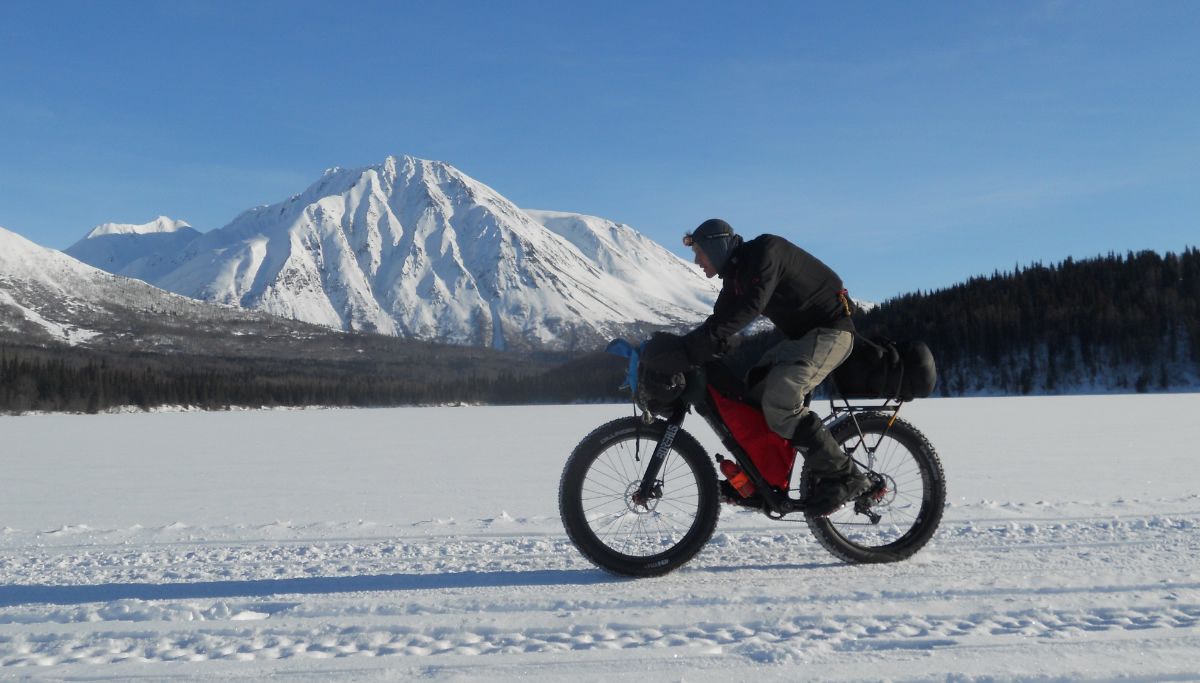
I raced in Alaska when it was double digits below freezing; and honestly, I’d take that kind of cold over multiple days of heavy rain. Cold is brutal, but rain becomes psychological warfare.
Have you suffered any serious mechanical disasters during races? Absolutely. At Silk Road, my crank came off about 400km into the race. One leg was pedalling, and the other leg was basically just hanging there in agony, trying not to interfere. In the same race, my pedal bearings failed after climbing to around 4 200m in altitude.
But I finished in the end.
That’s the thing with these races – small mechanical issues can become very problematic, because you’re so remote. Which is why I spend a lot of time before races checking and replacing parts: chain, bearings, cables, brake pads – everything. I’m not a brilliant mechanic, so being proactive and preventing issues becomes important.
The obvious question, then, is why? Why put yourself out there?! Simplicity. You realise how little you actually need. A bike. Some clothes. Food. Water. Shelter. That’s basically it.
And when life gets reduced to those essentials for days at a time, something happens in your head: the noise disappears, and you come back appreciating the small things again. Not in some fake Instagram way – genuinely.
I feel like I stop obsessing over nonsense, after a big trip.
Tell us more about your emotions while riding one of these events. They must be quite powerful? Massively so! You’ll be in the middle of nowhere, and someone leaves food for riders in a cooler box. Or a farmer invites you into their home. Or children run half a kilometre just to hand you something to drink.
Those moments hit all the right buttons.
“You end up crying over tiny acts of kindness; because emotionally, you’re completely stripped open.”
During the recent Race Across South Africa, a friend and I accidentally bypassed a resupply point, and suddenly realised we had almost no food – and another 90km to ride. A farmer pulled over, asked what we were doing and took us into his home. His wife cooked eggs for us, made sandwiches, filled our bottles. They completely saved us.
You never forget things like that.
It’s not just at home where that happens. In Mongolia, little kids ran towards me carrying horse milk, because they wanted to help.
You end up crying over tiny acts of kindness. Because emotionally, you’re completely stripped open.
What part of these races do you enjoy the most? I love riding at night. Everything changes at night. Your focus narrows, and your entire world becomes your light beam and whatever exists inside it. You become incredibly aware of sounds and movement and weather and terrain.
Sometimes I’ll listen to podcasts or audiobooks. Sometimes music. Sometimes nothing. In places like the Karoo, night riding is unbelievably beautiful. You see wildlife constantly. And the stars are insane. There’s something very primal about it.
What have you learned about yourself from doing ultra-endurance events? One thing this type of riding has taught me is that when things suddenly go wrong, panicking is not helpful. I remember something Canadian endurance athlete] Jenny Tough said: “Don’t be shit.”
It sounds ridiculous; but her point was that when you’re tired, you make stupid decisions. You ignore small problems. You stop eating. You postpone fixing things. And then everything snowballs from there.
So if something feels wrong, I deal with it immediately.
The other thing is acceptance. When the weather turns awful, or your body starts hurting, instead of getting angry, I try to welcome the feeling. You have to say, “Okay. Here’s the rain. Fine.” The second you stop resisting reality, your brain calms down.
But the two main lessons I’ve learned are these: one, you don’t need very much to get by; and two, most people are fundamentally good. That’s what stays with me, more than any result or finish time.
Sure, there’s racing and there’s suffering, and there are ups and downs and learnings; but it’s always the people that you remember. And then you realise that as long as there are good people in your life, you don’t need much else.
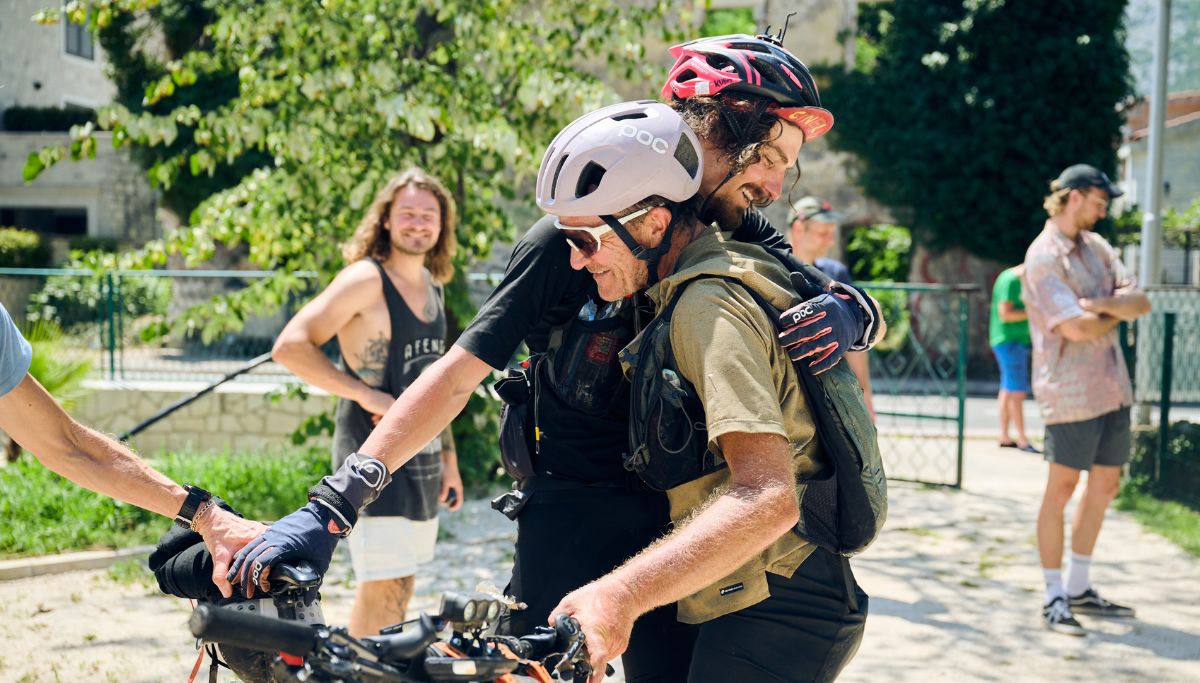
If you look back, from when you started to where you are now… do you think the sport has changed you, in any way? For sure. There’s always something emotional underneath it all.
My brother was very sick when I was doing a lot of the endurance running events; and after he passed away, there was a period when I felt like I was carrying him with me in races. I still think about him a lot when things get difficult.
These events also remind you how fortunate you are physically. You stop feeling sorry for yourself very quickly when you realise how many people would desperately love to be able to do what you’re doing.
What’s next, once you’ve ticked off all the events you want to do? There are still races I want to do. I’d love to race in Norway. I want to do more events in South America: Argentina, Chile… places I’ve always wanted to experience properly.
But increasingly, I’m drawn towards pure bikepacking, rather than racing. I rode through Central America years ago, and loved that feeling of simply moving through places slowly, under your own power. That’s ultimately where I think this all leads – away from competition, towards exploration.
A bicycle gives you access to the world in a way almost nothing else can.
(SOME OF) GUY’S LONG-DISTANCE PALMARÈS
- Tour Divide 4 400km / Canada, USA, Mexico
- Silk Road Mountain Race 2 000km / Kyrgyzstan
- Atlas Mountain Race 1 350km / Morocco
- Hellenic Mountain Race 900km / Greece
- Iditarod Trail 1 600km / Alaska
- The Rhino Run 2 800km / South Africa, Namibia
- The Munga 1 000km / South Africa
- Race Across South Africa 2 000km
- Sedgefield 500 500km / South Africa
Read about another extraordinary individual: Rocky’s Ride Into The Forgotten Kingdom.