
How a Can of Coke Can Save a Ride
Why cyclists swear by a mid-ride Coke for fast carbs, caffeine, and a morale boost.
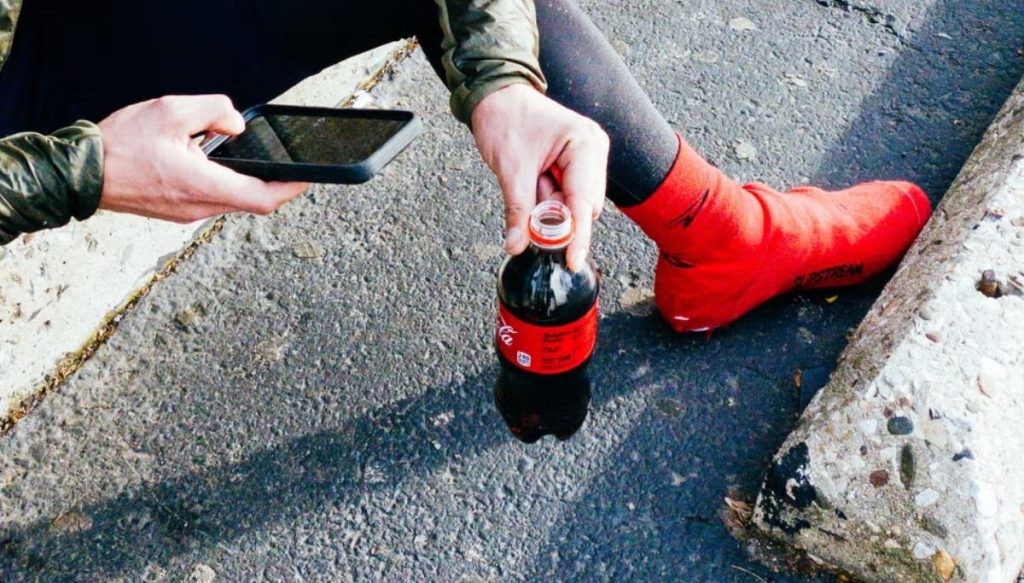
I was about seven hours into a long day ride and I could feel the bonk coming on. I was fuelling as much as I could, but was simply running out of food on the bike. I was out of my typical go-to drink mixes and at this point I had just finished the last of my snacks. When we rolled into the rest stop, I knew where my first destination would be — an ice-cold Coke.
“Are you even a cyclist if you haven’t had a Coke on a ride?”
Coca-Cola has been used by cyclists for decades for a quick bump in energy to drive away the dreaded bonk. Most of our staff at Bicycling has tapped into this quick-burning fuel source during a ride at some point or another. “Are you even a cyclist if you haven’t had a Coke on a ride,” questions our resident bike racer and photographer Trevor Raab.
When there are so many fuel sources cyclists can bring on a ride the question arises: why is Coca-Cola still used so prevalently in cycling? There is so much science that goes into products, yet so many cyclists fall back to Coca-Cola.
Here we’ll get some insight from Claire Shorenstein, MS, RD, CSSD on why Coca-Cola gives such a good mid-ride bump, what overdoing it looks like, and some stories from our team at Bicycling when they’ve had to tap into this fuel source that has been around for well over 100 years.
Most Accessible Fuel Source?
If you watch any of the media from events like the Silk Road Mountain Race you’ll see that even in the most remote Kyrgyzstan Tien-Shen mountains, Coca-Cola can still be found. It is one of the most widely available options no matter where you are in the world. To top it off, it’s consistent — whether you’re riding in the U.S., France, or the Middle East, you know what you’re getting as soon as you see that ubiquitous logo.
Recently, Tara Seplavy, deputy editor for Bicycling, was riding a Tour de France stage and ran out of water mid-ride. “On top of the near 40-degree temps, my planned water stops were both closed, and I was out of water. Luckily, a McDonald’s was open, so I grabbed a Coke and water while cooling off in the air conditioning,” says Seplavy.
While it might not be a go-to choice for everyone, many cyclists see it as a bridge to the next preferred fuel. “I’ve used Coke, Red Bull, [insert name of sugary drink here] many times. Never as a first choice: Always in a pinch when I didn’t have access to my mixed drink for whatever reason. It’s fine, but doesn’t have electrolytes so, for me (very heavy sweater) it is only good for shorter/easier rides, or to bridge between better drink options,” says Matt Phillips, senior test editor for Bicycling. We all have our drink mix of choice, but an option like Coca-Cola is always there, as Phillips says, to bridge the gap to your next option.
Why does it bring you back?
“There’s nothing quite like a petrol station Coke to ward off an impending bonk. The hit of sugar and caffeine has pulled me from some dark places, just long enough to get to the end of the ride,” says Raab. If you look at things like calories and sugar content in Coca-Cola it’s easy to understand why it’s such a good mid-ride boost. One can of Coke contains about 140 calories, 39 grams of carbohydrate, and 34 milligrams of caffeine. It even has 45 mg of sodium, which helps replenish a little bit of what you are losing to sweat — albeit not nearly enough to substitute for your favourite drink mix. “It’s a quick energy source (glucose + fructose and about 10g carbs per 100ml) that’s easily absorbed and put to use by working muscles when energy demands are high,” says Shorenstein.
Having an ice-cold Coke in the middle of a ride is about more than just the numbers. While the caffeine content and quick-burning carbs are great, there’s the feeling you get when you take that first sip. “The sugar and caffeine are nice, but it’s not about performance for me. It’s really all about the vibes,” says Louis Mazzante, senior features director with Bicycling. There’s a nostalgic comfort in having a Coke when you are at a low point in the ride that can help bring you back to a different headspace.
Even the pros partake
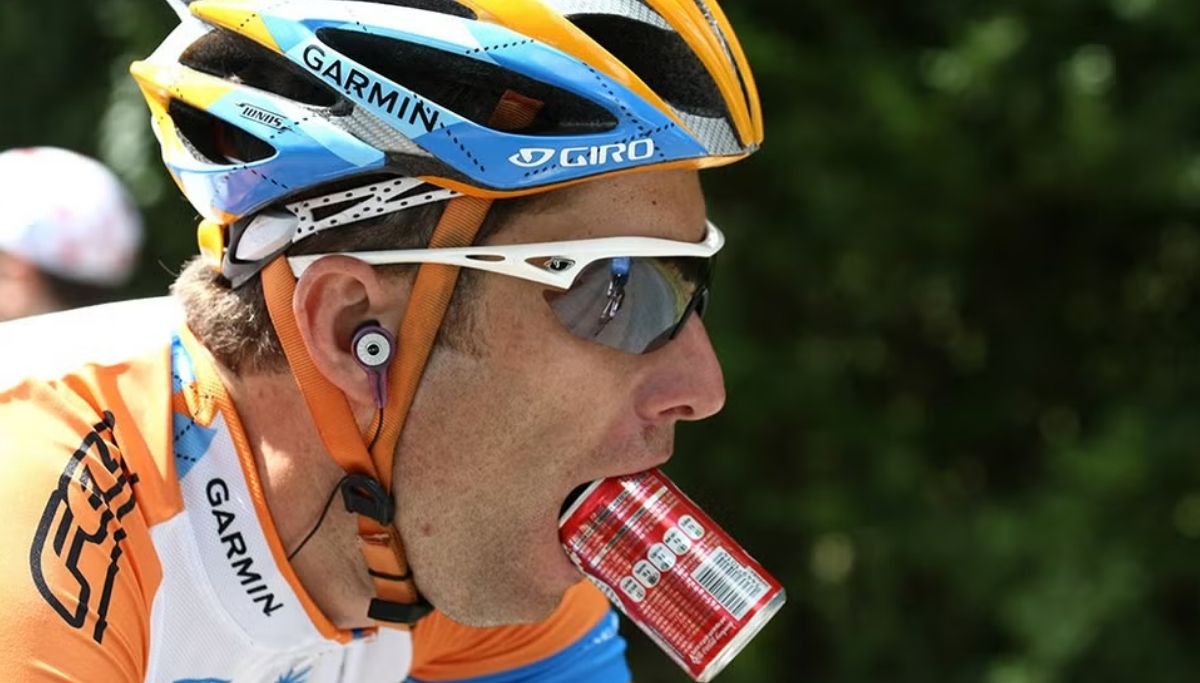
It’s not just a fuel source for the weekend warriors. Professional cyclists are known to partake as well. Look closely enough at handoffs at events like the Tour de France and you’ll see cans of Coke getting passed around. Athletes like Mathieu van der Poel have been caught on camera having one in the middle of the pack.
When Dan Chabanov, Bicycling’s test editor, was participating in a 2013 road race Coca-Cola was there to give him the boost he needed to finish the stage. “In 2013 I was riding stage 5 of the Tour de Beauce. I was getting dropped and as I was in the cars, one of the teams gave me a mini Coke.” That gave him just enough juice to make it to the finish line.
Too much Coke
Just like anything else, it’s possible to overdo it with something like Coke. With the sugar content being a huge driver of the benefit, it can be easy to lead into the sugar crash. I see this with my 4-year-old and her friends. Give kids too much sugar and that energy peaks hard, then that energy train runs out of tracks even harder. Cyclists are the same way — you might feel great initially, but if you don’t take something else in with it to keep that energy going, then you’re going to run out of steam.
Seplavy experienced this first-hand on her ride through the heat while pre-riding stage five of this year’s Tour de France. “After the Coca-Cola sugar rush ran out, I don’t remember much. I know I climbed off the bike on a climb to sit in the shade for a while — twice in less than eight kilometres,” says Seplavy.
That’s why I like to take in more than just a Coke when I’m doing a stop. I start with the Coke to bring me back to life a bit, then while I’m drinking that I will pick up whatever else I’m craving as I wander the aisles of the local petrol station convenience store or deli.
The bottom line
While everyone is different, Coke is something to consider if you are bonking as you roll into a petrol station or are in a remote area of Asia and want something to feel like home. I rarely drink any soda outside of rough experiences on a bike, but in the situations where I’ve craved it, deep in the pain cave of a long ride, it hits the spot like few other things could.
This isn’t a substitute for drink mixes, gels, or food, but it is a great option to bridge the gap and keep you cranking as you find your next fuel. Shorenstein gave me a pro tip I’m going to try on my next ride,“try to drink it flat so it sits better in the gut, as carbonation can cause bloating and other GI issues while riding.”
This article first appeared on bicycling.com