
10 Things Tour de France Riders Do That You Shouldn’t Copy
Some pro habits are worth stealing. These aren't — and here's why.
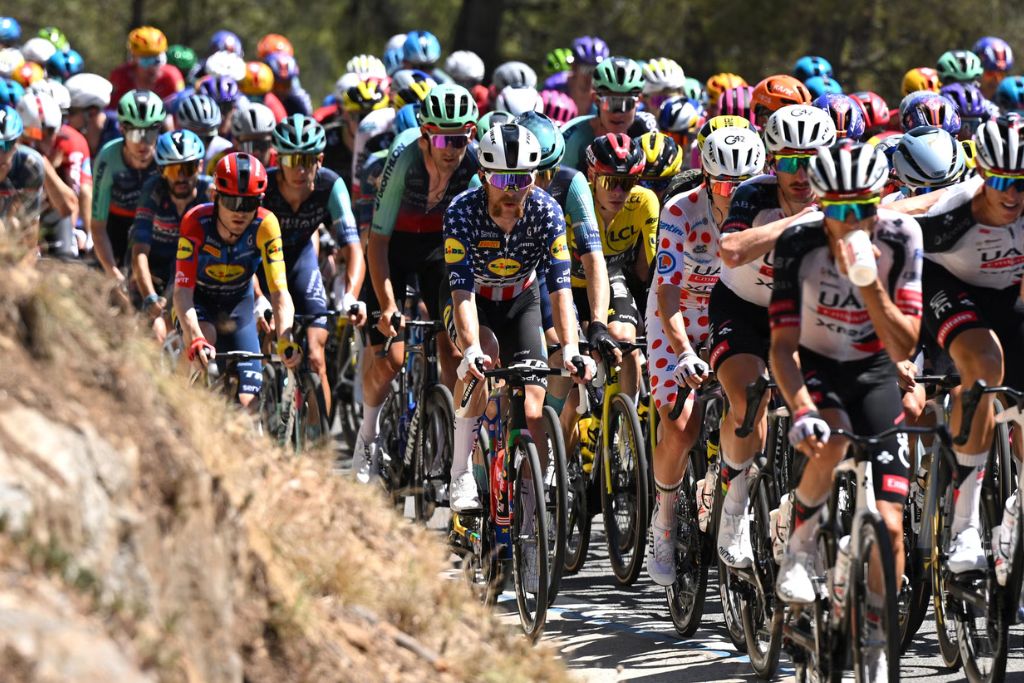
The Tour de France shows us what is possible when talent, money, obsession, science, and suffering all get pointed in the same direction. It also shows us a lot of stuff regular riders have no business copying.
The Pros have team cars, soigneurs, mechanics, closed roads, freakish fitness, and there’s the small matter of this being their job.
That does not mean the pros are wrong. It means their choices exist inside a very specific ecosystem: team cars, soigneurs, mechanics, closed roads, freakish fitness, and the small matter of this being their job. The mistake amateur riders make is seeing what works in that world and assuming it must also be the best answer in ours. Often it is not.
Below are 10 things you see riders in the Tour de France doing or using that the rest of us probably should not.
Wear a Skin Suit
A skin suit can, in the best case, improve aerodynamics. But those gains are heavily dependent on fit. At the top level, riders are using specially designed suits built around their body and position, not just grabbing whatever happens to be hanging on a shop rack.
That is the problem with most off-the-shelf skin suits. They come in stock sizes, which is a good way to end up in something that does not really fit. Chances are, you are not exactly a medium on top and a medium on the bottom in the precise way that suit was designed around. And a poorly fitting skin suit can easily be slower than a well-fitting two-piece kit.
They are also expensive, annoying if you need a bathroom stop, and if you crash and ruin the shorts, you have also killed an otherwise good jersey. For most riders, a good jersey-and-bib-short setup is easier to live with and probably the better answer.
Take In Massive Amounts of Carbs
One of the changes that has helped make the modern peloton so fast is the carb revolution. Riders are taking in eye-popping amounts of carbohydrates through drink mix and gels, and it can be tempting to read that your favourite pro is doing 150, 180, even nearly 200 grams per hour and think maybe you should too. You probably should not. Elite teams have pushed hourly intake higher in recent years, but they do it with deliberate gut training and highly specific fueling plans, not vibes.
First, amateur riders like you and me generally do not need that much because we are not producing anything like the same power. Pogačar has said his zone 2 is around 320 to 340 watts, which tells you how far his world is from normal-person riding.
Second, you do not just decide to eat that many carbs and have it go well. Riders work up to those numbers. They train their gut for it. Trying to slam down huge amounts of carbs without building toward it is a good way to end up bloated, nauseated, and trying to ride while explosive diarrhea is brewing inside you.
It is also expensive, sticky, and kind of a logistical pain because you are constantly drinking or tearing open another gel. More carbs can be good. But there is a big difference between enough and absurd.
Ride With Time Trial Tyres
The fastest time trial tyres can save a few watts. But the gains come with tradeoffs that pro riders can accept and most of us probably should not. Time trial tyres are more puncture-prone, less grippy, and shorter-lived than a good all-around road tyre. Which is fine if you have a team car and a mechanic and the whole day is built around one result. That is not how most of us ride.
For normal riders, a puncture-resistant fast tyre is usually the smarter choice. Because a tyre that is a couple watts slower on paper but keeps you upright, gets you home, and lasts longer is, in the real world, the better tyre.
Ride With Only One Water Bottle
Pros can get away with this because they have support. Bottles are handed up. Fresh ones appear. If something goes wrong, there is a whole system built to catch them. You only have whatever you remembered to leave the house with.
For most amateur riders, one bottle is less a smart optimisation than a mistake. You drink less because you know you are short. Then you fade, your mood goes bad, your power drops, and the last part of the ride feels way harder than it should. Unless the ride is short or has sure and frequent refill stops, just take the second bottle.
Suffer Through a Bad Day on the Bike Like It Is Your Job
Pros have to suffer through bad days on the bike because it literally is their job. They have contracts, teammates, team management, and race situations that do not care how they feel. You do not need to turn every ugly ride into some test of character.
Yes, riding well sometimes means being uncomfortable. Yes, fitness requires work. But there is a difference between useful suffering and pointless suffering. If your legs are empty, your head is off, or your body is telling you something is wrong, going home early is not weakness. It is smart. One of the luxuries of being a civilian rider is that you can choose not to cosplay as a beat-down domestique.
Drop Gel Sachets on the Road
You will see Tour riders dropping gel sachets on the road (hopefully in the designated litter zones along the route) and casually throwing water bottles to the side. It should go without saying, but don’t do this.
Throwing your sticky little trash bomb on the road or trail is gross, lazy, and a good way to make cyclists look like entitled slobs. The empty packet weighs basically nothing. Even if it is a sticky mess, stuff it in your pocket and deal with it later.
Use Monster Gearing
A lot of pro gearing only makes sense if you are producing pro power at pro speed. A giant chainring looks cool right up until you realise you spend most of your riding nowhere near the speeds that make it useful.
Colnago says Pogačar’s 2026 Tour road bike is running Carbon-Ti 55/40T chainrings with an 11-36 cassette. In other words, what counts as enough range for the climbs of the Tour is still enormous by normal-person standards. That tells you a lot about how fast and how hard these guys are riding.
Most amateur riders would be better served by much lower gearing that lets them stay smoother and fresher and gives them better options when the road tilts up, or the ride goes long. Bigger gears do not make you strong. They mostly just make it easier to pedal badly.
Ride With a R6 Million Watch
If you earn a multimillion-rand salary and are sponsored by a luxury watch brand, like Tadej Pogačar and Mathieu van der Poel, racing with a R6 million watch may not seem like a big deal. But seriously: what? That’s a house in many parts of South Africa. It’s enough to pay for a university degree — and then some. And it’s strapped to your wrist while you’re racing in a sport where crashing is often less a question of if than when.
Ride Without a Repair Kit
Tour riders can skip the repair kit because their repair kit is a car full of spare bikes, spare wheels, and mechanics. You do not have that. You have your pockets, bags for your bike, and maybe a friend who will get very tired of rescuing you.
You do not need to carry a shop with you. But if you are riding farther than you want to walk, bring the basics: a tube or plug kit, an inflator or mini pump, and a multitool. The exact setup depends on the bike and the ride. The point is not being helpless just to save a few grams and watts.
Obsess Over Marginal Gains
To be fair, most of this stuff is real. Tire choice matters. Chain lube matters. Clothing fit matters. Aerodynamics matter.
But we’re watching pro riders and their mechanics chase smaller and smaller gains because they are already close to optimised, and because seconds can decide their race. When you’re at that level, details that seem ridiculous to normal people — like taping over the end of a pedal axle — can matter. That does not mean they should dominate your thinking.
Most amateur riders still have huge, boring gains sitting right in front of them: better pacing, better sleep, better fueling, a better bike fit, smarter training. That stuff is not sexy, so people skip past it and start worrying about ceramic bearings and aero socks. Marginal gains are fine. Installing a set of 1.5-gram Carbon-Ti anodised aluminum pulley bolts is fun, even. But if you are ignoring the big stuff, they are mostly just a distraction.
The broad lesson here is simple: pro riders are trying to win the Tour de France. You are probably trying to have a good ride, get a little fitter, maybe go a little faster, and come home wanting to do it again tomorrow. Those are not the same task.
So take what is useful from the pros. Ignore what is not. And remember that one of the best things about being a civilian rider is that your bike does not have to be obsessed over down to every bolt and hole in the hunt for fractions of a second.
This article first appeared on bicycling.com
READ MORE ON: 2026 Tour de France pro cycling