
Nine Takeaways From the 2026 Tour de France Femmes
A historic second title, an emerging generation and an unrelenting GC battle defined the 2026 Tour de France Femmes.
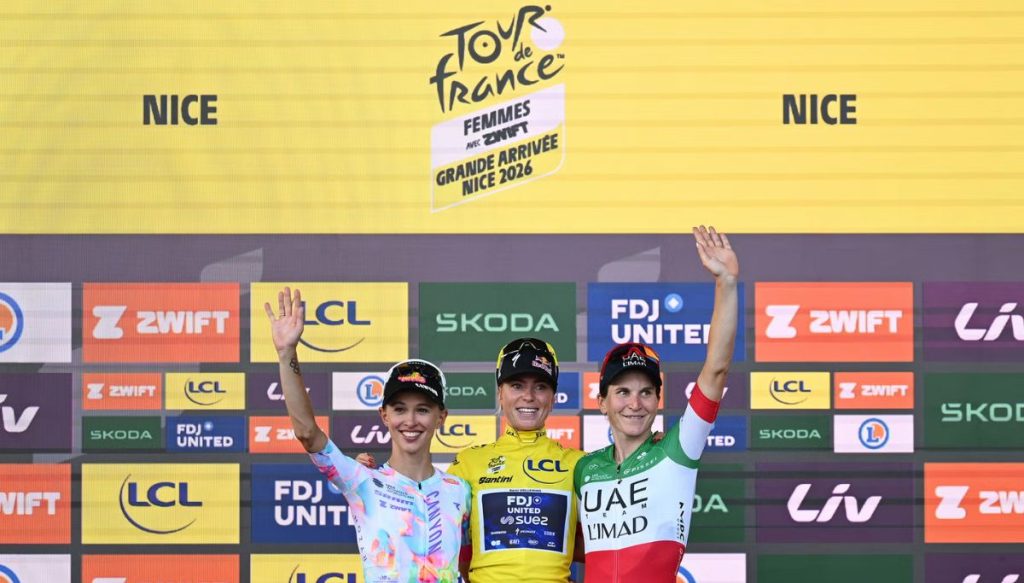
The 2026 Tour de France Femmes avec Zwift was an unrelenting nine days of racing. From Lorena Wiebes (Team SD Worx-Protime) taking yellow in Lausanne to Demi Vollering’s (FDJ United-SUEZ) final solo attack above Nice, the suspense kept me glued to the (unfortunately) limited broadcast.
Five riders wore yellow across nine stages: a sprinter, a breakaway revelation, a time-trial specialist and two of the sport’s best climbers. After Ventoux, only 15 seconds separated Kasia Niewiadoma-Phinney (Canyon/SRAM) and Vollering; going into the final stage, the gap was eight seconds.
Vollering eventually won her second Tour de France Femmes overall and took three stages. Niewiadoma-Phinney earned her first Tour stage on Mont Ventoux and a fifth consecutive podium. Antonia Niedermaier (Canyon/SRAM) finished fourth and won white. Wiebes secured green, while Puck Pieterse (Fenix-Premier Tech) won the polka-dot jersey.
The results do not capture everything this Tour revealed. A new generation moved closer to the podium, while almost constant GC action sometimes came at the expense of smaller teams and breakaway riders. Here are my biggest takeaways.
Vollering Remains the GC Standard
There is no real argument over who won the most at this Tour. Vollering took three stages, won the final day in yellow, and finished 1:18 ahead of Niewiadoma-Phinney. Her second yellow jersey made her the first rider to win the modern Tour de France Femmes twice.
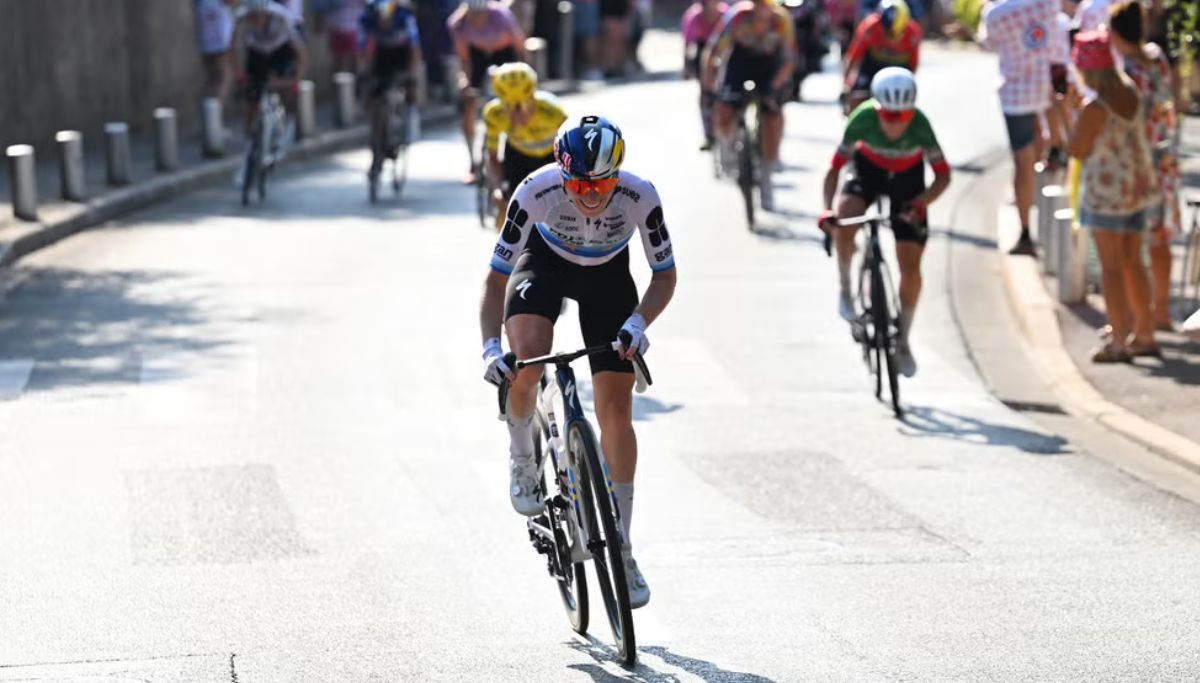
Despite the overwhelming dominance, her victory did not look inevitable. Vollering started the final day only eight seconds ahead, and she was up against a motivated Niewiadoma-Phinney, who put 1:16 into Vollering on Mont Ventoux. It wasn’t until Vollering put in that final attack to crack Niewiadoma-Phinney in Nice that her yellow jersey looked safe.
Kasia Niewiadoma-Phinney is the Best Pure Climber in the Peloton Right Now
Niewiadoma-Phinney came to win, and second place overall will sting. Still, her ride on Mont Ventoux was arguably the best performance of pure athleticism in the race.
Niewiadoma-Phinney attacked on Mont Ventoux from almost 10 kilometres out while Vollering and Marlen Reusser (Movistar Team) watched one another. She won her first-ever Tour de France Femmes avec Zwift stage and took the yellow jersey.
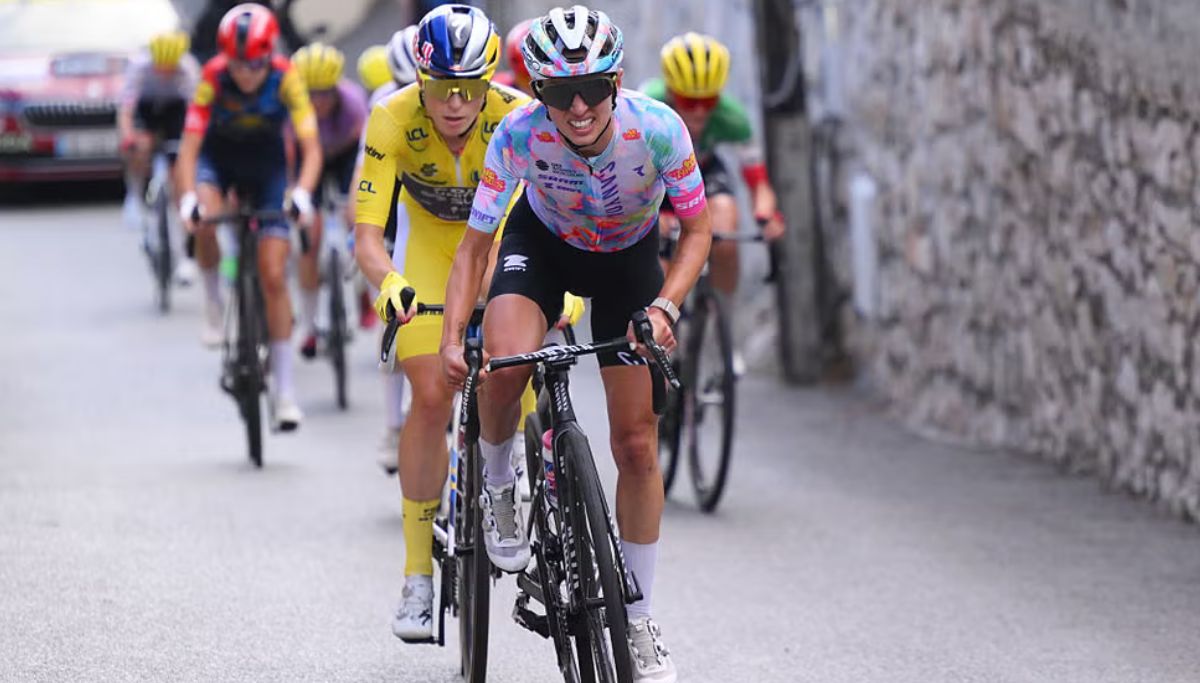
It was also just an absolutely incredible climbing performance. Niewiadoma-Phinney rode the official Mont Ventoux Strava segment (20.73 kilometres at 8.3%) at an average speed of 18.8 kph. We don’t have her power numbers, but her time of 1:06:02 puts her 53rd out of 197,260 recorded times on Strava. For context, that is in the top 0.03% percentile. Just an utterly devastating reality check for anyone still entertaining the delusion of the professional women’s races being “slow”.
Her second place overall is Niewiadoma-Phinney’s fifth consecutive Tour podium. She has finished third, third, first, third and now second since the race returned in 2022. While Vollering bested her in Nice, the rivalry between her and Niewiadoma-Phinney remains one of the best in modern cycling.
The Next Generation Is Knocking at the Door
The white-jersey competition for best young rider was not happening somewhere behind the real race. Niedermaier finished fourth overall, Paula Blasi (UAE Team L’Imad) fifth and Isabella Holmgren (Lidl-Trek) eighth.
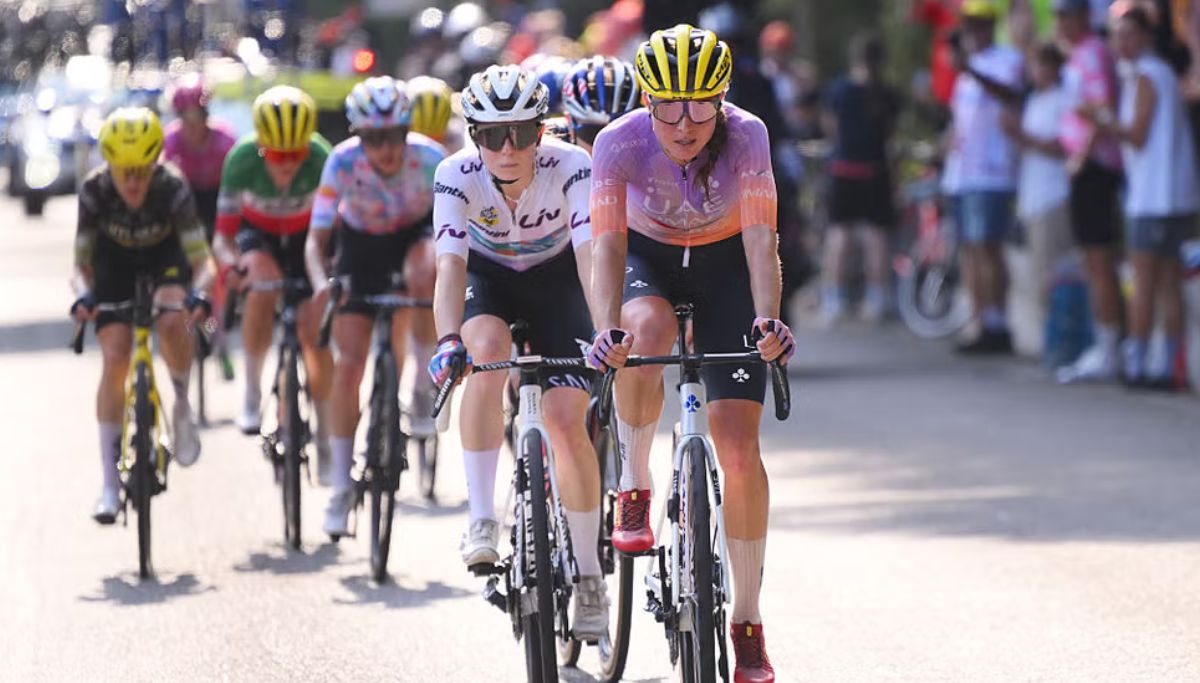
Niedermaier rode consistently enough to win white and nearly reached the podium. Blasi finished second on Stage 9, showing that fifth overall was not simply the result of surviving. Holmgren stayed in the top 10 through a race with almost no easy stages.
All three will face more pressure next time. Particularly Blasi, who has already won multiple high-profile stage races this season.
UAE’s Depth Nearly Made Up for Not Winning a Stage
UAE was the best team in the race without winning a stage. Elisa Longo Borghini finished third, Blasi fifth and Dominika Włodarczyk seventh. UAE also won the teams classification by 48 minutes.
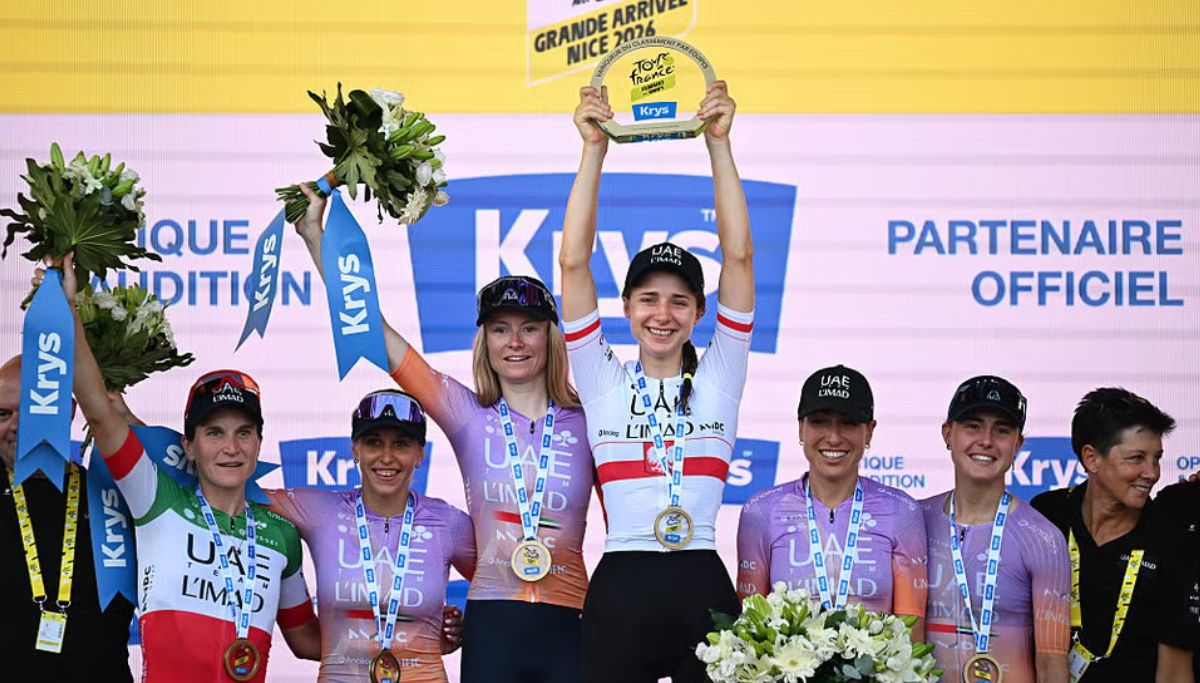
Longo Borghini finally overcame a string of bad luck at the Tour de France Femmes and moved onto the podium on the final day in Nice after Reusser fell apart. Even with these strong results, the lack of a stage win will bother UAE and leave them hungry for more next year.
The Route Delivered
Five riders wore yellow across nine stages. Wiebes led after the opening sprints. Sigrid Ytterhus Haugset (Uno-X Mobility) took an 89-kilometre solo win. Reusser used the Dijon time trial to move into yellow, before Niewiadoma-Phinney and Vollering traded the jersey over the final three days.
The race did not wait for Mont Ventoux to become interesting, and the final stage was not ceremonial. Nearly every stage delivered meaningful GC action. That made the Tour exceptionally good to watch from start to finish. Even though some of the stages were only broadcast from their halfway point.
Ferrand-Prévot Didn’t Get the Chance to Defend Her Title
Everyone wanted to see the Vollering-Ferrand-Prévot (Team Visma | Lease a Bike) rematch, but the battle never materialised. Ferrand-Prévot lost time in the Dijon time trial, conceded more than 10 minutes on Ventoux, and withdrew before Stage 8.
While it was impossible to miss the contrast from her dominant 2025 form, Ferrand-Prévot never made any excuses for her lack of form. Even saying that her numbers were still quite good, but the overall level of the race has gone up substantially.
Reusser Deserved Better Than 14th
Reusser won the Stage 4 time trial, wore yellow and started Stage 9 in third. Her ride on Mont Ventoux, where she finished within 30 seconds of Vollering, is a better indication of her form than her final GC standing.
Reusser was dropped on the Col d’Èze circuit and then crashed on a descent, falling to 14th. She was already losing the podium before the crash, but that was an absolutely brutal way to end her race.
The GC Battle Squeezed Out the Smaller Teams
Nearly every day of the 2026 race was raced like a GC day. While that made for some nail-biting racing, it also meant that the strongest teams always had a reason to control the peloton and chase the breakaways.
Just six teams ended up winning stages, leaving 15 teams empty-handed. FDJ United-Suez and SD Worx-Protime took five of the nine stages between them. Of the seven invited ProTeams, only Uno-X won, through Haugset’s remarkable solo ride (the race’s only early breakaway victory). Kim Le Court-Pienaar’s (AG Insurance-Soudal Team) Stage 6 win from a late breakaway was another good day for the stage hunters. But with only nine days of racing, there just weren’t that many opportunities for smaller teams to make an impact.
While it feels counterintuitive as a viewer to fret over the race being too exciting, as someone who’s invested in the sport’s long-term growth, I worry that concentrated dominance can easily drain that excitement. The smaller teams need opportunities to attract investment and continue to broaden the talent base.
The Post Stage Eight Discussion Became Unnecessarily Ugly
The incident between Niewiadoma-Phinney and young FDJ rider Célia Gery deserved to be discussed. Niewiadoma-Phinney believed Gery had blocked her as Vollering attacked, while FDJ defended Gery’s positioning as a normal part of racing.
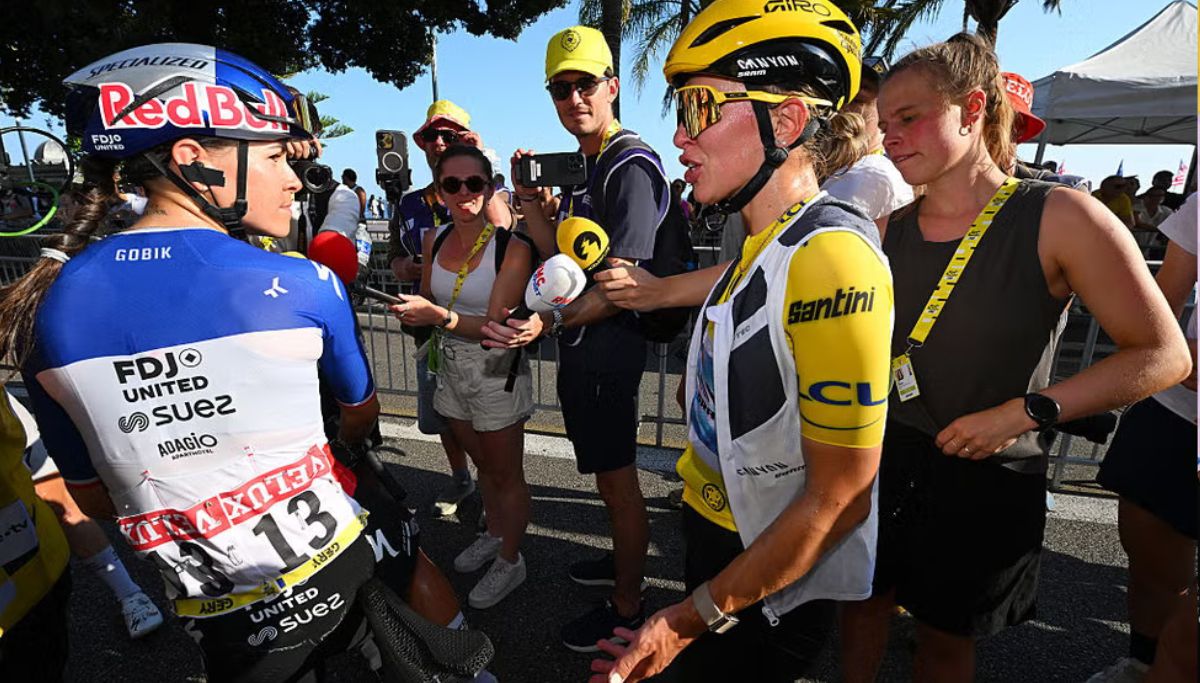
I do not think riders should have to hide their reactions or pretend they agree with one another. It is good for the sport when they feel empowered to speak honestly, disagree, and perhaps even beef with each other a little. Rivalries and heated moments are just as important to sport as the athletic performances.
What was unacceptable was the personal abuse and reported threats aimed at Gery afterward.
This article originally appeared on bicycling.com
READ MORE ON: Tour de France Tour de Frane Femmes