How To Ride Strong at 50+
With age comes experience. And as time marches on, it’s that experience that can make you an even better rider.
There’s good news and bad news. The good news is, when you get older, you’ll actually have more time to ride. The bad news is, you have to wait until you get older to have the extra time to ride!
Of course, there’s also that gradual drop-off in performance that we all have to contend with as the years go by. But that doesn’t mean it’s the end of the road for your riding prowess.
In fact, depending on how you embrace the ageing process, your later years can be turned into golden years on the bike. You can still race. You can still tour. You can still dawdle along with your chums.
No matter what your youthful pedalling preference, there’s still a bright cycling second act to be had. It all comes down to mindset, how you approach your riding, and how you look after your body.
Don’t take it from us, though; take it from these six experienced riders, all of whom know exactly how to keep the fighting spirit, the fun and the freewheeling alive. Here’s their real-world advice for riding into your 50s and beyond.
Do Your Strength Training
PAUL GODDARD, 59, BICYCLING AD MAN
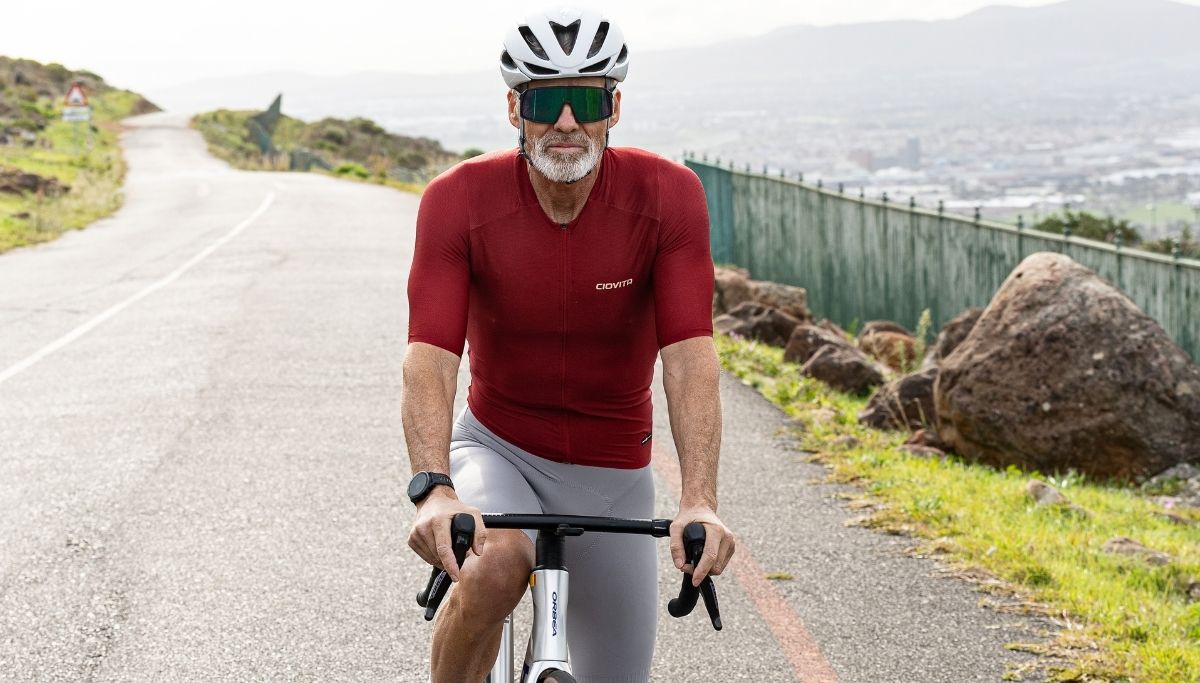
Looking in the rearview mirror at a full cycling life, Paul ‘Goddie’ Goddard can still see the Wednesday-night training rides that earned him his first sub-three-hour Cape Town Cycle Tour.
“There were no fancy lights on bikes back then,” he says. “We’d ride from the Bishopscourt area of Cape Town to Killarney, do laps there, then race home before the sun disappeared. It ended up becoming a 100km training session.”
The man dragging him through those sessions was a former pro rider, the late Lionel Murray. “He basically taught me everything I know about cycling. He got me into it and got me faster. We did that for training rides, and we did track sessions for three or four months; I went under three hours, then did it again, then moved from road to mountain biking.”
Back then, in the prehistoric days of mountain biking, Goddard was riding a fully rigid mountain bike that weighed “about 20kg”, with V-brakes and inner tubes. “We thought it was brilliant. I’ve been mountain biking ever since. I just fell in love with the culture straight away.”
Decades later, he still loves the culture and rhythm of cycling just as much as he did then. “I was always competitive, but honestly, I was – and still am – a rank amateur,” he says. “I just liked improving. I just like riding my bike and having a good time.”
“At this age, one of the highlights of my week is still a long ride with my mates.”
One result still stands out, though. A brutal old-school fun ride from Somerset West to Stellenbosch and back, where he somehow survived in the A-batch all day, averaging close to 40km/h. “That was probably the highlight of my cycling career – not getting dropped!” he says with a smile. “But honestly, I’ve never been (and never was) an ‘if I train hard, I can win’ kind of rider.”
Now, approaching 60, he credits two things with slowing the decline most riders fear. “The first is strength training. Heavy compound lifts. Squats. Deadlifts. Lunges. You’ve got to keep the body strong.” The second is indoor training. “Smart trainers are the silver bullet for older riders. A properly structured 75-minute session indoors is far better than noodling around outside for two hours.”
Still, he’s careful not to let cycling become joyless. He now works in structured three-month blocks towards major events, before deliberately stepping back. “Otherwise, you start getting anxiety around events and training.”
The social side has become equally important. “At this age, one of the highlights of my week is still a long ride with my mates.”
Goddie’s Essential Advice: “Lift heavier weights than you think you should. Stay strong. And always leave space to ride purely because you love it.”
Ride With People You Like
MICHELLE LOMBARDI, 57, ACCOUNTANT
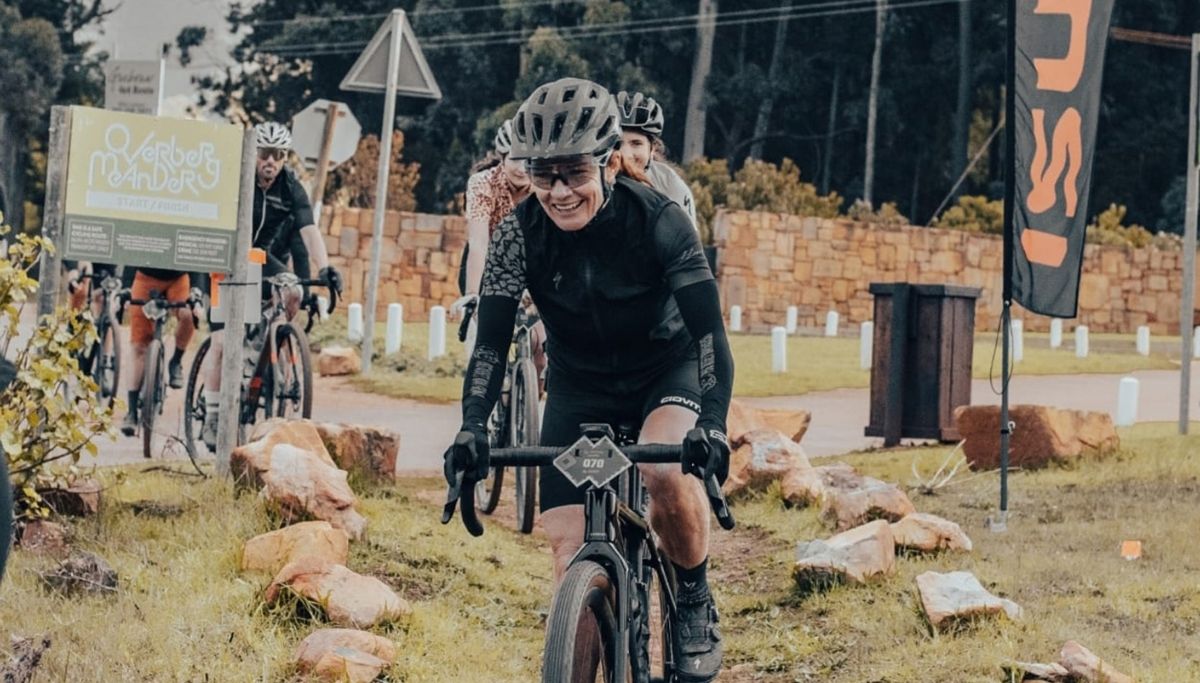
A familiar and popular figure on the South African cycling scene, Michelle Lombardi has lived several different cycling lives.
There was the early mountain-bike racing era in the 1990s, back when riders tackled cross-country and downhill on bikes with barely an inch of suspension travel. There were World Championship appearances. Then marriage, children, back injuries, long periods away from racing; and eventually, a return to the sport she thought she might never do properly again.
“I started riding in the early 90s after meeting Martin [her husband],” she says. “Back then, everybody was doing events like the Sedgefield Fat Tyre Festival. We just got pulled into it.”
By 1993 and 1995, she was racing Worlds. “The bikes were ridiculous, by today’s standards,” she says. “Non-existent suspension – and we were racing downhill on them!”
Then came the kids, and a change in lifestyle and riding opportunities. After her son Matt was born in 1997 and daughter Megan in 2000, riding naturally took a back seat. A serious back problem in 2011 made things worse. “I stopped riding completely, and pretty much stopped competing at events.”
For years, Lombardi watched from the sidelines while friends raced Cape Epics and stage races. Then, unexpectedly, things changed. “My back just improved. Miraculously.” And around three years ago, she started riding properly again. Soon afterwards, she lined up for the Cape Epic with Hannelie Booyens. “After that, I just didn’t look back.”
Unusually, perhaps, Lombardi has no interest in complicated training programmes. “I hate intervals. I hate programmes. I just know what works for me.”
“Find people you enjoy riding with. That’s the key.”
What works is consistency, strength training, and riding with people she enjoys spending time with. “I do my rehab and gym exercises religiously now – probably four or five times a week. I never had time for that before.”
And then there’s the unofficial sport within the sport: chasing down younger riders! “One of my favourite things is catching younger girls on long climbs, and riding past them,” she says with a laugh.
These days, the social side matters just as much as the racing. “You’ve got to find people you love riding with. Some days we race hard; other days, we just chat and ride.”
Lombardi’s Essential Advice: “Find people you enjoy riding with. That’s the key. The riding becomes easier when the people around you make you want to be there.”
Keep It Simple
STEPHEN GOLDING, 71, BUSINESS OWNER
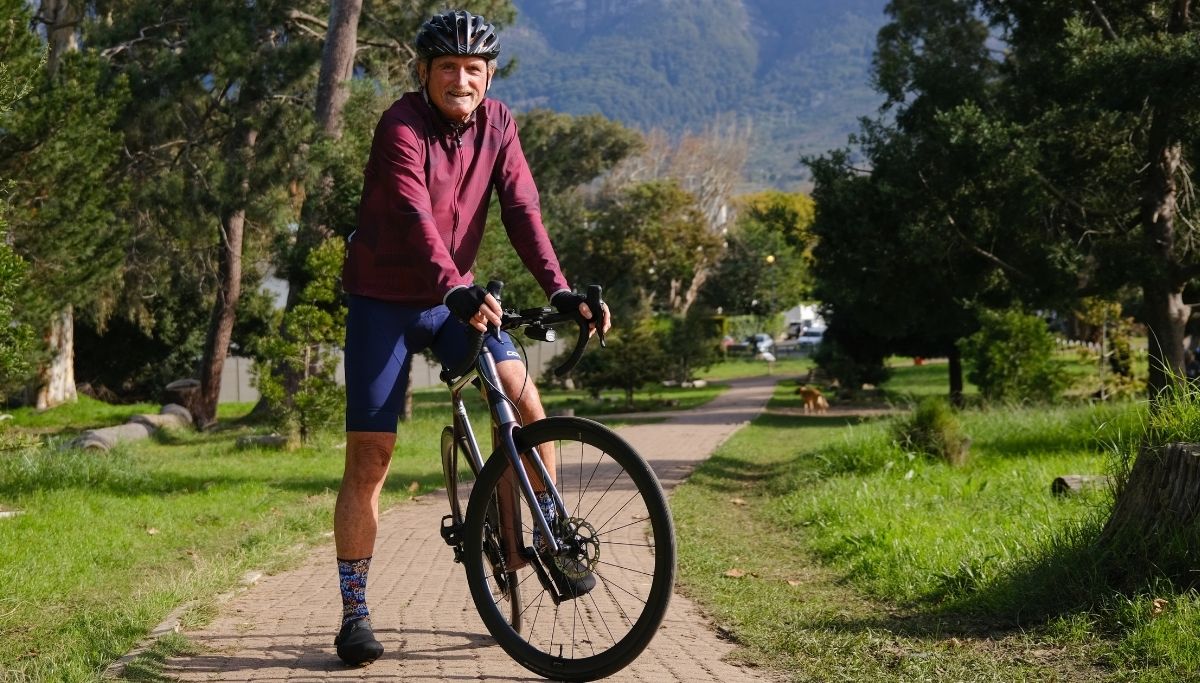
Stephen Golding still rides the Cape Town Cycle Tour in around three-and-a-half hours. At 71. He also still goes into the office every day to help run the industrial water treatment business he started with his brother.
Retirement, clearly, is not really his thing. “I’ve always been hugely competitive,” he says. “In sport, in business, in everything.”
Cycling arrived after a football injury ended his running days. “I damaged my ankle at university, and couldn’t really run properly anymore. At that stage I’d done one Comrades Marathon and one Two Oceans. Cycling became the next best thing.”
Twenty-six Cycle Tours later, he still trains much the same way he always has. “Yes, the training hasn’t really changed,” he says. “I still ride three times a week, and walk with my wife four times a week. I try and hit 150km a week on the bike.”
The numbers still matter, too. “Every Cycle Tour, I want to get under 3:45. That’s the goal, every year.”
As a rule, Golding eschews all the modern trinkets and constant upgrades of the current cycling era. He laughs when remembering one of his early bikes. “I had this red Merida, with a pump attached to the frame. The guys absolutely ragged me about it. Eventually, I bought a new Giant.”
But in his mind, new bikes come with responsibility. “When you get a new bike, you have to ride enough to deserve it.”
Unlike many modern riders, Golding has little interest in gravel riding, smart trainers or endless gadgets. For him, cycling remains wonderfully straightforward.
“It’s about being outdoors. It’s about riding with the guys. There’s always competition somewhere – on a hill, a sprint at a robot, wherever.”
And perhaps that’s the point. The goal isn’t always dramatic; it just exists. “If you don’t have something to aim for, then you don’t really have a plan,” he says. “You might as well stay on holiday.”
Golding’s Essential Advice: “Age is nothing to be scared of; embrace it. But have a goal. It doesn’t matter if it’s a 5km run or the Cycle Tour. You need something that gets you out the door. A goal makes you plan things, and having a plan gets you out the door.”
Say No To The Voice In Your Head
INGRID AVIDON, 56, MIND MASTERY AND NERVOUS SYSTEM COACH
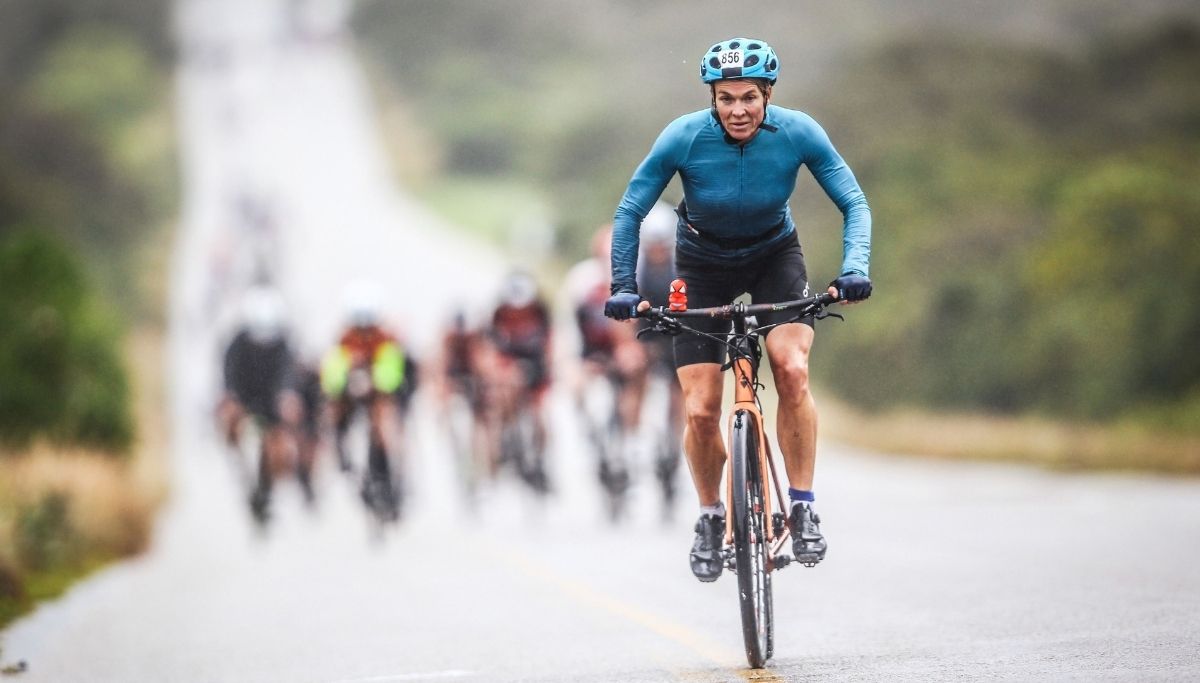
Some cyclists race to win. Ingrid Avidon seems more interested in finding out what happens after things go wrong…
She started cycling in her mid-20s through triathlon, and gradually drifted towards longer and harder events. Ironman followed. Then stage racing. Eventually, ultra-distance riding and Freedom Challenge-style events.
“I always want to test myself,” she says. “I do one distance, and then I wonder if I can do the next one.”
What keeps pulling her back is the uncertainty of the long ride. “You learn that you’re far tougher than you think…”
For Avidon, it’s a cycling lesson that has arrived the hard way. “I’m not a very good navigator,” she admits cheerfully. “I’ve got horrifically lost, many times.”
She describes nights spent sleeping under bushes after navigating errors left her too exhausted to continue. “You start having all these thoughts: ‘I’m an idiot. I shouldn’t be here. Everybody’s watching me fail.’”
But very soon, the doubts start to fall away. “You just have to say no to that voice. Yesterday was yesterday. Go back to basics. Keep moving.”
That ability to reset emotionally has become one of the biggest lessons endurance riding has taught her. “There’s no point throwing your toys. Things go wrong. You just have to make a plan.”
Unlike some riders who become less disciplined with age, Avidon has become more structured. Strength training, mobility work and gym sessions now play a major role in her riding.
“Strength, endurance and mobility are probably the biggest differences between my riding now and my riding in my 30s.”
“Strength becomes incredibly important, especially for women. Strength, endurance and mobility are probably the biggest differences between my riding now and my riding in my 30s.”
She also believes variety matters. Recently, she qualified for the Hyrox World Championships and the Deadly Dozen World Champs events. “Doing only one thing all the time eventually becomes stale.”
At the centre of everything, though, remains the simple joy of movement. “Cycling lets you see South Africa in a way you never would otherwise.”
Avidon’s Essential Advice: “Consistency matters more than perfection. You don’t even always need to ride your bike; just keep doing something aerobic.”
Always Have A Goal
JIMMY MILLS, 64, BUSINESS OWNER
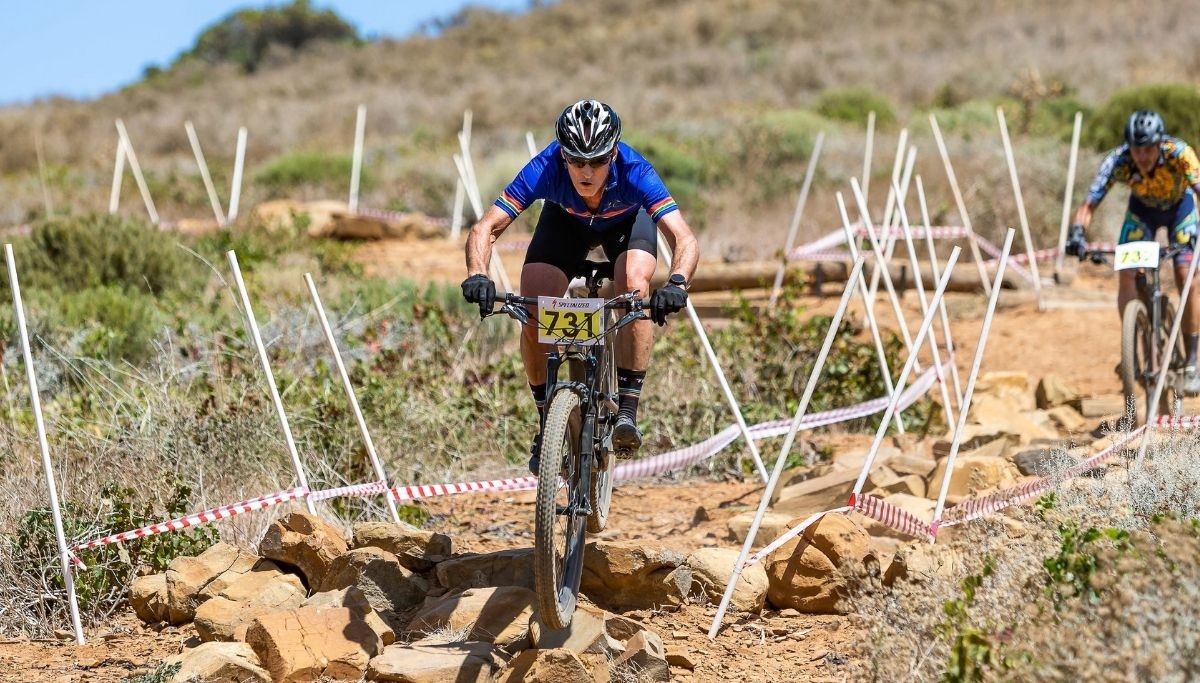
Jimmy Mills still races mountain bikes like a man who means it. National championship jerseys, Masters and Grand Masters racing, Gravel Nationals and Wines2Whales titles continue to fill his calendar.
Yet his relationship with cycling started long before any of that. “I’ve been riding bikes all my life,” he says. “But I only really became competitive in my mid-30s.”
Ironically, his most competitive years arrived later in life. “When the kids left home and became independent, suddenly I had more time again. The last 10 years have probably been my strongest on the bike.”
A defining moment came years earlier, while travelling through Austria in 1998. “I hired a mountain bike and rode up into the Alps. There were snow-capped mountains, crystal-clear lakes and green forests everywhere,” he says. “I still remember that feeling of freedom. Cycling became my oxygen.”
Still, Jimmy’s motivation remains deeply tied to competition. “I’ve always had that competitive edge. That’s what keeps me going. I like having goals.”
But age has forced him to rethink the way he trains. “You slow down. You have to!” he says. “Recovery becomes more important. Everyone says train harder, ride harder; but you can’t keep doing that forever.”
Instead, he has learnt the value of restraint. “One of my first coaches, Lance Stephenson, used to tell me: ‘When I prescribe a recovery ride, let the granny with the shopping basket ride past you.’”
It took years for that lesson to sink in. “In your 30s and 40s, you think you can do everything. But we also didn’t have the information available back then that riders have now.”
Mills still trains hard, but smarter. He watches his diet carefully, limits alcohol before events, and pays close attention to sleep. “You notice very quickly how badly poor sleep affects you as you get older.”
More than anything, though, cycling still gives him the same thing it gave him as a child. “When I was 11 or 12, I’d disappear on my bike for the whole day. Even now, riding bikes is still my soul food.”
Mills’ Essential Advice: “Listen to your body. Slow down when you need to. And keep riding with younger riders. That keeps you motivated.”
Just Keep Moving
MARTHA KOEKEMOER, 51, ACCOUNTANT
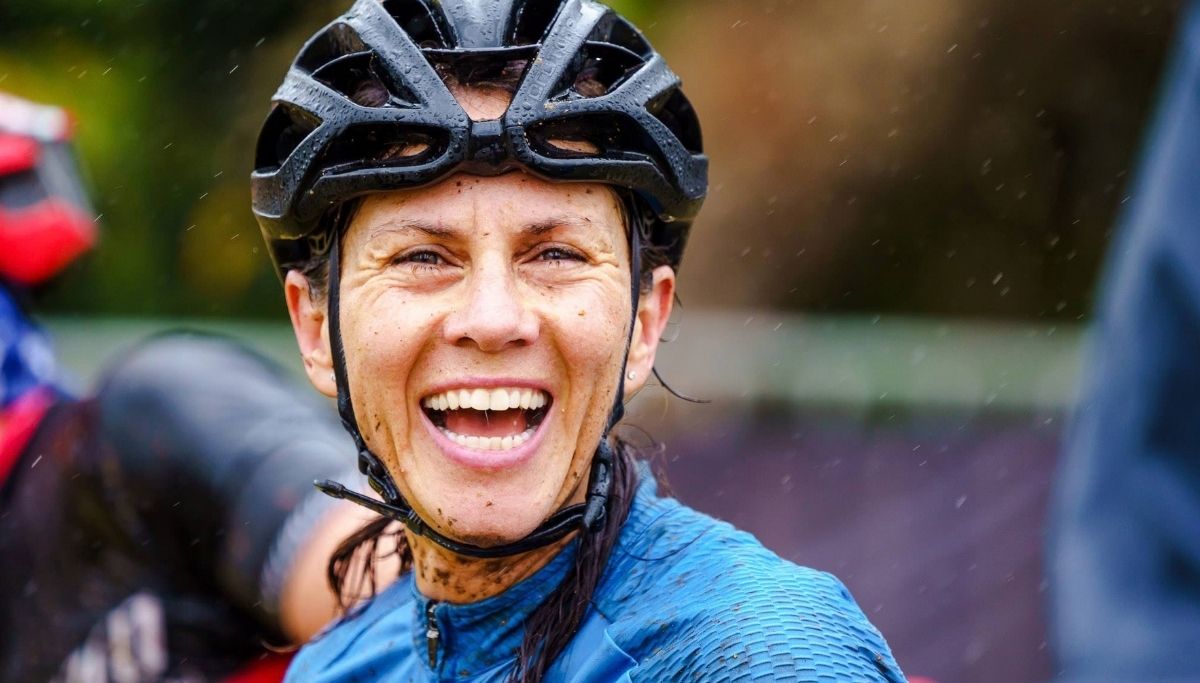
For Martha Koekemoer, cycling has become less about racing and more about belonging; although big races are still a major part of her riding life.
Most of the rides and adventures she remembers best started the same way: somebody in the group suggested something mildly ridiculous. “A lot of what we do starts because one person says, ‘Who wants to do this?’ And suddenly, everyone’s in.”
Koekemoer’s group of like-minded ladies has been riding together for roughly 15 years. Some met when putting together a team for the Double Century (“It’s still the one race we all get together for”), others through stage races and tours. Together they’ve crossed the Cederberg, the Tankwa Karoo, and countless gravel back roads – carrying all their own gear.
“We rough it properly,” she says. “We get lost all the time.”
Sometimes, spectacularly so… “We once went 70km off route in pouring rain!”
But remarkably, nobody seems too bothered when things unravel. “That’s the whole thing; we still laugh about it afterwards.”
Age, she says, has shifted her relationship with cycling entirely. “When I was younger, I was much more competitive in my own head. Back then, I would rather go out alone and train hard.”
Now, the priorities are different. “I’d rather ride slower with people I love than smash myself on my own. The joy matters more now. I also think it makes you a nicer person if you do things with joy in your heart.”
That joy extends well beyond the actual riding. The planning, accommodation logistics and route plotting have become part of the fun. “We love mountains. We love travelling by bike. One day, we’ll sit in an old age home and still talk about these tours. The idea is to see the country. We all love being out there, and that’s why we do it; that’s what motivates us to find more adventures.”
For Koekemoer, movement itself has become the goal. “As soon as you stop moving, that’s when the trouble starts!”
Koekemoer’s Essential Advice: “Find people who make you excited to ride. Adventure is always better when it’s shared. And don’t stop moving!”
“The shift older cyclists need to make isn’t away from the bike, but away from the idea that riding is enough.”
READ MORE ON: Older athletes Training Tips